It was just a Tuesday. That’s what people forget most often—the mundane, crystal-blue sky of a September morning in New York City before everything changed forever. When you look at the 9 11 attacks timeline, it doesn't start with an explosion. It starts with a routine. Commuters were grabbing coffee at the World Trade Center's underground mall. Janitors were buffing floors. On the planes, flight attendants were prepping breakfast service, completely unaware that nineteen men with box cutters were about to rewrite global history.
People remember the smoke. They remember the noise. But the sheer speed of the collapse, the way the minutes blurred together into a singular trauma, is something we’re still untangling decades later.
The morning that broke the world
At 7:59 AM, American Airlines Flight 11 took off from Boston. It was a Boeing 767. Heavy with fuel for a cross-country trip to Los Angeles. Within fifteen minutes, the hijackers made their move. They didn't just take the cockpit; they sprayed Mace, stabbed a passenger, and slit the throat of a flight attendant. We know this because of the harrowing calls made by Betty Ong and Madeline Sweeney. They stayed on the line with ground control, calm and professional, describing the terrorists even as their own lives were being extinguished.
Things moved fast then.
At 8:14 AM, United Airlines Flight 175 left Boston. Same destination. Different fate.
By 8:46 AM, the world shifted. Flight 11 slammed into the North Tower (1 WTC) between floors 93 and 99. People on the ground thought it was a freak accident. Maybe a small private plane had a mechanical failure? The news cameras started rolling. We all watched the gaping, smoking hole in the silver facade. Then, at 9:03 AM, United 175 cut through the air and sliced into the South Tower (2 WTC).
That second impact was the moment of realization. It wasn't an accident. It was war.
Confusion in the corridors of power
While New York burned, Washington D.C. was in a state of absolute, chaotic flux. President George W. Bush was in Sarasota, Florida. He was at Emma E. Booker Elementary School. He was reading "The Pet Goat" with second graders when Andrew Card, his Chief of Staff, whispered in his ear: "A second plane hit the second tower. America is under attack."
Bush stayed seated for about seven minutes. Critics have dissected those minutes for years, but the reality of a President trying to project calm while his brain processes a national catastrophe is a heavy thing to witness.
Meanwhile, at 9:37 AM, American Airlines Flight 77 hit the Pentagon.
The nerve center of the American military was on fire. The "secure" feeling of being in the most powerful nation on Earth evaporated. In the basement of the White House, Vice President Dick Cheney was being hurried into a bunker by Secret Service agents. They basically lifted him off his feet. Orders were being barked to scramble fighter jets, but there was a massive problem: nobody knew how many planes were still out there. The FAA took the unprecedented step of grounding every single civilian aircraft in United States airspace. If you were in the air, you were forced down. If you were on the ground, you stayed there.
The stand in the sky
There’s a part of the 9 11 attacks timeline that feels like a movie, but it was tragically real. United Flight 93.
It took off late from Newark. By the time the hijackers took over, the passengers were calling their loved ones from GTE Airfones. They learned about the Twin Towers. They realized their plane wasn't being used for ransom; it was a guided missile aimed at the U.S. Capitol or the White House.
"Are you guys ready? Okay. Let's roll."
Todd Beamer’s words became a rallying cry. The passengers fought back. They used a food cart as a battering ram. They forced the plane into a field in Shanksville, Pennsylvania at 10:03 AM. They died, but they saved the seat of American government. It’s a miracle of sorts, born from a nightmare.
The dust and the silence
Back in Lower Manhattan, the physics of the situation were becoming terminal. The jet fuel didn't "melt" the steel beams—that’s a common conspiracy myth—but it weakened them enough that they lost their structural integrity.
At 9:59 AM, the South Tower collapsed. It took ten seconds.
The North Tower followed at 10:28 AM.
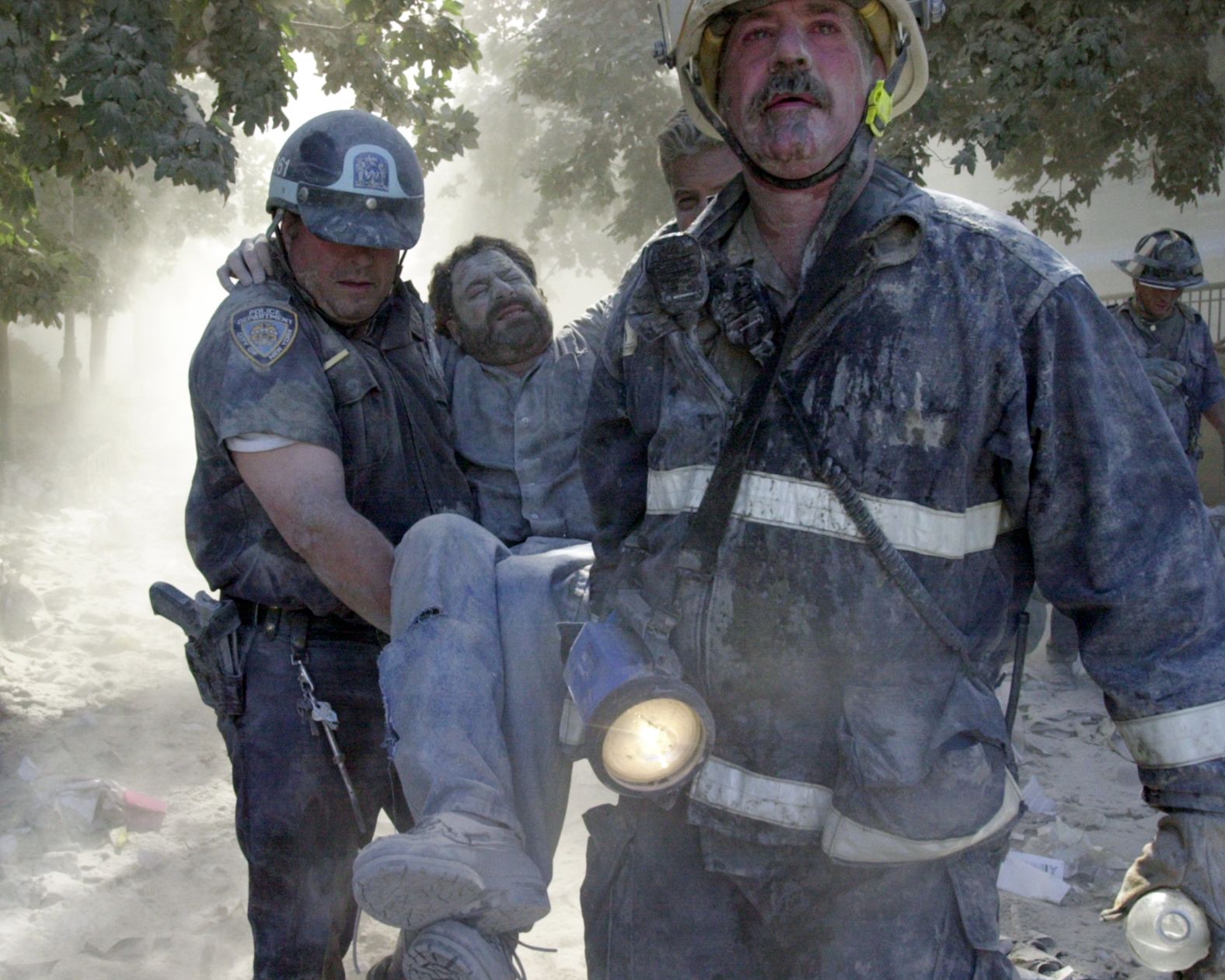
The sound was described by survivors as a roar like a freight train coming through the ceiling. Then came the dust. It wasn't just dust; it was pulverized concrete, glass, asbestos, and the remains of those who didn't get out. It turned day into night. People walked through the streets like ghosts, covered in a thick, gray coating.
The 9 11 attacks timeline doesn't end when the towers fell. At 5:20 PM, 7 World Trade Center collapsed after burning for hours. It was a 47-story building. By sunset, the skyline of New York was jagged and wrong.
What we often get wrong about the timeline
People think the response was instantaneous. It wasn't. There were massive communication failures. The FDNY and NYPD were on different radio frequencies. Firefighters inside the towers didn't get the evacuation orders that the police did. That lack of interoperability cost lives.
Also, the "hero" narrative often skips the messy reality of the following hours. Hospitals across the city prepped for thousands of injuries. They set up gurneys and IV drips on the sidewalks. But the survivors didn't come in the numbers they expected. You were either basically fine, or you were gone. There was no middle ground in the rubble.
Long-term health and the lingering clock
We have to talk about the "after" timeline. The toxic cloud didn't go away. Thousands of first responders and residents are still getting sick today. The James Zadroga 9/11 Health and Compensation Act exists because the timeline of this attack spans decades, not just one morning. Cancers, respiratory illnesses, PTSD—the clock is still ticking for the people who were there.
How to honor the history today
If you're looking for a way to process this history beyond just reading dates and times, there are a few things you can actually do. It's not just about trivia; it's about the legacy.
- Visit the 9/11 Memorial & Museum website. They have a digital archive of artifacts that tell the personal stories behind the stats. It’s heavy, but necessary.
- Support the Tunnel to Towers Foundation. They do real work for veterans and first responders. It’s a direct way to help the people still affected by the ripples of 2001.
- Watch the "102 Minutes That Changed America" documentary. It uses raw footage without narration. No experts talking over it. Just the sounds and sights of the day as it happened.
- Read the 9/11 Commission Report. Honestly, it’s one of the most readable government documents ever produced. It lays out the systemic failures in a way that is chillingly clear.
The 9 11 attacks timeline is a scar on the calendar. Understanding the sequence of events is the only way to make sense of the security world we live in now, from TSA lines to foreign policy. It changed the way we travel, the way we talk about privacy, and the way we look at the sky.
To really grasp the impact, look into the specific stories of the 2,977 victims. Each one had a morning routine that was interrupted. Each one is a reason why this timeline remains the most studied few hours in modern American history.