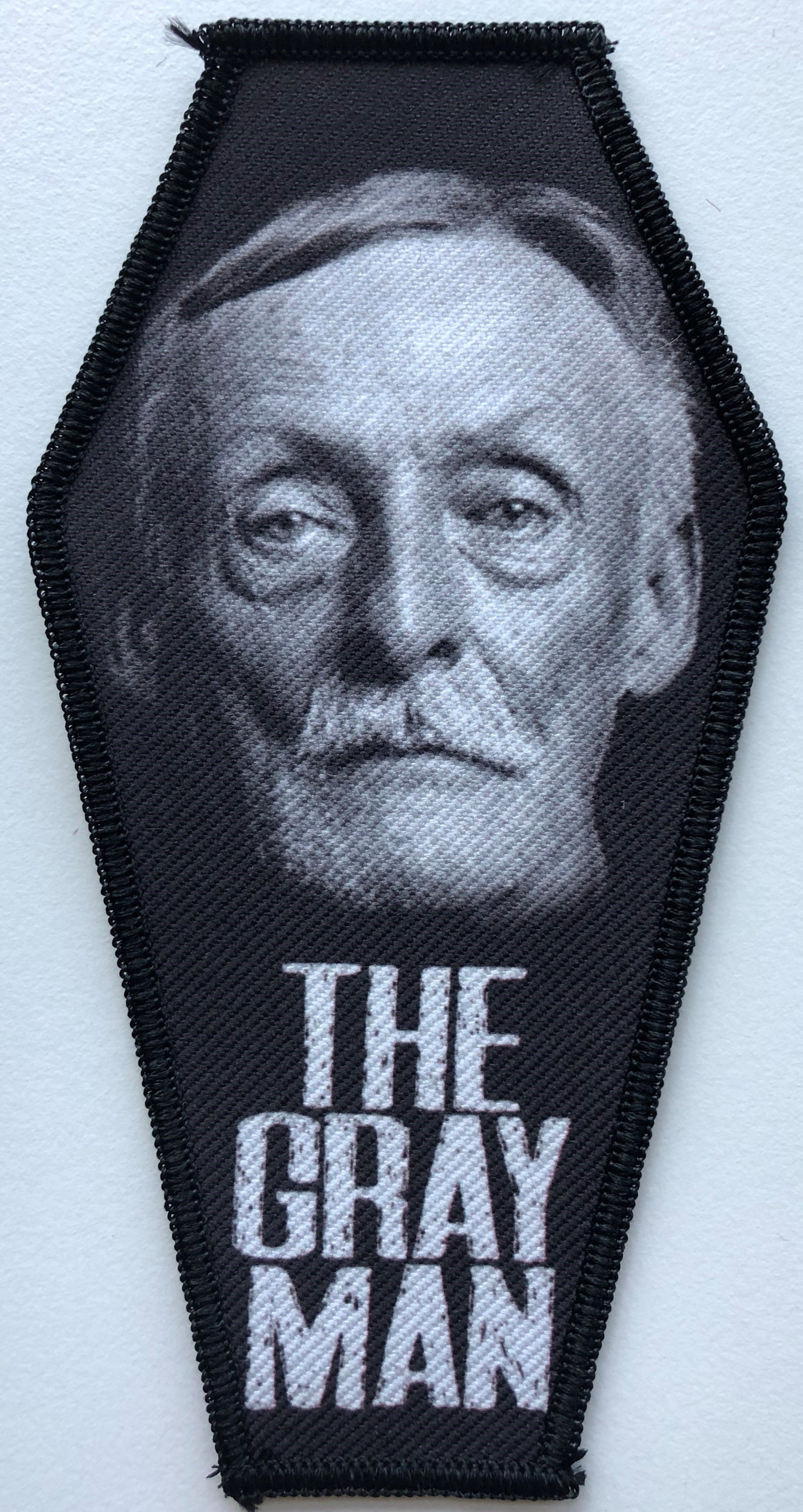
He looked like your grandfather. That’s the thing that sticks with you when you see the grainy photos of Albert Fish. He was a frail, wispy-haired man in a cheap suit, looking like he’d have trouble opening a jar of pickles, let alone committing some of the most stomach-churning crimes in American history. People called him the Gray Man. He blended into the crowds of early 20th-century New York like a ghost in a wool coat. But behind that unassuming exterior was a level of depravity that genuinely challenges our understanding of human psychology. Honestly, even seasoned detectives who have seen it all tend to get a bit quiet when the name Albert Fish comes up.
He wasn't just a killer. That's too simple. Fish was a cannibal, a child molester, and a self-mutilator who derived pleasure from physical pain in ways that seem biologically impossible.
When he was finally caught in 1934, the public was forced to confront a terrifying reality: the monster doesn't always have fangs. Sometimes, the monster has a mustache and a gentle voice.
The Disappearance of Grace Budd
It all started with a "help wanted" ad. In June 1928, Edward Budd, a teenager living in New York, placed an advertisement looking for work. A man calling himself Frank Howard showed up at the Budd family home. He was polite. He was charming in that old-fashioned, "harmless old man" kind of way. He claimed he worked on a farm and was looking for a hardworking young man to help out.
But then his eyes settled on Grace.
Grace Budd was only ten years old. "Frank Howard"—who was, of course, Albert Fish—pivoted his plan instantly. He told the family he was going to a birthday party for his niece and asked if Grace could tag along. He promised she’d be back by the evening. The Budds, living in a more trusting era and likely influenced by Fish's grandfatherly demeanor, said yes.
They never saw her alive again.
The search for Grace Budd went cold for six long years. It’s hard to imagine that kind of agony. The family lived in a state of perpetual "what if" until 1934, when a letter arrived. This wasn't a ransom note. It was something far worse. In the letter, Fish described, in agonizing, graphic detail, exactly what he had done to their daughter. He talked about taking her to an abandoned house in Westchester County, killing her, and eating her over the course of nine days.
The sheer cruelty of sending that letter is what sets Fish apart from your run-of-the-mill serial killer. Most criminals want to hide. Fish wanted to boast. He wanted the family to feel his pleasure. This letter, written on stationery from a private chauffeur's association, eventually led Detective William King straight to Fish's door.
A Lifetime of Masochism and Madness
To understand Albert Fish, you sort of have to look at the needles. When Fish was eventually arrested and X-rayed, the doctors found something that looked like a sewing kit gone wrong. There were roughly 29 needles embedded in his pelvic region. He had inserted them there himself.
Think about that for a second.
He didn't just hurt others; he lived in a constant state of self-inflicted torture. He would beat himself with paddles studded with nails. He would stick needles into his own flesh. This wasn't a sudden break from reality in his old age. Fish had been "off" since childhood. Born in 1870 in Washington, D.C., he came from a family with a massive history of mental illness. His father died when he was young, and he was sent to an orphanage where he witnessed—and experienced—brutal physical discipline.
The orphanage was a catalyst. It's where the wires got crossed.
For Fish, pain and pleasure became the same thing. By the time he was an adult, he was wandering the country, working odd jobs, and indulging in "the great work," as he sometimes called his crimes. He claimed to have "had" children in every state, though historians generally believe he was exaggerating his body count. However, even if only a fraction of his claims were true, he was one of the most prolific predators of the era.
The Trial and the "Insanity" Question
The trial of Albert Fish was a media circus. People couldn't believe this tiny, trembling man was the Boogeyman. His lawyer, James Dempsey, tried to use the insanity defense. It seemed like a slam dunk, right? I mean, the man ate children and stuck needles in his groin. That’s not the behavior of a sane person.
The psychiatrist Fredric Wertham, who interviewed Fish extensively, famously stated that there wasn't a single "unperverted" cell in Fish's body. Wertham argued that Fish was deeply psychotic.
But the jury didn't buy it.
In the 1930s, the legal definition of insanity was the M'Naghten Rule. Basically, did the defendant know right from wrong at the time of the crime? The prosecution argued that because Fish took steps to hide his crimes—using aliases, taking Grace to a remote location, waiting years to send the letter—he clearly knew what he was doing was "wrong" in the eyes of the law.
The jury agreed. They found him guilty and sentenced him to death by the electric chair.
True to form, Fish was reportedly thrilled by the sentence. There’s a persistent legend that he even helped the executioner steady the electrodes on his legs. He allegedly said that "burning" would be the ultimate thrill he hadn't yet experienced. On January 16, 1936, the Gray Man was executed at Sing Sing Prison. Some say the needles in his body caused a short circuit during the first attempt, though that’s likely more of an urban legend than a hard fact.
Why the Albert Fish Case Still Shakes Us
There are plenty of serial killers in history. So why does Fish still occupy such a dark corner of the true crime world?
It’s the psychological complexity. Most killers have a "type" or a specific motive like power, sex, or money. Fish’s motives were a chaotic slurry of religious delusion, extreme masochism, and cannibalism. He wasn't just a predator; he was a man who had completely deconstructed the human experience into something unrecognizable.
Also, he challenges our intuition about safety. We teach kids to watch out for "creepy" people. But Fish didn't look creepy. He looked like the guy who feeds pigeons in the park. He was the "Gray Man" because he was invisible. That invisibility is the ultimate nightmare for any parent.
What We Can Learn from the Legacy of the Gray Man
Studying cases like this isn't just about morbid curiosity. There are actual takeaways here for how we view criminal psychology and public safety:
- The Fallacy of Appearance: We still harbor a bias that "evil" looks a certain way. Criminal profiling has evolved, but the Fish case remains the gold standard for why we shouldn't trust "vibe checks" alone.
- The Documentation of Deviancy: Fish’s letters provided a blueprint for modern forensic linguistics. Investigators now look at the "signature" of a killer—not just what they do to kill, but the extra things they do to satisfy their psychological needs.
- The Importance of Cold Case Persistence: Detective William King didn't give up on Grace Budd. It took six years. In an era before DNA and digital databases, it was pure, old-school legwork that caught the killer. It's a reminder that no case is truly "unsolvable" if the paper trail exists.
Practical Steps for True Crime Enthusiasts and Researchers
If you're looking to dig deeper into the actual primary sources of this case—and not just the sensationalized versions—there are a few things you can do.
First, look for the book Deranged by Harold Schechter. He’s a historian who specializes in 19th and early 20th-century crime. Unlike a lot of true crime writers, Schechter sticks to the court transcripts and contemporary newspaper accounts. It's probably the most factual deep-dive available.
Second, if you're ever in the New York area, the archives of the New York Times and the Brooklyn Eagle from 1934-1936 are a goldmine. Reading the day-to-day coverage of the trial gives you a sense of the visceral shock the public felt. You see the shift in the "American Dream" of the 1920s into the grim reality of the 1930s.
Lastly, understand the limitations of the "insanity defense" in historical contexts. If you’re a law student or a psych buff, comparing the Fish trial to modern cases like Jeffrey Dahmer provides an incredible look at how our legal definition of "sanity" has—or hasn't—changed in the last century.
Albert Fish was a nightmare in human form, but he was a human nonetheless. That’s the most uncomfortable truth of all. He wasn't a demon from a movie; he was a man who walked among us, and his story serves as a permanent, chilling reminder to look a little closer at the "gray" people in the background of our lives.