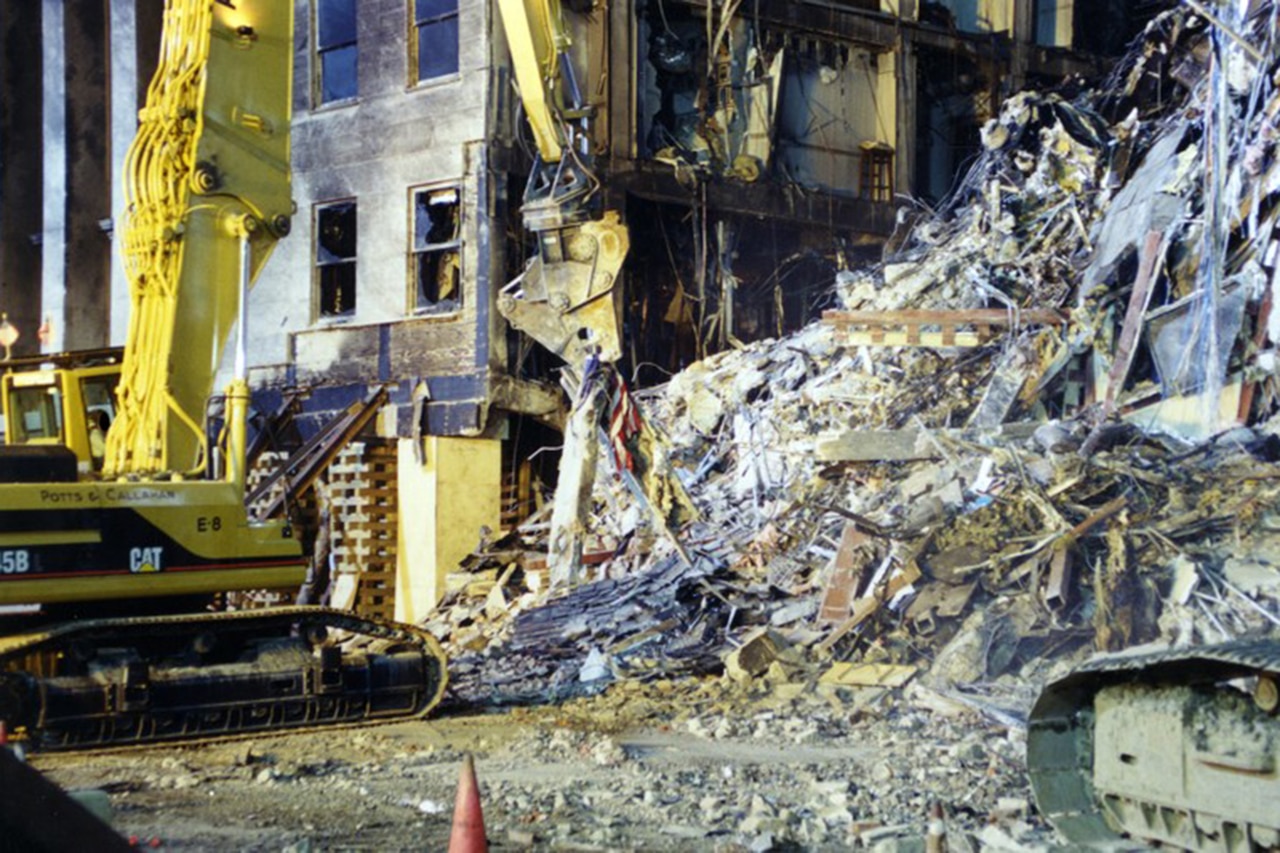
September 11, 2001, is a day usually defined by the Twin Towers. We all remember the footage of the smoke against the New York skyline. But for those in Northern Virginia and D.C., the trauma sounded like a low-altitude roar and a ground-shaking thud. At 9:37 a.m., American Airlines Flight 77—a Boeing 757 carrying 64 people—crashed into the west side of the building. The plane hitting the Pentagon wasn't just a secondary strike; it was a surgical hit on the nerve center of global military power.
People sometimes forget how fast it happened.
One minute, the Pentagon was a buzzing hive of bureaucracy. The next, a massive jet was screaming across the highway, clipping light poles, and slamming into the first floor of the building's E Ring. Honestly, the scale of the destruction is hard to wrap your head around unless you look at the physics of it. You have 182,000 pounds of metal and jet fuel traveling at 530 miles per hour. That’s not just a crash. It’s a kinetic explosion.
The Flight Path of American Airlines Flight 77
Flight 77 took off from Dulles International Airport at 8:20 a.m., bound for Los Angeles. It was a routine cross-country flight until five hijackers, led by Hani Hanjour, took control about 30 minutes later. They turned the transponder off. They did a 360-degree descending turn to get the plane low enough to hit the target. It’s terrifying to think about.
Air traffic controllers at Dulles actually spotted a fast-moving "primary target" on their screens shortly before the impact. They didn't even know it was a commercial airliner at first because the signal was so raw and fast. Danielle O’Brien, an air traffic controller on duty that morning, later described the aircraft's movement as being like a fighter jet. It wasn't drifting; it was being steered with aggressive, violent intent.
The plane traveled over the Navy Annex and across Interstate 395. Witnesses on the road saw the belly of the plane. Imagine driving to work and seeing a Boeing 757 so low you can count the rivets on the fuselage. It clipped five streetlights on Route 27 before the left engine struck a portable generator. Then, it disappeared into the side of the building.
Why the Damage Wasn't Even Worse
There is a weird, grim bit of luck involved in why the death toll at the Pentagon—125 people in the building plus the 64 on the plane—wasn't in the thousands. The plane hit the First Wedge. This was an area of the building that had just undergone a massive, multi-million dollar renovation.
Workers had literally just finished reinforcing the walls with steel masonry and blast-resistant windows. Some of those windows were two inches thick. They stayed intact even as the plane disintegrated behind them. Also, because of the renovations, many of the offices in that section were still empty. If the hijackers had hit the other side of the building, where the high-ranking brass sit in unreinforced offices, the loss of life would have been catastrophic.
Basically, the building's structural integrity saved lives. The "E Ring"—the outermost circle—took the brunt of the impact, but the reinforcement kept the floor from collapsing immediately, giving people in the inner rings (D, C, and B) a few precious minutes to crawl through the black smoke.
Debunking the Myths of the Pentagon Strike
If you spend five minutes on the internet, you’ll find people claiming a missile hit the building, not a plane. They ask, "Where's the debris?" or "Why is the hole so small?"
The truth is much more visceral.
When a plane hitting the Pentagon at 530 mph meets a reinforced concrete wall, the plane doesn't stay "plane-shaped." It behaves more like a liquid. The aluminum skin shreds into thousands of tiny pieces. However, investigators found plenty of evidence. They recovered the flight data recorder. They found pieces of the landing gear, the engines, and—most importantly—DNA evidence for almost everyone on board.
Frank Cullison, a photographer who was at the scene, and countless first responders saw the wreckage. The "small hole" argument usually ignores the fact that the wings of the plane were sheared off upon impact with the heavy structural columns. The main fuselage created the entry point, while the rest of the aircraft basically vaporized or was consumed by the massive fireball fueled by thousands of gallons of Jet A fuel.
The Heroism Inside the Rings
While the world was watching New York, people inside the Pentagon were living through a literal furnace. The smoke was so thick you couldn't see your hand in front of your face.
Take the story of Sheila Moody. She was at her desk in the newly renovated section. She heard a whistle, then a blast. She was trapped in the dark until she heard the sound of a splash. It was a coworker, Isaac Hoopi, who was using a fire extinguisher and calling out into the void. He led her out through the wreckage. These weren't soldiers in a war zone; they were accountants, budget analysts, and administrative assistants who suddenly found themselves in a combat environment.
The fire burned for days. It was so hot that it compromised the structural steel in the unrenovated sections adjacent to the impact site. Firefighters from Arlington County, Alexandria, and even as far as Reagan National Airport fought the blaze while fearing a second plane might be coming.
Key Details of the Impact Site:
- The Point of Entry: The plane hit the ground floor and second floor simultaneously because of the angle.
- The Depth: Debris traveled through three of the five rings (E, D, and C).
- The Fire: Reach temperatures high enough to melt internal office equipment into "puddles" of plastic and metal.
Long-term Health and the Phoenix Project
We talk a lot about the 9/11 dust in New York, but the Pentagon had its own toxic cocktail. Burned jet fuel, pulverized hazardous materials, and the fumes from the renovation materials created a lingering health crisis for many first responders.
The physical building was repaired with incredible speed, though. This was called the "Phoenix Project." Builders worked 24/7 to rebuild the damaged sections. They actually managed to get staff back into the reconstructed offices by the one-year anniversary in 2002. There’s a spot in the rebuilt wall where you can still see scorched stones that were kept as a memorial. It’s a quiet, heavy reminder of what happened there.
The Pentagon Memorial now sits just outside the impact point. It has 184 benches, each dedicated to a victim. They are organized by the birth years of the people who died, ranging from three-year-old Dana Falkenberg to 71-year-old John Yamnicky. If you stand there, you can look up and see the flight path. It’s a sobering place.
Actionable Steps for Learning More
History isn't just about dates; it's about the evidence left behind. If you want to understand the reality of the Pentagon strike beyond the headlines, here is how to dig deeper:
- Visit the National 9/11 Pentagon Memorial: If you are in the D.C. area, go at night. The way the benches are lit from below creates a specific atmosphere for reflection that you don't get during the day.
- Read the 9/11 Commission Report: Specifically, Chapter 1.1 covers the specifics of Flight 77’s hijacking. It’s dry, but it’s the definitive factual record of the timeline.
- Explore the Smithsonian National Museum of American History: They hold several artifacts from the Pentagon site, including a piece of the fuselage and damaged office equipment that show the sheer force of the heat and impact.
- Review the ASCE Report: The American Society of Civil Engineers published a "Pentagon Building Performance Report." It’s technical, but if you want to understand why the building stood up when the towers fell, this is the document to read. It explains the "spiral reinforcement" in the concrete columns that prevented a total progressive collapse.