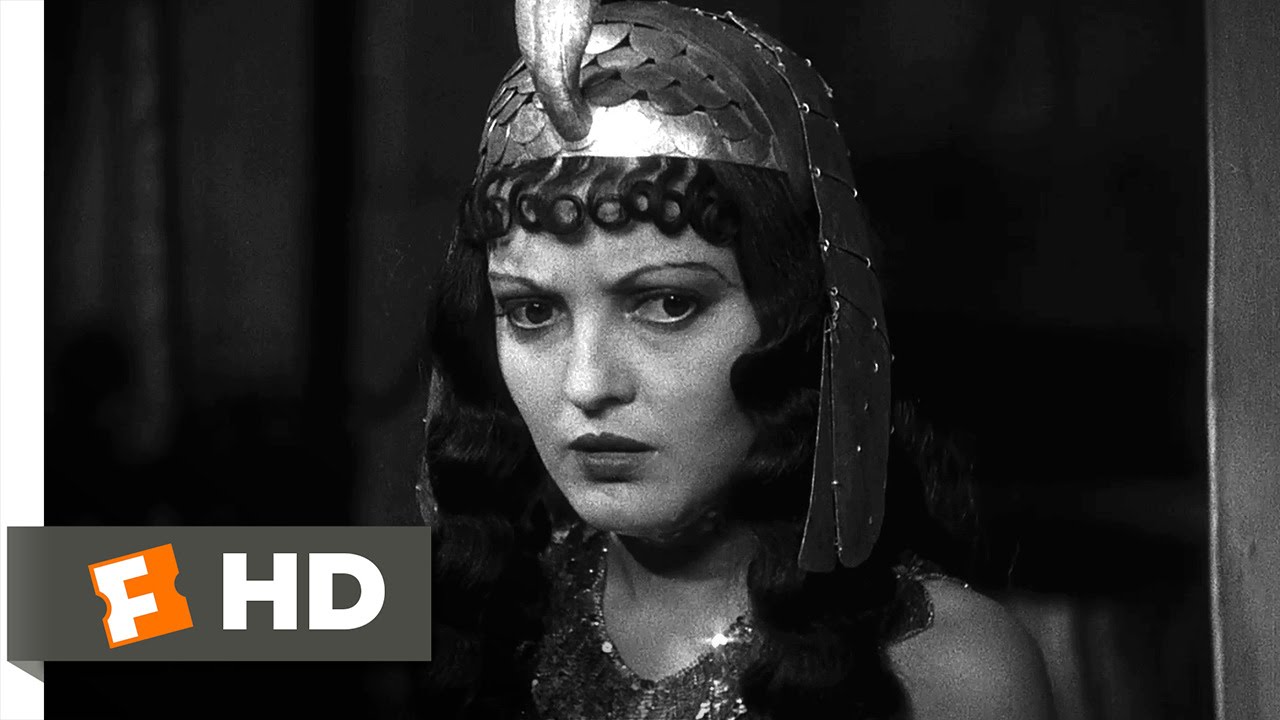
She walked onto the screen covered in gold paint and basically changed everything for a whole generation of moviegoers. If you grew up in the late nineties, Anck Su Namun the mummy wasn't just a character; she was a vibe, an aesthetic, and a total enigma. Most people remember her from Stephen Sommers’ 1999 masterpiece The Mummy, but there’s actually a lot of weird, messy history behind the character that the movies sort of glossed over or totally invented.
It’s wild how much staying power she has. You see the gold body paint at every Comic-Con, and honestly, the "Anck Su Namun look" is still a massive trend on TikTok and Instagram every Halloween. But who was she really? Was she a real person in Ancient Egypt, or just a figment of a screenwriter’s imagination? The answer is kinda both, which makes the whole thing even more fascinating.
The Real History vs. Hollywood Magic
Okay, let’s get the facts straight. The name "Anck Su Namun" isn't just made up. It’s actually a slight variation of Ankhesenamun, who was a very real, very high-profile Queen of the Eighteenth Dynasty of Egypt. She was the daughter of Akhenaten and Nefertiti, and more famously, the wife of Tutankhamun. Yeah, King Tut.
In the movies, she’s portrayed as the forbidden lover of the high priest Imhotep. In real life? Her story was way more tragic and complicated. She lived through a period of massive religious upheaval and political backstabbing. When Tutankhamun died young, she was left in a terrifying position. There’s this famous letter found in the Hittite archives where an Egyptian queen—widely believed to be her—begged the Hittite king to send one of his sons for her to marry because she was "afraid" and didn't want to marry a "servant."
That "servant" was likely Ay, a powerful advisor who eventually became Pharaoh and married her anyway. It's dark stuff. Hollywood took that name, shifted the timeline by about a thousand years (Imhotep actually lived during the Third Dynasty, way before her), and turned her into the catalyst for a world-ending curse.
Why Patricia Velásquez Made the Role Iconic
You can’t talk about Anck Su Namun the mummy without talking about Patricia Velásquez. She brought this incredible, fierce energy to the role that most villains just don't have. Interestingly, Velásquez wasn't even primarily an actress when she got the part; she was one of the world's first Latina supermodels.
That gold paint scene? It took about thirteen hours to apply. Thirteen hours! She had to stand perfectly still while artists meticulously hand-painted those intricate patterns on her skin. There was no CGI used for the paint. It was all real, and it’s why it still looks so much better than the digital effects in modern blockbusters.
The chemistry between her and Arnold Vosloo (Imhotep) was palpable even though they barely had any dialogue together in the first film. It was all in the eyes. That's the secret sauce of the 1999 movie—it felt like a romance first and a horror movie second. You actually kind of felt for them, even though they were, you know, murdering people to achieve eternal life.
The Tragedy of the Character's Loyalty
In The Mummy Returns, we get to see a lot more of her backstory through Evelyn’s visions. We see the duel between Anck Su Namun and Princess Nefertiri. This is where things get really interesting from a character perspective. Anck Su Namun is defined by a singular, obsessive loyalty to Imhotep.
But then, the ending of the second movie hits.
It’s one of the most brutal moments in action cinema. Imhotep is hanging over the pit to the underworld, pleading for her to help him. She looks at him, looks at the danger, and she runs away. She chooses her own life over his. Contrast that with Rick and Evelyn, where Evelyn risks everything to pull Rick up. It’s a gut-punch. It shows that while their love was powerful enough to defy death for 3,000 years, it was ultimately selfish.
Impact on Pop Culture and the "Mummy" Aesthetic
The visual language of Anck Su Namun the mummy has leaked into everything. From Rihanna’s "Where Have You Been" music video to high-fashion runways, that blend of ancient Egyptian royalty and dangerous, lethal beauty is everywhere.
The 1999 film succeeded because it didn't try to be a dry history lesson. It embraced the "pulp" feel of the 1930s original while adding a modern, kinetic energy. And let’s be real, the costume design by John Bloomfield was legendary. He managed to make characters look like they belonged in the desert while also making them look like movie stars.
The gold scales, the heavy kohl eyeliner, and the sheer audacity of her character's ambition made her a feminist icon for some, even if she was technically a villain. She wasn't a damsel. She was the one who stabbed the Pharaoh. She was the one who took her own life to ensure Imhotep could bring her back later. She had agency, even if that agency was used for some pretty questionable goals.
Common Misconceptions About the Character
People often get confused about her role in the broader "Mummy" franchise. Some think she was in the Tom Cruise reboot—she wasn't. That movie went with a different character named Ahmanet. Some people also think she was a real princess who was buried alive. Again, that’s the movie talking.
- The Age Gap: In reality, the historical Ankhesenamun was much younger than the movie version when she was thrust into power.
- The Timeline: As mentioned, Imhotep lived around 2600 BC. The real Ankhesenamun lived around 1300 BC. They missed each other by over a millennium.
- The Reincarnation: The whole plot of the second movie hinges on Meela Nais being her reincarnation. While ancient Egyptians believed in the afterlife (the Duat), the specific idea of soul-jumping into a modern-day person is more of a Hollywood trope than a religious tenet from the New Kingdom.
How to Capture the Anck Su Namun Vibe Today
If you’re looking to channel that energy, it’s all about the details. People still obsess over the makeup. To get that look, you need a heavy hand with the black kohl and a very specific shade of gold leaf or body pigment.
But more than the makeup, it’s the confidence. The character was defined by her "I'm the most important person in this room" energy. Whether she was facing down a Pharaoh or fighting a princess with sais, she never blinked.
What We Can Learn From the Legend
The story of Anck Su Namun the mummy tells us a lot about our obsession with the past. We love the idea that love can last forever, but the movies also warn us that holding onto the past too tightly can destroy you. Imhotep couldn't let her go, and she couldn't let go of her desire for power, and it ended in a pit of souls for both of them.
If you're revisiting the films or researching the real history, here is how you can actually engage with this topic further without just scrolling through memes:
Check out the Amarna period of Egyptian history. It’s the time when the real Ankhesenamun lived. It was a time of "heretic" kings and incredible art that looks nothing like the rest of Egyptian history. Understanding the world she actually lived in makes the movie version feel even more like a tragic "what if."
Watch the 1932 original The Mummy with Boris Karloff. The character there is named Princess Ankh-es-en-amon. It’s a much slower, creepier film, but you can see where the 1999 version got its DNA. It’s a lesson in how Hollywood evolves its monsters over time.
Finally, look into the conservation efforts for the tombs in the Valley of the Queens. The real historical figures these movies are based on left behind incredible legacies that are currently being preserved by archeologists. Supporting these efforts is a great way to respect the real history that inspired the movie magic.
The character is a bridge between what was and what we imagine. She’s the gold-painted ghost of the 90s, and honestly? She isn't going anywhere.
To dive deeper into this world, start by researching the "Amarna Letters." These are the actual clay tablets that give us a window into the desperate world the real queen lived in. It’s way more intense than any movie script. You can also visit the Egyptian Museum's digital archives to see the actual jewelry and artifacts found in the tombs of her family members. These items are often the direct inspiration for the props you see on screen. Don't just settle for the Hollywood version; the real story is waiting in the sand.