James Cameron waited thirteen years to bring us back to Pandora. When Avatar: The Way of Water finally hit theaters in late 2022, it wasn't just the visuals that had people talking; it was the sprawling, slightly confusing family tree of the Sully clan. Honestly, keeping track of every single one of the Avatar The Way of Water characters feels like a full-time job if you aren't paying close attention to the subtle facial markings or the specific ways they interact with the ocean.
The story shifted. It’s no longer just Jake and Neytiri against the world. Now, it’s about a family trying to survive a literal "sea change."
The Sully Family Dynamics (and the Kids You Forgot)
Jake Sully isn't the reckless marine we met in 2009. He’s a dad now. A strict one. He runs his family like a flight crew because, in his mind, that’s the only way they stay alive. Then you've got Neytiri, who is basically the emotional heartbeat of the film, even if she feels a bit sidelined by the move to the reefs.
But the real focus is on the kids.
Neteyam is the golden child. He’s the oldest, the responsible one, the one who actually listens to Jake. Contrast that with Lo’ak. Lo’ak is a total outcast. He has the five-fingered "demon blood" hands of his father’s human side, and he feels like he never quite fits in with the Omatikaya or the Metkayina. He’s the character most people relate to because he’s constantly messing up while trying to do the right thing.
Then there's Tuk. She’s mostly there for the "cute" factor and to give the older siblings someone to rescue, but her innocence provides a sharp contrast to the high-stakes warfare happening around her.
Kiri: The Biggest Mystery in the Franchise
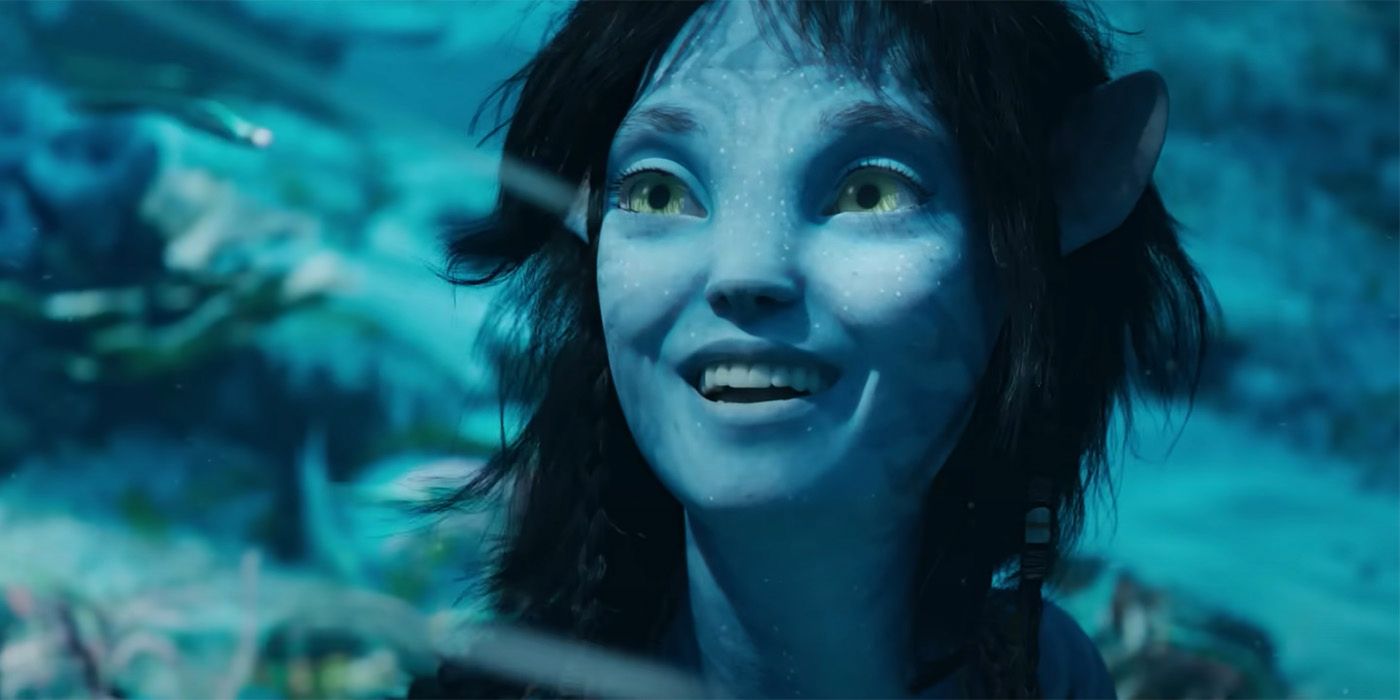
We have to talk about Kiri. Played by Sigourney Weaver—who is somehow playing a fourteen-year-old girl at age seventy-three—Kiri is the biological daughter of Grace Augustine’s inert avatar. Nobody knows who the father is. Some fans think it was a literal "immaculate conception" by Eywa herself.
Kiri has a deep, almost transcendental connection to the planet. While the other Avatar The Way of Water characters are struggling to hold their breath, Kiri is underwater communing with the flora and fauna. She’s the bridge between the physical and the spiritual, and she clearly has powers we haven't fully seen yet. She gets seizures when she connects too deeply, which suggests that her link to the "Great Mother" might be a bit too much for a biological body to handle.
The Metkayina: Entering the Reef
When the Sullys flee to the eastern seaboard, we meet the Metkayina clan. These aren't just blue forest people; they're greenish-teal sea people. They have thicker tails for swimming and wider arms to help navigate the currents.
Tonowari, played by Cliff Curtis, is the Olo’eyktan (leader). He’s stoic. He’s fair. He’s everything Jake is trying to be but with less of the "former soldier" baggage. His wife, Ronal (Kate Winslet), is the Tsahìk. She is terrifying. Even when she’s heavily pregnant, she’s ready to go to war. Winslet actually broke Tom Cruise's underwater breath-holding record for this role, staying submerged for over seven minutes. That kind of dedication shows in how Ronal moves; there’s a weight and a grace to her that feels ancient.
Their daughter, Tsireya, acts as the "Pocahontas" figure for Lo’ak, teaching him that "the way of water has no beginning and no end." It’s a bit cliché, sure, but their relationship is the primary vehicle for us learning about the Metkayina culture.
The Villains and the "Spider" Problem
Quaritch is back. Sort of.
He’s a Recombinant now—an autonomous avatar embedded with the memories of the human Miles Quaritch. It’s a clever narrative trick to keep Stephen Lang in the franchise. This version of Quaritch is faster, stronger, and arguably more dangerous because he understands the Na'vi way of life better than his human predecessor ever did.
Then there's Spider.
Miles "Spider" Socorro is the human kid who grew up on Pandora. He’s actually Quaritch’s biological son, left behind because babies can't be put into cryosleep. His presence creates this massive moral friction. Neytiri hates him. She looks at him and sees the people who burned her home. Jake treats him like a stray dog—kind of part of the family, but not really. Spider’s loyalty is tested throughout the film, especially when he’s captured by his "Blue Dad" and starts helping the RDA navigate the terrain.
The Tulkun: More Than Just Whales
If you think the Tulkun are just big whales, you're missing the point of the movie. In the world of Avatar The Way of Water characters, Payakan the Tulkun is just as important as Lo’ak.
The Tulkun are sentient. They have their own music, their own mathematics, and a philosophy of total non-violence. Payakan is an outcast because he fought back against the RDA hunters who killed his mother. By breaking the Tulkun code of pacifism, he was shunned by his own kind. The bond between Lo’ak and Payakan is the emotional core of the second half of the film. It's two lonely souls finding kinship across species lines.
Why These Characters Resonate (or Don't)
Some critics argue that the character development is thin compared to the world-building. That’s a fair point. But Cameron’s strength isn't in complex, gritty dialogue; it’s in archetypes. We understand the "disobedient son," the "protective mother," and the "villain seeking revenge."
The nuance comes from the performance capture. The way Neytiri’s face contorts in grief, or the way Kiri looks at a blade of grass—that's where the character work happens. You see it in the eyes.
Misconceptions About the New Cast
A lot of people walked out of the theater wondering why Vin Diesel wasn't in it after all the rumors. Truth is, he was never officially cast for this specific film, though he might pop up in the sequels. Another common mistake is thinking the Metkayina are just a different "race" of the same species. Biologically, they have evolved differently over thousands of years—their physiology is specifically adapted for the pressure and movement of the ocean.
How to Keep the Sully Family Straight
If you're planning a rewatch before Avatar 3 (Fire and Ash) drops, keep these points in mind:
- Neteyam is the one with the braid and the "soldier" attitude. He's the martyr of the family.
- Lo’ak has the stripes and the five fingers. Look at his hands; they're a constant reminder of his human heritage.
- Kiri is the one staring at things. If a character is spaced out or talking to fish, it's her.
- Spider is the only one who needs a breathing mask. If you see a human-sized kid in a loincloth, that's him.
The future of the franchise depends on these younger Avatar The Way of Water characters. Jake and Neytiri are the foundation, but the story is clearly being passed to Lo’ak and Kiri. Their ability to bridge the gap between different Na'vi cultures—and between the Na'vi and humans—is what will define the next three films.
Pay close attention to the Tulkun hunting scenes next time you watch. It's brutal, but it explains the RDA's new motivation: Amrita. It's a yellow fluid from the Tulkun brain that stops human aging. It replaced Unobtainium as the primary reason for being on Pandora. This shift in "resource" changes the villains' motivations from simple mining to active, sentient genocide, making the stakes for the characters much higher than they were in the first film.
The best way to appreciate these characters is to stop looking for complex "Oscar-bait" monologues and start watching how they interact with their environment. The environment is a character in Avatar. When a Na'vi "bonds" with an animal, they are literally sharing a nervous system. That’s as deep as character development gets.