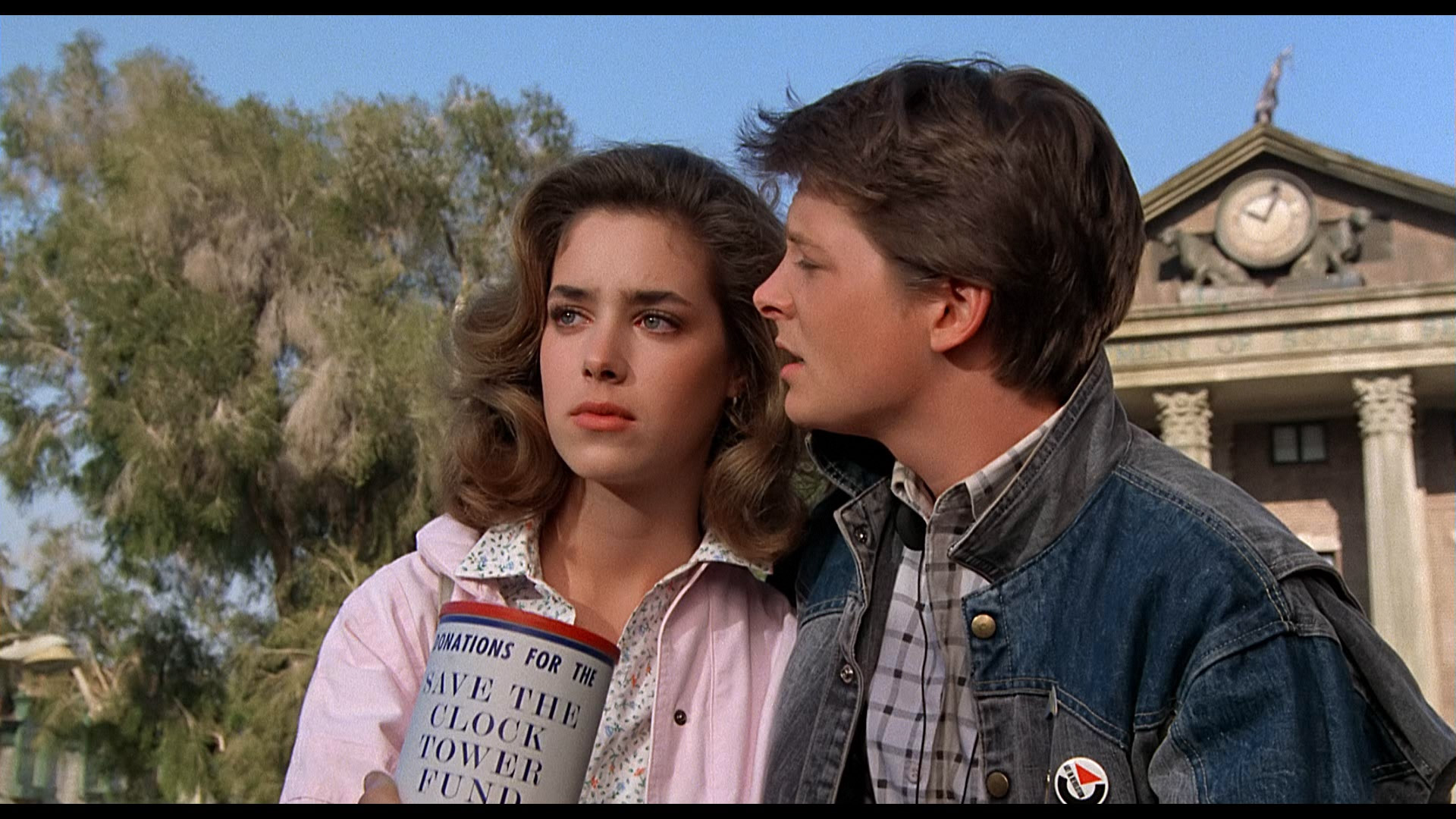
If you watch the ending of Back to the Future and then immediately pop in the sequel, something feels... off. It’s one of those "wait, did I blink?" moments. Marty McFly is the same. Doc Brown is the same. Even the DeLorean looks identical. But Jennifer Parker? She’s a completely different person.
Claudia Wells was the girl who first wrote her number on that "Save the Clock Tower" flyer. She was the one who gave Marty the confidence to send his demo tape to the record company. She was, for many fans, the definitive Jennifer. And then, suddenly, she wasn't.
For years, playground rumors filled the gap. People said she died. People said she got fired. The truth is actually much more human, and honestly, a bit heartbreaking. It wasn't about "creative differences" or Hollywood ego. It was about a daughter choosing her mother over a multi-million dollar franchise.
The Role She Almost Never Had
The casting of Jennifer Parker was a mess from the start.
Most people know about the Eric Stoltz situation—how he filmed for weeks as Marty McFly before being replaced by Michael J. Fox. But Claudia Wells had her own rollercoaster. She was actually the first choice for the original film. But there was a snag. She had already filmed a pilot for a show called Off the Rack, and the network wouldn't let her out of the contract to do the movie.
So, the producers cast Melora Hardin.
But then Eric Stoltz was let go. When Michael J. Fox came on board, Hardin was suddenly too tall for him. By total fluke, Wells’ sitcom had finished its run. The timing aligned perfectly. She stepped back into the role, filmed all her scenes with Fox, and became part of cinematic history.
Why Claudia Wells Walked Away
By 1988, Back to the Future Part II and Part III were gearing up for back-to-back production. The hype was unreal. Claudia Wells was signed, sealed, and delivered for the sequels. Then life hit.
Her mother was diagnosed with stage IV breast cancer.
"I just knew that I had to be with her," Wells has said in various interviews over the decades. She wasn't just "taking a break." She was stepping away from the peak of her career to be a primary caregiver. It’s a move that almost no one in Hollywood makes, especially at twenty-one years old with a blockbuster franchise at their feet.
The studio had a choice: delay or recast. They chose Elisabeth Shue.
If you watch the opening of the second movie, they actually reshot the entire final scene of the first movie frame-for-frame with Shue. It’s a surreal piece of footage. It’s almost perfect, but Shue plays Jennifer with a slightly different energy. Wells had this "girl next door" groundedness. Shue’s version felt a bit more like a comedic foil, partly because the writers didn't really know what to do with the character once she was in the car.
Life After Hill Valley
After her mother passed away in 1994, Wells didn't immediately rush back to the red carpets.
She did something completely different. In 1991, she opened a high-end men's resale boutique in Studio City called Armani Wells. It wasn't a "celebrity side project." She actually runs it. If you walk into the store today, there’s a decent chance she’s the one who will help you pick out a suit.
She’s basically become a staple of the Los Angeles fashion world while keeping the Back to the Future flame alive on the side.
The Return of the Original Jennifer
It took over twenty years, but she did eventually find her way back to the DeLorean.
In 2011, Telltale Games released Back to the Future: The Game. Instead of hiring a sound-alike, they brought back the original Jennifer Parker. Hearing Wells voice the character alongside Christopher Lloyd felt like a closed loop for the fans. She also started appearing at conventions, realizing that her small amount of screen time in 1985 had left a permanent mark on a generation of kids.
There’s a weird nuance to being "the original" in a recast situation. Usually, the replacement becomes the face of the role. But because the first movie is so perfectly self-contained, Wells’ Jennifer remains the one people associate with the "real" 1985.
What You Can Learn From Her Journey
- Priorities matter more than prestige. Choosing family over a career peak is a rare kind of integrity.
- Pivot, don't just pause. When she left acting, she built a business that has lasted over thirty years—longer than most acting careers.
- The "original" stays the original. Recasting happens, but fans rarely forget the person who established the chemistry.
Honestly, if you're a fan, the best way to support her isn't just rewatching the 1985 classic. Check out her boutique if you're in LA or catch her at a fan expo. She’s one of the few actors from that era who seems genuinely happy to talk about the "Save the Clock Tower" flyer for the thousandth time.
If you're looking to dive deeper into the production lore, look for the documentary Back in Time. It features interviews with the whole cast, including Wells, and gives a pretty raw look at how much that 1985 summer changed everyone's lives—for better or worse.
Actionable Insight: If you're wondering how the scenes compare, go watch the side-by-side "ending vs. beginning" comparisons on YouTube. It’s the easiest way to see the subtle differences in how Wells and Shue approached the exact same lines of dialogue.