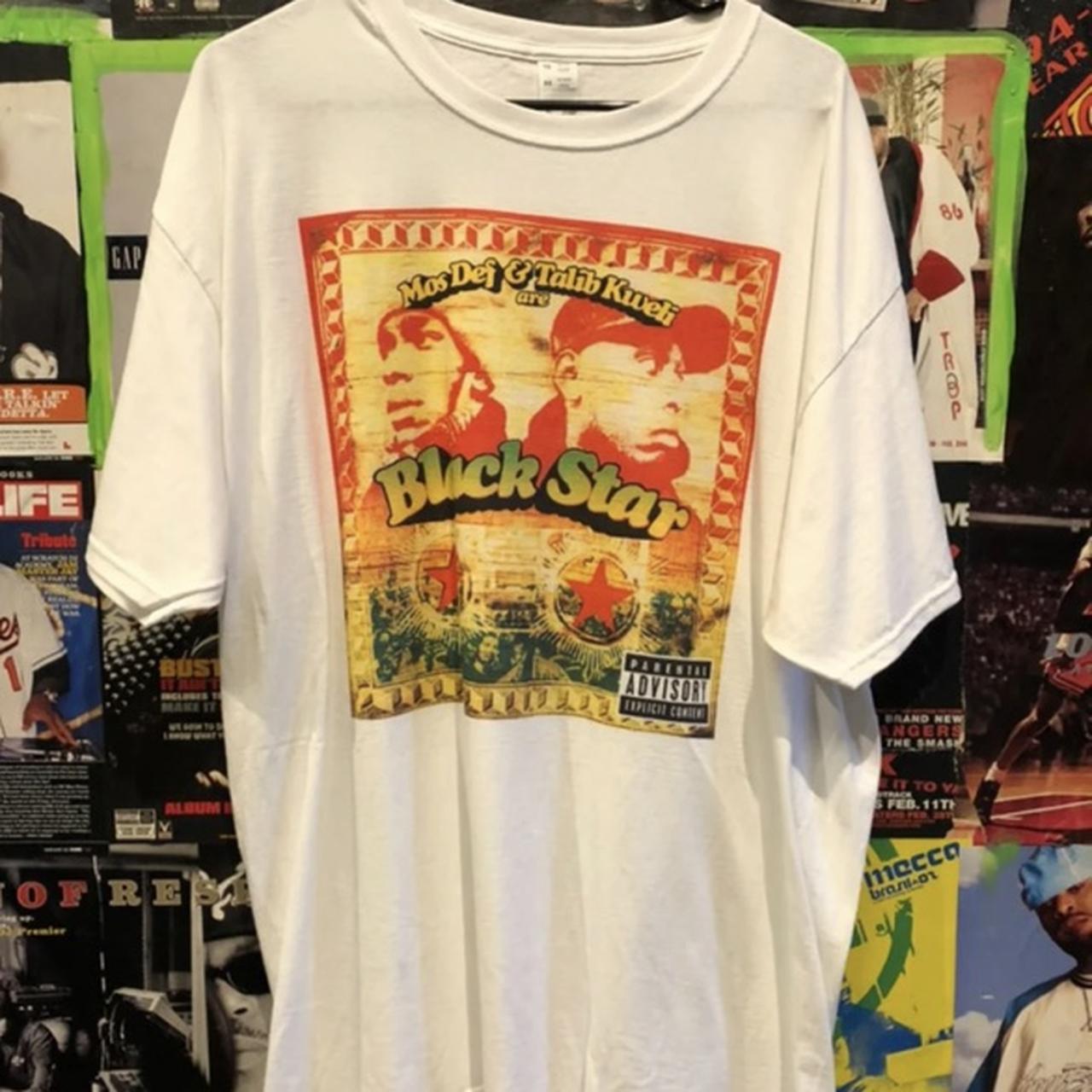
Brooklyn. 1998. The center of the hip-hop universe was shifting, or maybe it was just expanding into something more thoughtful than the shiny suit era allowed. While the radio was obsessed with Bad Boy’s glitz, two guys with glasses and a library’s worth of vocabulary were quietly crafting an album that would basically redefine what "conscious" rap looked like. Black Star, the legendary duo of Mos Def (now Yasiin Bey) and Talib Kweli, didn't just drop an album; they dropped a cultural manifesto.
They were young. They were hungry. Honestly, they were kind of the perfect foil to each other. Mos had this elastic, melodic flow that could turn into a hook at any second, while Kweli was the technical wizard, cramming more syllables into a bar than most people can fit into a paragraph. When Mos Def & Talib Kweli Are Black Star hit the shelves via Rawkus Records, it wasn't a chart-topper immediately. It was better. It was a slow burn that eventually became the blueprint for every "thinking man's" rapper from Lupe Fiasco to Kendrick Lamar.
The Rawkus Era and the Birth of a Movement
Rawkus Records was the lightning rod. Without that specific label at that specific time, Black Star might have just been two talented solo artists doing features for each other. Instead, they became a brand. They were the "Definition" of Brooklyn hip-hop.
You've probably heard that track—"Definition." It samples "The P is Free" by KRS-One, but it's not just a tribute. It’s a reclamation. At the time, hip-hop was mourning the losses of Biggie and Pac. The atmosphere was heavy. Black Star walked in and basically said, "We can be smart, we can be street, and we can be joyful all at once." They didn't preach. They observed.
Respiration, featuring Common, is arguably one of the greatest rap songs ever written. Period. The way it captures the claustrophobia and the beauty of city life is almost cinematic. "The city sleeps with one eye open / Gripping her pillow tightly." That’s poetry. It isn't just rhyming; it’s a vivid painting of 11:30 PM in a neighborhood that never stops breathing.
What Most People Get Wrong About the "Conscious" Label
People love to put Black Star in a box. They call it "backpack rap" or "conscious hip-hop."
That’s a bit reductive.
Calling them "conscious" implies that everyone else was asleep, which isn't really fair to the complexity of 90s rap. What Yasiin Bey and Kweli did was focus on Afrocentricity and pan-Africanism without being exclusionary. They were reading Frantz Fanon and Morrison, sure, but they were also kids who grew up on the park jams. They weren't trying to be "holier than thou." They were just trying to be honest.
Interestingly, the duo almost didn't happen as a full-length project. Initially, they were just supposed to do a few songs together for a compilation. But the chemistry was so undeniable that the label pushed for a full album. It was a lucky break for us. If they hadn't committed to the full project, we wouldn't have "Astronomy (8th Light)," a song that flips the script on the color black—associating it with light and stars rather than darkness or void. It was a radical act of self-love in a medium that was increasingly focused on nihilism.
The 24-Year Wait for No Fear of Time
For over two decades, being a Black Star fan was a test of patience. We got solo masterpieces like Black on Both Sides and Quality. We got a few guest verses here and there. But a follow-up album? It felt like a myth.
Then came 2022.
No Fear of Time dropped, but not on Spotify or Apple Music. They put it on Luminary, a subscription podcast platform. People were mad. They wanted the convenience of the big streamers. But if you know anything about Yasiin Bey, you know he’s been fighting against the "devaluation" of art for years. He didn't want the album to be a fraction of a cent per stream. He wanted people to actually seek it out.
The album itself, produced entirely by Madlib, is a strange, shimmering, lo-fi journey. It doesn't sound like 1998. Thank God for that. It sounds like two grown men who have traveled the world and seen how the industry works. It’s dense. It’s experimental. It’s basically a middle finger to the algorithm. Madlib’s production is dusty and erratic, which forces you to lean in and listen. It’s not background music for a workout; it’s a sit-down-and-process-this experience.
Why They Are Still Relevant in 2026
You might wonder why a group with only two albums in 25 years still commands so much respect. It's the integrity. In a world where every artist is trying to go viral on TikTok, Black Star remains stubbornly committed to the craft.
- They proved that lyricism can be commercially viable without selling out.
- They bridged the gap between the Native Tongues (De La Soul, Tribe Called Quest) and the modern era.
- They showed that "political" rap doesn't have to be boring or sonically flat.
Think about the landscape now. We see artists like J. Cole or Rapsody carrying that torch. That lineage traces directly back to the 1100 Fulton St. vibes of the late 90s. Black Star taught a generation that you don't have to choose between being an intellectual and being a "real" rapper. You can be both. You should be both.
The Cultural Impact Beyond the Music
It’s not just about the bars. It’s about the aesthetic. Mos Def’s transition into acting—think The Hitchhiker's Guide to the Galaxy or Dexter—brought a different kind of visibility to the group. Meanwhile, Kweli became a fixture in social justice circles and a prolific podcaster.
They represent a specific type of Black excellence that is rooted in the "each one teach one" philosophy. When you listen to a Black Star record, you usually end up Googling a book title or a historical figure. They make you want to be smarter. That’s a rare gift in entertainment.
There were rumors of a project with Kanye West at one point (the "liberation" leak), but like many things in the Black Star universe, it remained shrouded in mystery and half-finished sessions. That’s part of the allure. They aren't a content factory. They are an event.
Actionable Steps for Exploring the Black Star Legacy
If you’re just catching up or want to dive deeper into the world of Yasiin Bey and Talib Kweli, don't just hit shuffle on a playlist. Do it right.
Start with the Source Material
Listen to the 1998 self-titled album from start to finish. Do not skip the skits. The intro sets the tone for the entire philosophy of the group. Pay attention to the transitions between "K.O.S. (Determination)" and "Brown Skin Lady."
Check the Solo Foundations
To understand why Black Star works, you have to see the individual parts. Listen to Mos Def’s Black on Both Sides and Talib Kweli’s Reflection Eternal: Train of Thought (with Hi-Tek). These albums were recorded around the same era and provide the context for their creative peak.
Watch the Chapelle Connection
Dave Chappelle has been a long-time champion of the group. Track down the "Block Party" documentary. Watching them perform "Definition" in the rain in Brooklyn is the purest distillation of their energy you will ever find. It’s a moment in time that hasn't aged a day.
Explore the Luminary Release
If you have the means, find No Fear of Time. It requires a different headspace. It’s more of a jazz record in spirit than a traditional boom-bap album. Listen to it on good headphones so you can catch the subtle textures in Madlib’s production.
Support Independent Media
The reason Black Star moved to Luminary was to protest the way tech companies treat musicians. If you value the art, look for ways to support the artists directly, whether through Bandcamp, official merchandise, or live shows. The duo still tours occasionally, and their live chemistry is often better than the studio recordings because they play off each other's improvisations.
The legacy of Black Star isn't found in record sales or Grammys. It’s found in the way people talk about them in barbershops and university classrooms alike. They are the rare example of a group that stayed true to their original mission: to shine a light in the dark.