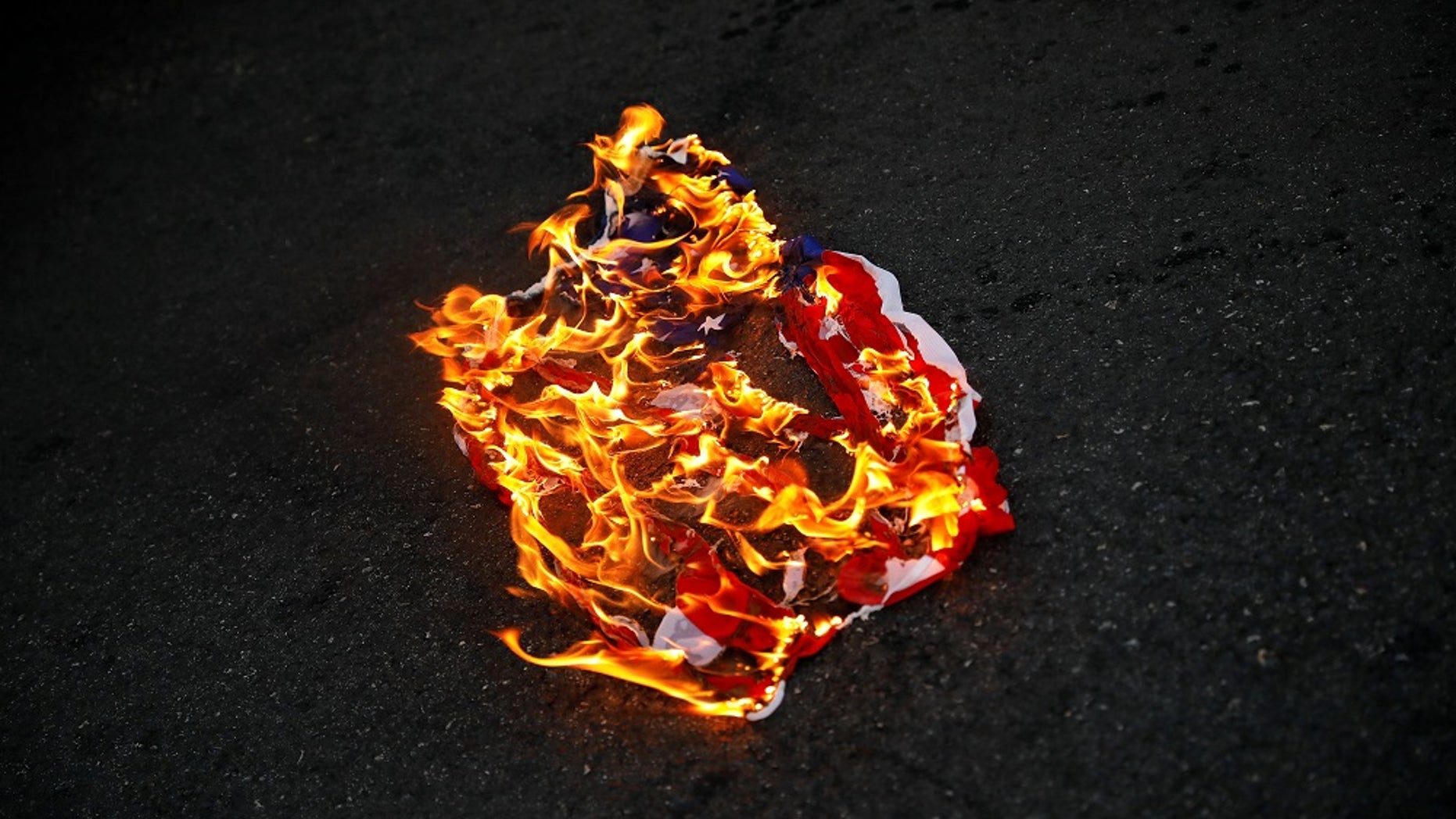
It is the kind of image that makes your blood pressure spike instantly. Someone stands in a public square, flicks a lighter, and watches the Stars and Stripes catch fire. For millions of people, it feels like a physical punch to the gut. It’s visceral. It’s messy. It’s deeply offensive to veterans and families who see that fabric as a shroud for fallen heroes. But here’s the thing that trips people up: in the United States, burning the American flag is perfectly legal.
Seriously.
You might hate it. You might want to see someone arrested for it. But the Supreme Court has been remarkably clear on this for decades. It isn’t about whether the act is "nice" or "respectful." It’s about whether the government has the power to stop you from expressing an opinion, even an ugly one.
The Court Case That Changed Everything
Most people assume there’s some old law on the books that forbids this. There used to be. In fact, 48 out of 50 states had laws against flag desecration for a long time. Everything shifted in 1984 during the Republican National Convention in Dallas. A man named Gregory Lee Johnson soaked a flag in kerosene and set it on fire while protesters chanted. He was arrested, fined, and sentenced to a year in prison.
He appealed.
The case, Texas v. Johnson (1989), eventually landed in front of the Supreme Court. The justices had to decide if burning the American flag was "symbolic speech." Justice William Brennan wrote the majority opinion, and he didn't mince words. He basically said that if there is a bedrock principle underlying the First Amendment, it’s that the government cannot prohibit the expression of an idea just because society finds the idea itself offensive or disagreeable.
It was a 5-4 decision. Not a landslide. It divided the court in ways that didn't follow typical party lines. Interestingly, Justice Antonin Scalia—a staunch conservative—voted with the majority to protect the right to burn the flag. He famously said later that he hated doing it, but he felt the Constitution left him no choice.
Why We Get Confused About "Flag Code"
You’ve probably heard of the U.S. Flag Code. It’s a real set of federal guidelines. It tells you not to let the flag touch the ground, not to wear it as apparel (though everyone does on the 4th of July), and—get this—how to properly destroy a flag.
Wait.
The Flag Code actually recommends burning the American flag as the preferred method of disposal when it is "in such condition that it is no longer a fitting emblem for display." If a flag is tattered or gray, the American Legion and the VFW hold dignified ceremonies where they burn them.
So, the act of burning isn't the problem. The law cares about the intent.
If you burn it to retire it, you’re a patriot. If you burn it to protest a war or a president, you’re a dissenter. Under the First Amendment, the government can't punish you for the "protest" version while praising the "retirement" version. That’s called viewpoint discrimination.
Congress Tried to Fight Back
People were furious after the 1989 ruling. Like, "constitutional amendment" level furious. Immediately after the Johnson decision, Congress passed the Flag Protection Act of 1989. They tried to bypass the court by making it a federal crime to desecrate the flag regardless of the "message" intended.
It lasted about five minutes.
The very next year, in United States v. Eichman (1990), the Supreme Court struck down that federal law too. They doubled down. Since then, there have been dozens of attempts to pass a "Flag Desecration Amendment." To change the Constitution itself. It usually passes the House with a huge margin because no politician wants to be seen as "pro-flag burning." But it almost always dies or stalls in the Senate.
The Loophole: When Can You Get Arrested?
Just because the act is "protected speech" doesn't mean you have a total free pass to do whatever you want. This is where the nuance kicks in. You can’t just walk onto someone else’s property, steal their flag, and light it on fire.
That’s theft. That’s arson.
If you start a massive bonfire in the middle of a dry forest or a crowded sidewalk, you can be arrested for:
- Reckless endangerment.
- Disturbing the peace.
- Violating local burn bans.
- Inciting a riot (if your actions are specifically directed to inciting or producing imminent lawless action).
The police won't bust you for the message on your flag; they’ll bust you because you’re creating a public safety hazard. It's a fine line, but it's an important one. Honestly, most "flag burning" arrests you see in the news today end up being dismissed or downgraded because the cops overreach on the "desecration" aspect rather than sticking to the "public safety" aspect.
The Global Perspective
If you tried burning the American flag—or any national flag—in other countries, the outcome would be very different.
In France, you can face a massive fine for degrading the "Tricolore" during a government-organized event. In Germany, insulting the federal flag can land you in prison for up to three years. We are somewhat unique in our radical protection of expression.
Justice Anthony Kennedy, in his concurrence for the Johnson case, wrote something pretty profound about this struggle. He admitted that it is "poignant but fundamental" that the flag protects those who hold it in contempt. Basically, the flag is so powerful that it even protects the right of people to destroy it.
That’s a hard pill to swallow for a lot of folks.
What to Do If You See It Happening
If you encounter someone burning the American flag, your instinct might be to rush in and grab it. Don't. From a legal standpoint, that flag is likely their personal property. If you take it, you’re the one committing a crime (theft or assault).
The most effective "counter-speech" isn't violence. It's more speech.
History shows that flag burning as a protest tactic often backfires. It tends to alienate the average person rather than winning them over to a cause. If the goal of a protester is to gain sympathy, burning the most sacred symbol of the nation is usually a strategic failure.
Real-World Insights for Handling the Issue
- Check Local Ordinances: If you are planning a protest (or observing one), remember that "incendiary device" laws and "open flame" permits are the primary ways the government regulates these events legally.
- Property Rights Matter: The First Amendment protects your right to burn your own flag. It does not protect you if you take a flag from a post office, a neighbor's porch, or a car.
- Documentation is Key: In modern legal disputes regarding protests, video evidence usually determines whether an arrest was based on "speech" (illegal to suppress) or "conduct" (legal to regulate).
- Support Veterans Groups: If the sight of a burning flag bothers you, the most productive outlet is often supporting organizations like the USO or the Wounded Warrior Project, which focus on the people the flag represents rather than the fabric itself.
The reality of American law is that it prioritizes the "marketplace of ideas" over the sanctity of symbols. It’s a messy, loud, and often offensive system. But it’s the system we have. Understanding the difference between what is "offensive" and what is "illegal" is the first step in navigating the complex world of American civil liberties.