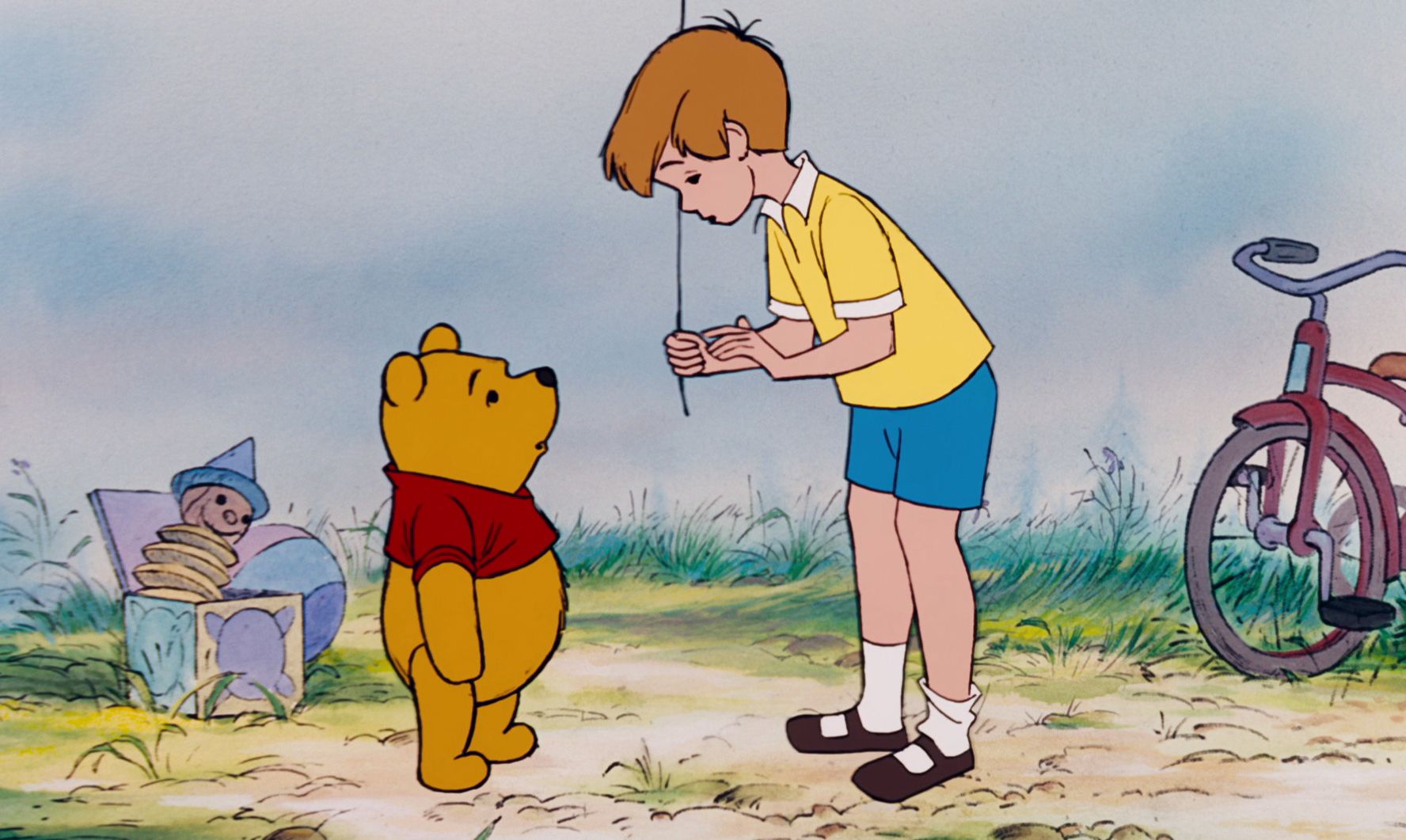
Everyone knows the image. A small, golden-haired boy in a smock, holding hands with a chubby bear as they wander through the Hundred Acre Wood. It’s the ultimate picture of childhood innocence. But for the real-life Christopher Robin Milne, that image wasn't a cozy memory. Honestly, it was more like a cage.
While the world fell in love with Christopher Robin and Winnie the Pooh, the actual boy behind the stories spent decades trying to escape his own name. Imagine being six years old and becoming the most famous child on the planet, only to find out that the world doesn't want you—it wants the "dream" version of you your father wrote about.
The Real Toys in the Nursery
Most people think A.A. Milne just made up the stories from thin air. He didn't. Most of the magic actually came from Christopher’s mother, Daphne, who spent hours playing with him in the nursery and relaying the "plots" to her husband.
The toys were very real. On his first birthday in 1921, Christopher received a 10-inch Alpha Farnell teddy bear from Harrods. At first, he called it Edward. The name "Winnie" came later, inspired by a real-life Canadian black bear named Winnipeg that Christopher obsessed over at the London Zoo. The "Pooh" part? That was actually the name of a swan he met on vacation.
By the time the books were being written, the nursery was crowded:
- Piglet was a gift from a neighbor.
- Eeyore arrived at Christmas in 1921 (and yes, he was already missing his tail's perkiness).
- Tigger, Kanga, and Roo were later additions to the collection.
Interestingly, Rabbit and Owl weren't toys at all. A.A. Milne and the illustrator E.H. Shepard just invented them to round out the cast. If you want to see the originals today, you have to go to the New York Public Library. They’ve lived there since 1987, though they look a bit more "well-loved" (read: mangy) than the Disney versions most of us grew up with.
Why the Real Christopher Robin Resented the Fame
For the first few years, Christopher actually liked the attention. He sang songs for crowds and posed for photos. It felt like a game. But things turned dark once he hit boarding school at age nine.
Kids are mean. We know this. But they were especially brutal to the boy who "said his prayers" in a world-famous poem. His classmates would play his own audio recordings on a gramophone just to mock him. He eventually got so fed up that he took up boxing just to defend himself.
By the time he reached adulthood, the resentment had hardened into something much heavier. He felt like his father had "filched" his name. In his memoir The Enchanted Places, he wrote a line that still stings: "It seemed to me, almost, that my father had got to where he was by climbing upon my infant shoulders."
He struggled to find a career because employers didn't see a man; they saw a storybook character. He was a war veteran, a talented craftsman, and a dedicated husband, but to the public, he was always just the boy with the bear.
The Complicated Bond with A.A. Milne
It’s easy to paint A.A. Milne as a cold-hearted exploiter, but the truth is muddier. Milne was a WWI veteran who suffered from what we now recognize as PTSD. He wrote the Pooh books as an escape into a world where nothing truly bad ever happened.
Ironically, Milne didn't even like being known as a children's author. He was a playwright and a political satirist who felt trapped by the bear's success just as much as his son did.
The family dynamic was... complicated.
- The Nanny: For the first nine years of his life, Christopher's primary bond was with his nanny, Olive Brockwell. She was the one who actually raised him.
- The Mother: Daphne was the creative spark, but she and Christopher became deeply estranged later in life.
- The Marriage: Christopher ended up marrying his first cousin, Lesley de Sélincourt. His parents hated the match, which effectively severed what was left of their relationship.
More Than a Childhood Character
Despite the "bitter son" narrative that often pops up in documentaries, Christopher Robin Milne eventually found his own peace. He moved to Dartmouth and opened a bookstore called the Harbour Bookshop. He lived a quiet life, worked with his hands, and became a father to a daughter, Clare, who had cerebral palsy.
He didn't hate the books forever. In his sixties, he admitted he could look at them without flinching. He even helped save the Ashdown Forest—the real-life inspiration for the Hundred Acre Wood—from being turned into an oil exploration site. He used his "empty fame" to protect the trees he used to climb.
Actionable Insights for Pooh Fans
If you're looking to connect with the real history of Christopher Robin and Winnie the Pooh, skip the cartoon marathons for a second and try these:
- Read the Memoirs: If you want the real story, read The Enchanted Places by Christopher Milne. It’s beautifully written and surprisingly fair to his father.
- Visit the Real Forest: You can still visit Ashdown Forest in East Sussex. You can play Poohsticks at the actual bridge (Posingford Bridge) and see "Galleon's Lap."
- See the Toys: If you're in NYC, the original stuffed animals are in the Children's Center at the 42nd Street Library. They are free to view and provide a much more "human" perspective on the legends.
The story of Christopher Robin isn't a tragedy, but it isn't a fairy tale either. It's a very human account of what happens when your private childhood becomes public property. In the end, he didn't want to be a hero; he just wanted to be himself.
Next Steps for You
- Visit the New York Public Library website to see the digital archive of the original toys' restoration process.
- Look up the Ashdown Forest tourism site to map out a walk through the real-life locations that inspired the 100 Aker Wood.
- Check out the 1920s illustrations by E.H. Shepard to see how the "real" Pooh looked before he got his iconic red shirt.