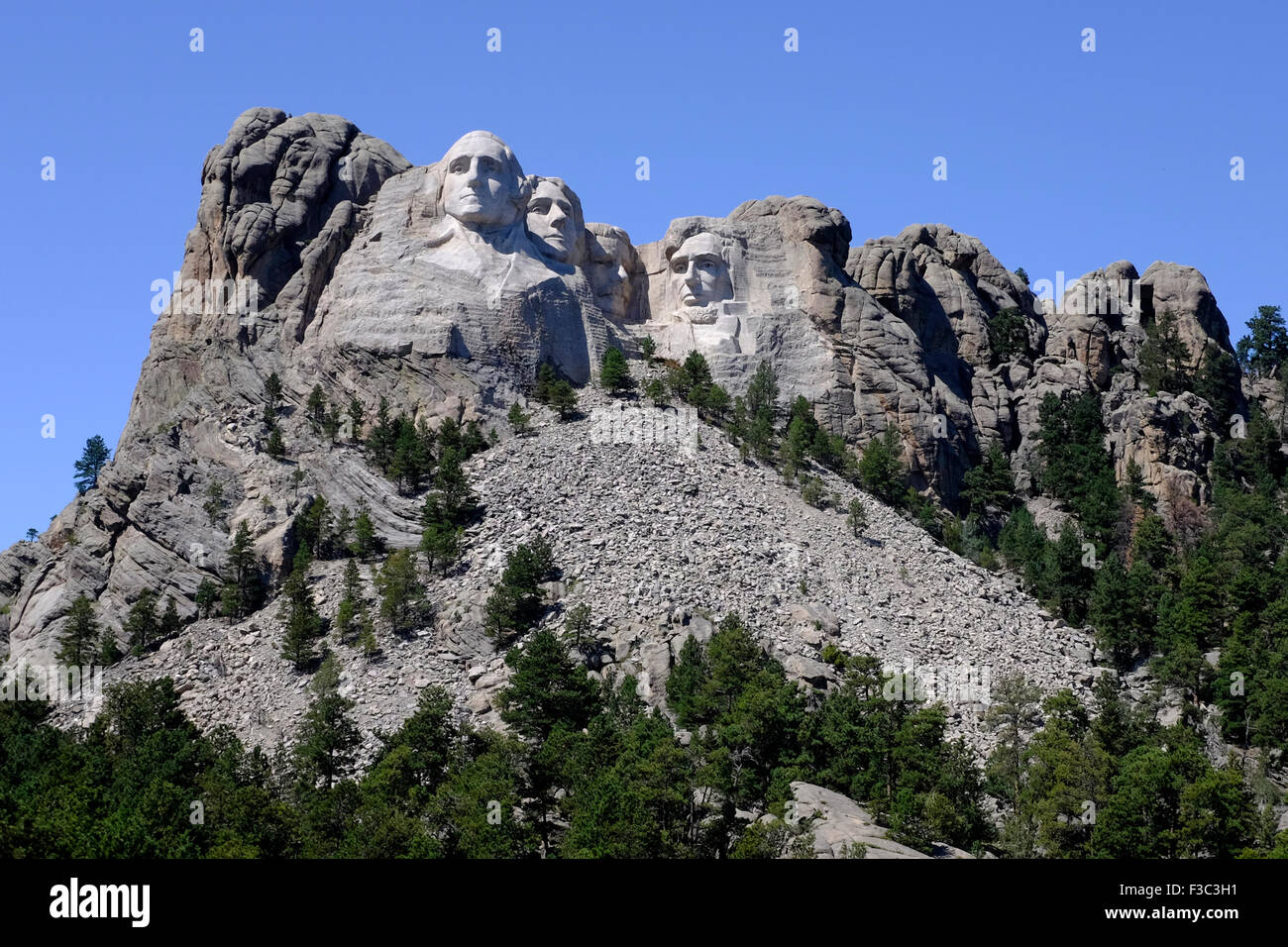
You’re driving through the Black Hills, maybe just left the gift shop at Mount Rushmore, and you see it. A massive, jagged granite face staring out from a mountain just 17 miles away. It’s huge. Honestly, it makes those four presidents down the road look kinda small by comparison. This is the Crazy Horse Memorial, the massive Indian monument near Rushmore that has been under construction since 1948. It’s a project defined by grit, controversy, and a timeline that spans generations.
People always ask the same thing: "When will it be finished?" The short answer? Probably not in our lifetime. But to understand why, you have to look at the sheer scale of what they’re trying to do out there in Custer County. We aren't just talking about a face. The goal is a full-body sculpture of the Lakota warrior Crazy Horse sitting on his horse, pointing toward his lands. If it’s ever completed, it will be the largest sculpture in the world.
The Letter That Started a Mountain Carving
It all began with a letter. In 1939, Lakota Chief Henry Standing Bear wrote to a Polish-American sculptor named Korczak Ziolkowski. Ziolkowski had actually worked briefly on Mount Rushmore under Gutzon Borglum, but he didn't exactly love the experience. Standing Bear's request was simple but heavy: "My fellow chiefs and I would like the white man to know that the red man has great heroes, too."
Standing Bear didn't want a government-funded project. He wanted a tribute.
Korczak arrived in the Black Hills with almost nothing. He was 40 years old when he started blasting rock in 1948. He had 174 dollars in his pocket. He spent the rest of his life living in a log cabin at the foot of the mountain, raising ten children with his wife, Ruth, all of whom ended up involved in the blastings and the business.
It was a staggering undertaking for one man. He used a hand-me-down compressor and climbed hundreds of wooden stairs every single day just to reach the top. There was no heavy machinery at first. Just a man, some dynamite, and a vision that most people thought was totally insane.
Why the Indian monument near Rushmore isn't finished yet
If you visit today, you’ll see the face. It was dedicated in 1998. It's 87 feet tall. For context, the heads on Mount Rushmore are about 60 feet tall. So, the face of Crazy Horse alone is already bigger than George Washington's entire head.
But why is it taking so long?
Money. This is the big one. Korczak Ziolkowski was fiercely independent. He twice turned down 10 million dollars in federal funding from the government. Why? Because he didn't trust the feds to keep the vision pure. He believed that if the government paid for it, they’d eventually take it over or shut it down. To this day, the project is funded entirely by admission fees and private donations. No tax dollars.
The Rock. Geology is a nightmare. Unlike the relatively stable granite of Mount Rushmore, the rock at Thunderhead Mountain is full of "vugs" and iron seams. These are basically air pockets or weak spots that can cause massive chunks of the mountain to fall off unexpectedly. Every time they blast, they have to be incredibly careful not to ruin the structural integrity of the horse’s arm or the warrior's hand.
Scale. The finished product is intended to be 641 feet long and 563 feet high. That is nearly two football fields long. You can't just "carve" that. You have to move millions of tons of rock. Since 1948, they’ve moved over 10 million tons of granite.
The work has shifted now to the "Thinning and Finishing" stage of the hand and the horse's head. It’s slow, meticulous work using thermal torches that flake away the rock at 4,000 degrees Fahrenheit. It isn't just about blasting anymore; it's about surgery on a mountain.
More Than Just a Carving: The Mission
A lot of tourists miss the point of the Indian monument near Rushmore if they just look at the mountain and leave. The Ziolkowski family and the Crazy Horse Memorial Foundation aren't just building a statue. They’re building a campus.
The site currently houses the Indian Museum of North America. It’s one of the most comprehensive collections of indigenous art and artifacts in the country. They also established the Indian University of North America. Students can actually earn college credits there while working and living on-site.
The vision was always "The Three-Fold Purpose":
- The Mountain Carving.
- The Museum.
- The Medical and Training Center for American Indians.
When you pay your entrance fee, you aren't just paying to see a face in the rock. You're funding a scholarship. You're keeping a museum open. You're supporting a legacy that seeks to offset the narrative of the monument just a few miles away.
The Controversy You Won't Hear in the Gift Shop
It’s not all praise and progress. Honestly, the monument is controversial within the Native American community itself.
Some Lakota people, including descendants of Crazy Horse like Elaine Quiver, have argued that the monument is an insult. Crazy Horse was a man who famously refused to have his picture taken. He lived a life of humility. He didn't want to be captured in an image. Carving his likeness into a massive mountain—the very mountains the Lakota consider sacred—feels like a contradiction to some.
Then there's the environmental aspect. People ask: "Is it right to blast a mountain into rubble to honor a man who loved the land?"
There are also critics who point to the Ziolkowski family. For decades, the project was run almost exclusively by Korczak’s widow and their children. Some outsiders felt it had become a "family business" rather than a true indigenous project. However, in recent years, the board of directors has diversified, and more Native American voices are leading the direction of the foundation.
Despite the friction, the monument remains a site of pilgrimage. Thousands of indigenous people visit every year. For many, it is a necessary counterbalance to Mount Rushmore, which was carved into the Paha Sapa (Black Hills)—land that was taken from the Lakota in violation of the 1868 Treaty of Fort Laramie.
What to Expect When You Visit
If you’re planning a trip to see this Indian monument near Rushmore, don't expect a quick 20-minute stop.
The visitor center is massive. You should start by watching the orientation film. It’s a bit dated, sure, but it gives you the emotional context of Korczak’s struggle. Then, walk through the museum. The beadwork and quillwork on display are world-class.
Pro Tip: If you want to get closer to the mountain, you have to pay for the bus ride to the base. It’s worth the extra few bucks. You can't hike to the top of the carving unless you're there for the "Volksmarch." This happens twice a year—usually in June and September—and it’s the only time the public can actually walk out onto the arm of Crazy Horse. It’s a 10K hike, and the views are insane.
Also, check the schedule for the "Legends in Light" laser show. During the summer, they project a massive light show onto the mountain at night. It tells the story of the Native American heritage in a way that’s actually pretty moving, even if it feels a bit "touristy" at times.
Looking Forward: The Horse's Head
Right now, the focus is the horse's head. Engineers and carvers are working on the "blocking out" phase. If you look closely with binoculars, you can see the white lines painted on the rock. Those are the guides for the next series of precision blasts.
The progress feels glacial. If you visited ten years ago, it might look exactly the same to the naked eye. But look at the photos from the 1980s compared to now. The transformation is undeniable.
The Indian monument near Rushmore is a lesson in patience. In a world of instant gratification and 48-hour construction cycles, Crazy Horse stands as a reminder that some things take centuries.
Actionable Insights for Your Trip:
- Timing: Visit in the early morning. The sun hits the face of the mountain directly, making for the best photos. By late afternoon, the face is often in shadow.
- The Volksmarch: If you are physically able, plan your entire South Dakota trip around the spring or autumn Volksmarch. It is the only way to stand on the mountain and truly grasp the scale.
- Support the Artists: The gift shop has standard souvenirs, but there is also a section for authentic Native American made-to-order crafts. Buying directly from the artists in the center helps support the local community.
- Read Up: Before you go, read "Sprit of Crazy Horse" by Peter Matthiessen. It’ll give you the political and historical backbone you need to understand why this mountain matters so much to the people of the Great Plains.
- Stay in Custer: Instead of staying in the tourist trap of Keystone (near Rushmore), stay in the town of Custer. It’s closer to Crazy Horse, has better food, and feels a lot more authentic to the Black Hills experience.
The Crazy Horse Memorial isn't just a pile of rocks. It’s a complicated, beautiful, and stubborn piece of American history. Whether it ever gets finished isn't really the point. The point is that they’re still digging.