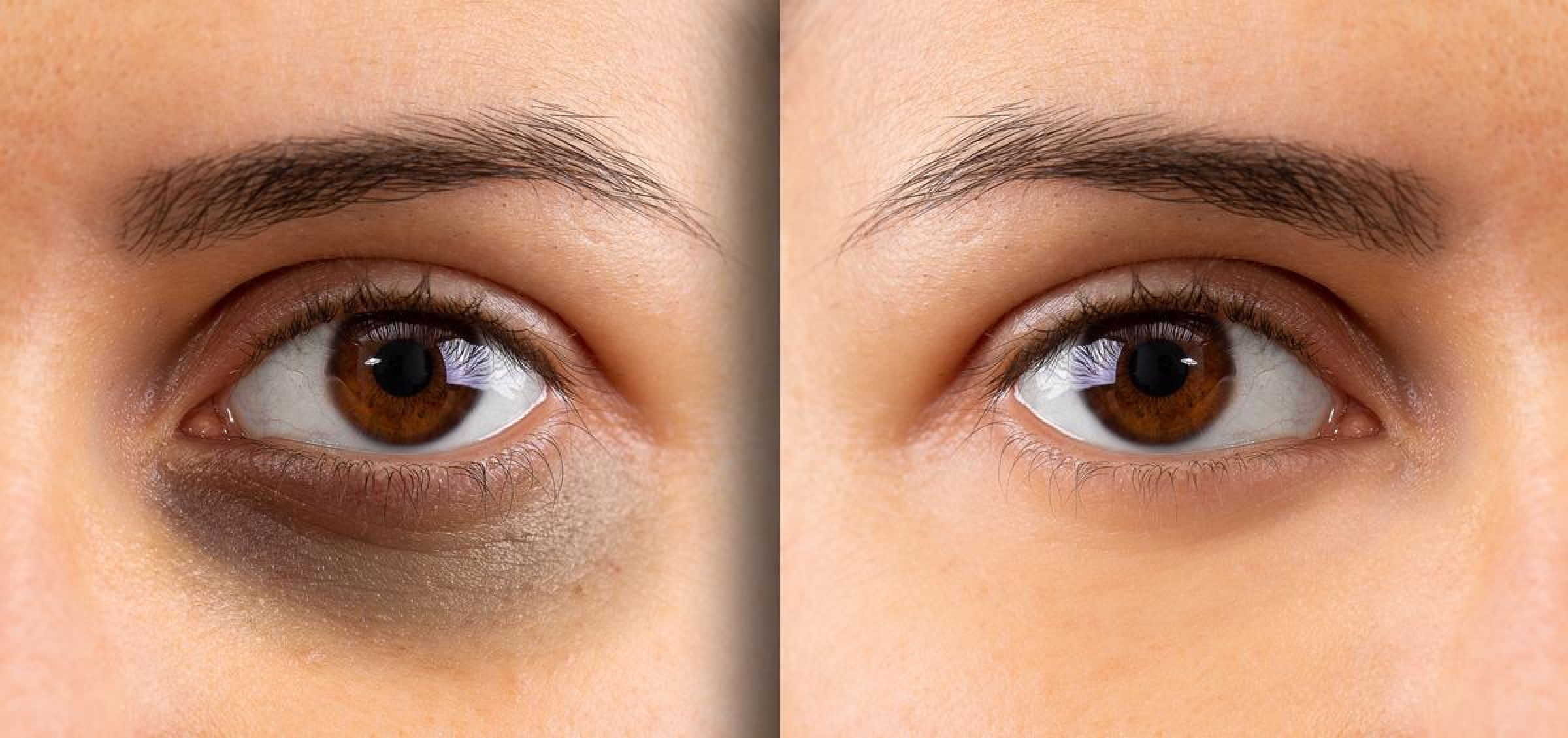
You’ve tried the cold spoons. You’ve spent a small fortune on caffeine-infused rollers and "miracle" creams that claim to brighten your skin overnight, yet you still look like you haven't slept since 2012. It’s frustrating. Looking tired when you’re actually full of energy is a specific kind of annoyance that topical skincare rarely fixes. This is because, for a lot of us, those shadows aren't actually about skin pigment or sleep deprivation. They're about anatomy. When the creams fail, people start looking into dark eye circle removal surgery, a broad term that usually refers to a lower blepharoplasty or fat repositioning.
But here is the thing: surgery isn't a magic wand for every type of dark circle.
If your "circles" are actually just hyperpigmentation—meaning the skin itself is darker—surgery won't do much. You'd be better off seeing a dermatologist for a chemical peel or Q-switched laser treatment. However, if your shadows are caused by bulging fat pads or a deep "tear trough" (that little hollow groove under the eye), surgery is often the only thing that actually works. It's about physics, not just aesthetics.
Why the "Circle" is Usually a Shadow
Think about how a mountain casts a shadow on a valley. That is exactly what is happening on your face. As we age, the septum (the membrane that holds fat in place around the eye) weakens. The fat starts to protrude, creating "bags." Below those bags, you usually have a loss of volume, creating a physical dip. When overhead light hits your face, the bag casts a shadow into the dip.
That shadow? That's your dark circle.
No cream can remove a physical shadow. Dark eye circle removal surgery addresses this by either removing the excess fat or, more commonly now, "repositioning" it. Expert surgeons like Dr. Guy Massry or Dr. Kami Parsa often talk about the "fat transposition" technique. Instead of just cutting out the fat and leaving the eye looking hollow or "surgical," they move that fat into the hollow tear trough. You’re basically using your own tissue as a permanent filler. It’s a clever bit of biological recycling.
The results are usually far more natural than the aggressive "fat stripping" surgeries of the 90s. Back then, doctors took out too much fat, and patients ended up looking like they had sunken sockets ten years later. Modern techniques are much more conservative. They focus on creating a smooth, flat transition from the lower lid to the cheek.
The Reality of the Operating Room
It's a weird sensation, honestly. Most people opt for "twilight" sedation (IV sedation) rather than full general anesthesia. You're breathing on your own, you're relaxed, and you don't care what's happening, but you aren't "under" in the traditional sense.
The surgeon usually makes a "transconjunctival" incision.
This is a fancy way of saying they cut inside the eyelid. No external scar. Nothing. If you have a lot of loose, crepey skin, they might make a tiny cut just below the lash line (subciliary incision) to trim the excess, but the "inside-out" approach is the gold standard for most people just trying to fix the shadows.
It takes about an hour. You go home the same day.
The Recovery Timeline (What They Don't Always Tell You)
Social media makes it look like you’ll be red-carpet ready in four days. You won't.
- Day 1-3: You’ll look like you went twelve rounds with a heavyweight champion. Swelling is intense. Your eyes might feel tight.
- Day 7: Stitches (if any) come out. Bruising starts turning that lovely shade of yellowish-green.
- Day 14: Most people can return to work with a bit of concealer.
- Month 3: This is the "real" result. Residual swelling inside the tissue takes a long time to settle.
What Can Go Wrong? (The Nuance)
Surgery has risks. Period. With dark eye circle removal surgery, the biggest risk isn't usually "danger," but "dissatisfaction."
If a surgeon takes too much skin, you can end up with ectropion, where the lower lid pulls down and exposes the white of the eye. It's hard to fix. There’s also the risk of "hollowing." If the surgeon is too aggressive with fat removal, you might look great for two years, but as you age further, you’ll look skeletal. This is why choosing a board-certified ophthalmic plastic surgeon—someone who specifically specializes in the anatomy of the eye—is so vital. General plastic surgeons are great, but the eye is a specialized beast.
Also, let's talk about the "Snap Test." Surgeons do this during your consult. They pull your lower lid down and see how fast it snaps back. If your skin is "lax" (doesn't snap back quickly), they might need to do a canthopexy to tighten the lid margin. If they don't, surgery could leave you with "droopy" looking eyes.
Cost vs. Value: Is It Worth the $5,000 to $10,000?
Price varies wildly based on geography and the surgeon's reputation. In NYC or Beverly Hills, you might pay $12,000. In smaller markets, $4,500. Insurance will almost never cover this because it's considered cosmetic unless the bags are so severe they’re interfering with your vision (which is rare for lower lids).
Compared to fillers?
Fillers like Restylane or Belotero are popular for the tear trough. They cost $800 to $1,500 a pop and last maybe 9 to 12 months. Over ten years, you'll spend more on fillers than you would on a single surgery. Plus, filler in the tear trough is notorious for the "Tyndall Effect," where the gel gives the skin a bluish tint—ironically making the dark circle look worse. Surgery is "one and done."
What Most People Miss
There is a subset of people whose dark circles are caused by "allergic shiners." If you have chronic allergies, the veins under your eyes dilate and show through the thin skin. Surgery won't fix this. Neither will cream. You need an antihistamine and a nasal spray.
Always check your thyroid and iron levels too. Anemia is a classic, boring cause of dark circles that no scalpel can fix.
If you’ve ruled out medical issues and you’re tired of the "you look tired" comments, dark eye circle removal surgery is statistically one of the highest-satisfaction cosmetic procedures. According to RealSelf data, it consistently maintains a "Worth It" rating above 90%. That’s higher than breast augmentations or rhinoplasty.
Actionable Next Steps for Success
If you're seriously considering this, don't just Google "plastic surgeon near me."
- Seek an Oculoplastic Surgeon: Look for membership in the American Society of Ophthalmic Plastic and Reconstructive Surgery (ASOPRS). These are surgeons who did ophthalmology first, then plastic surgery. They know the eye better than anyone.
- The Mirror Test: Tilt your head up while looking in a mirror under a bright overhead light. If the dark circle disappears when the light hits the hollow directly, it’s a shadow issue. You are a candidate for surgery. If the skin stays dark even when light hits it, it’s pigment. You need a laser, not a knife.
- Ask About Fat Transposition: During your consult, specifically ask: "Are you removing the fat or repositioning it?" Repositioning is generally better for long-term aging.
- Check the "Before and Afters" for Bone Structure: Look for patients who have a similar face shape to yours. If you have flat cheekbones, your results will look different than someone with high, prominent bones.
- Prep Your Recovery Kit: Buy a gel eye mask that can be chilled (not frozen), get some preservative-free artificial tears, and set up a sleeping area where you can keep your head elevated at a 45-degree angle for at least three nights. This reduces the initial "ballooning" phase of swelling.
Surgery is a big deal, but for the right person, it’s the difference between looking exhausted and looking like yourself again.