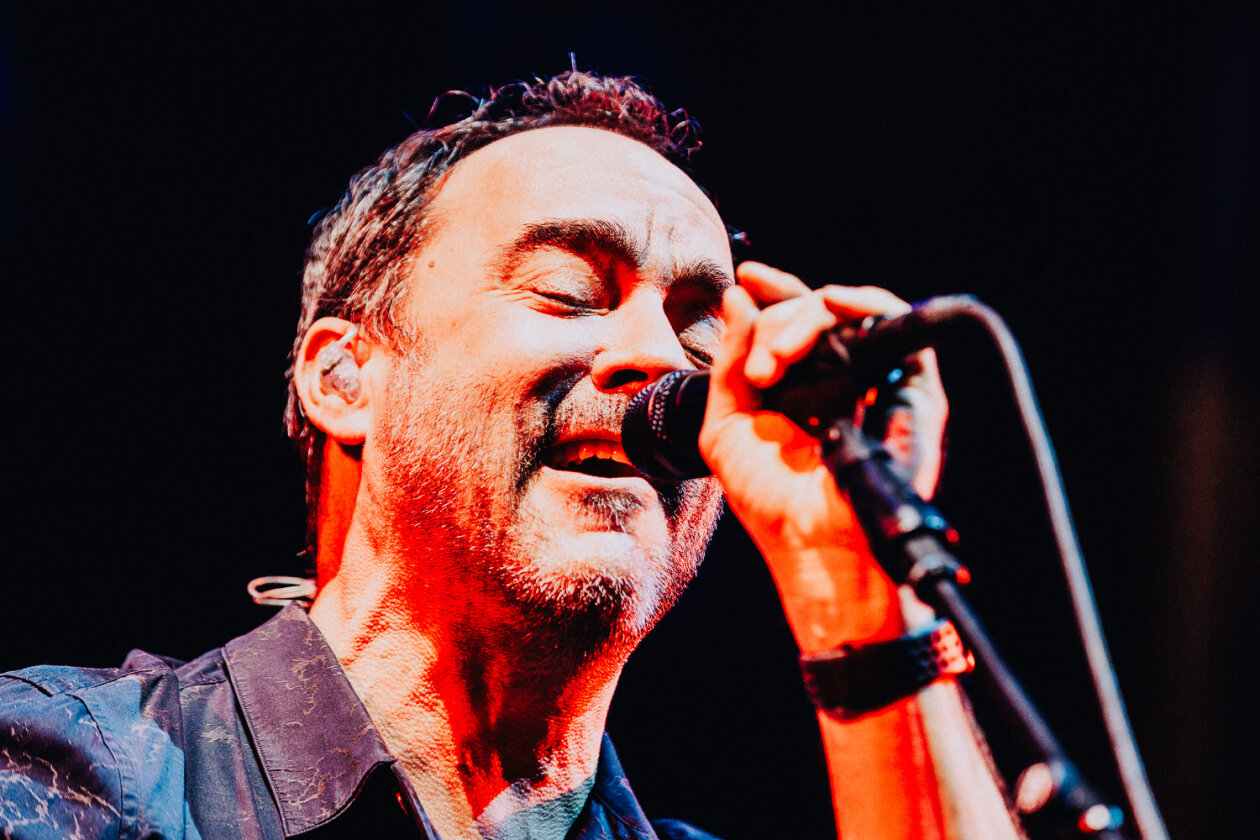
If you were alive and semi-conscious in 1996, you couldn’t escape it. That staccato acoustic strumming. The voice that sounded like a beautiful gravel pit. "Crash Into Me" was everywhere—proms, grocery stores, your older sister’s Sony Discman. For a lot of people, that’s where the story of the Dave Matthews Band discography begins and ends. A 90s relic. A "college rock" footnote.
Honestly? That's a massive mistake.
If you actually look at the numbers, DMB is a statistical anomaly. They’ve sold over 33 million albums in the U.S. alone. They were the first group in history to have seven consecutive studio albums debut at number one on the Billboard 200. Seven. Not even The Beatles did that.
The real magic isn't in the hits, though. It’s in the chaotic, sprawling mess of live releases, "lost" sessions, and a fan culture that treats a setlist like a holy text.
The Big Three: 1994 to 1998
Most people start with Under the Table and Dreaming (1994). It was their major-label debut, produced by Steve Lillywhite, who basically gave the band their signature "expensive but organic" sound. It went six-times platinum. But if you want to know what the band actually felt like in the early days, you have to go back to Remember Two Things (1993).
It was an independent release. It’s half-live, half-studio, and 100% Charlottesville energy. The cover is a Magic Eye poster—remember those? If you squinted hard enough, you saw a hand giving a peace sign. It's the most 90s thing ever.
Then came Crash in 1996. This is the one everyone knows. It’s slicker, darker, and features "So Much to Say," which won them a Grammy. But the real heads will tell you that Before These Crowded Streets (1998) is the peak of the Dave Matthews Band discography.
It’s dense. It’s moody. It has Bela Fleck on banjo and Alanis Morissette doing backing vocals. Songs like "The Dreaming Tree" aren't radio hits; they’re 10-minute explorations of loss and environmental decay. It was the last time the "classic" quintet felt like they were all pulling in the same direction before the weirdness of the 2000s hit.
The Glen Ballard Pivot and The Lost Tape
By 2000, the band was stuck. They’d spent months recording a new album with Steve Lillywhite, but they weren't happy. It was too "sad." So, they scrapped the whole thing and called in Glen Ballard, the guy who made Alanis Morissette a superstar.
The result was Everyday (2001).
Fans hated it. At first, anyway. Dave traded his acoustic guitar for a Baritone electric. The songs were short. There were no jams. "I Did It" was the lead single, and it sounded like... well, it didn't sound like DMB.
But here’s where it gets interesting. The scrapped recordings, known as The Lillywhite Sessions, leaked onto the internet via Napster. It was one of the first major "leaks" in music history. The songs were hauntingly beautiful—"Bartender," "Grey Street," "Grace Is Gone." The fan outcry was so loud that the band went back into the studio with Stephen Harris to re-record those songs properly. That became Busted Stuff (2002).
Basically, the fans bullied the band into releasing a better album. You’ve gotta love that.
Living (and Dying) on the Road
You can't talk about the Dave Matthews Band discography without mentioning the live albums. There are nearly 100 of them.
Why? Because back in the day, people were selling shitty, over-priced bootleg cassettes of their shows. To fight back, the band released Live at Red Rocks 8.15.95. It was a revelation. It proved that the studio versions were just blueprints. In concert, "Two Step" could go from a five-minute song to an eighteen-minute tribal drum war.
The Live Trax series is where the real gold is buried. If you're a casual listener, just grab The Central Park Concert (2003). There were over 100,000 people there. The energy is electric. If you want something more intimate, Live at Luther College (1999) features just Dave and his long-time collaborator Tim Reynolds. It’s just two guys and two guitars, but it sounds like an orchestra.
The Tragedy and the Pivot
In 2008, the band's world broke. LeRoi Moore, the founding saxophonist whose soulful, jazz-inflected lines defined their sound, died after complications from an ATV accident.
Most bands would have folded. Instead, they finished Big Whiskey & the GrooGrux King (2009). It’s a tribute to LeRoi. It’s loud, celebratory, and surprisingly heavy. It debuted at #1, obviously.
Since then, the discography has been a bit more spread out. Away From the World (2012) brought back Steve Lillywhite, which felt like a "homecoming." Come Tomorrow (2018) was a patchwork of sessions from various producers, but it still managed to break records. Most recently, Walk Around the Moon (2023) showed a band leaning into more psychedelic, tight arrangements.
How to Actually Listen to Them
If you're looking to dive in, don't just hit "shuffle" on a Greatest Hits playlist. That's a rookie move. The Dave Matthews Band discography is best experienced in chunks.
- The Gateway Drug: Start with Crash. It’s the easiest entry point.
- The Deep End: Listen to Before These Crowded Streets with good headphones.
- The Live Experience: Watch or listen to The Central Park Concert.
- The Solo Deviation: Check out Dave’s solo album Some Devil (2003). It’s darker, acoustic-heavy, and features "Gravedigger," which is arguably one of the best songs he’s ever written.
The reality is that DMB has outlasted almost every other band from their era. They didn't do it by following trends. They did it by building a massive, self-sustaining ecosystem of music that rewards people for paying attention.
To get started, your best bet is to find a copy of Under the Table and Dreaming—specifically the expanded edition. Listen to the studio track of "Ants Marching," then immediately go find a live version from 2024 or 2025. The way that song has mutated over thirty years tells you everything you need to know about why this band still matters to millions of people.