August 8, 1973, was sticky. It was that thick, oppressive Houston heat that makes your clothes feel like they're made of lead. In a small house at 2020 Lamar Street in Pasadena, Texas, a seventeen-year-old named Elmer Wayne Henley pulled a .22 caliber pistol and fired. Six shots. Dean Corll, the man the neighborhood kids called the "Candy Man," slumped to the floor. He was dead before he hit the linoleum.
That should have been the end of a simple homicide. Honestly, it was just the beginning of a nightmare that would leave America shaking.
When police showed up, Henley didn't just confess to the shooting. He started talking about others. He talked about a boat shed. He talked about beaches. He talked about "the boys." By the time the digging stopped, investigators had pulled 28 bodies from the Texas dirt. Some think the number is higher. It probably is. This is the story of Dean Corll, a predator who hid behind a bag of sweets and a polite smile, and the massive failure of a system that let him get away with it for three long years.
The Man Behind the Candy
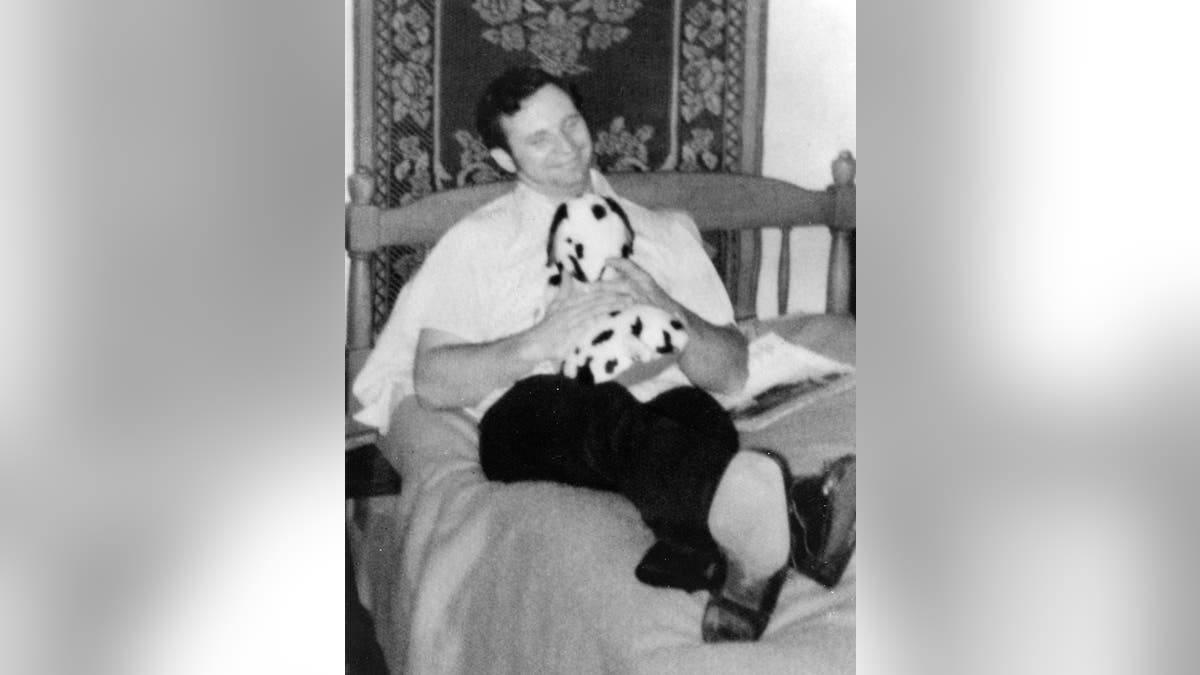
Dean Corll wasn't some shadowy figure lurking in an alleyway. People liked him. That’s the part that really messes with your head. He was a local businessman. His family owned the Corll Candy Company. He’d hand out free pralines and candy bars to the kids in Houston Heights. They’d follow him like he was the Pied Piper.
He was a vet. He’d served in the Army. He was an electrician. He was, by all accounts, a "nice guy."
But beneath that bland, 1970s exterior was something incredibly dark. Corll was a master of grooming. He didn't just snatch kids off the street; he built relationships. He used his candy factory—and later his home—as a hub where teenagers could hang out, play pool, and listen to music. He became a "brother-type" figure to them.
The Recruitment of Henley and Brooks
Corll didn't work alone. This is what makes the Dean Corll case so uniquely terrifying. He recruited two teenage boys, David Owen Brooks and Elmer Wayne Henley, to do his dirty work.
How do you convince a teenager to help you kill? You start small. You offer them money. You offer them gifts. Maybe a Corvette. You show them a world of "fun" and then you slowly trap them in a web of complicity.
- David Brooks: Met Corll when he was just twelve. By the time he was a teenager, he was being paid $200 for every boy he lured to Corll’s apartment.
- Elmer Wayne Henley: Met Corll through Brooks. He was a high school dropout looking for a way out of a rough home life.
These two weren't just "helpers." They were bait. They would find kids they knew—friends, classmates, neighbors—and invite them over for a party or a ride. The boys would walk into Corll's house expecting a good time. They never walked out.
The Houston Mass Murders: A Timeline of Terror
The killings started around 1970. For three years, boys in the Houston area were vanishing at an alarming rate. Yet, the police didn't seem to care. That sounds harsh, but it's the truth. Back then, if a teenage boy from a working-class neighborhood went missing, he was labeled a "runaway."
The cops basically told the families to wait it out. "He'll come home when he's hungry," they’d say.
Meanwhile, the bodies were piling up. Dean Corll and his accomplices were using a "torture board"—a piece of plywood with shackles and handcuffs. They would keep victims for days. The details are too gruesome to recount in full, but the level of sexual sadism was off the charts. Corll was obsessed with control. He wanted to own these boys.
The Burial Grounds
The scale of the disposal was industrial. They didn't just bury bodies in the backyard.
- The Boat Shed: A rented storage unit in Southwest Houston held 17 victims. They were buried under a layer of lime and dirt.
- Lake Sam Rayburn: Four more were found in the woods near the reservoir.
- High Island Beach: At least six victims were buried in the sand on the Bolivar Peninsula.
Imagine being a detective in 1973, walking into that boat shed. The smell. The heat. The realization that you’d been ignoring these families for years while their sons were being discarded like trash just a few miles away. It’s a stain on Houston’s history that has never really washed off.
Why Nobody Stopped Him
You have to wonder how 28 kids disappear in one city without a massive manhunt. It comes down to a few things: class, culture, and a lack of technology.
In the early 70s, there was no AMBER Alert. There was no national database for missing persons. If a kid went missing in Houston and ended up in Dallas, the two police departments wouldn't even talk to each other.
Also, Corll was smart. He’d make the boys write "I’m okay, I’m going to California" letters to their parents before he killed them. These letters gave the police the perfect excuse to do nothing. "See? He sent a letter. He’s a runaway. Case closed."
Expert forensic anthropologist Dr. Sharon Derrick has spent years working to identify the "Lost Boys"—the victims who remained nameless for decades. Her work highlights just how much was missed during the initial investigation. The bias against these "street kids" or "troubled youths" meant they were invisible to the law until they were dead.
The Final Confrontation
The end came because Dean Corll got greedy. Or maybe he just got careless. On that final night, Henley brought over two friends: Tim Kerley and a girl named Rhonda Williams.
Corll was furious. He didn't want a girl there. He reportedly told Henley, "I'm going to kill you all."
He strapped Henley’s friends to the board. He threatened Henley. In that moment, the "apprentice" realized he was next on the list. Henley begged for a chance to "prove himself" and asked Corll to untie him so he could help. When Corll did, Henley grabbed the pistol.
"Mama, I killed Dean," Henley said over the phone to his mother later that morning. He was crying. He was seventeen. He had just ended the life of one of the most prolific serial killers in history, but he was also about to spend the rest of his life in prison for his own role in the carnage.
What Most People Get Wrong
People often try to paint Henley and Brooks as "victims" of Corll. It's more complicated than that.
Yes, they were groomed. Yes, they were young. But they also accepted money. They watched their friends die. They led boys—knowing exactly what was going to happen—into that house.
Wayne Henley is still alive, serving six consecutive 99-year sentences. He’s been up for parole dozens of times. He’s always denied. David Brooks died in prison in 2020. The trauma they left behind hasn't died with them. Families in Houston still live with the "what ifs."
Actionable Insights for Today
The Dean Corll case isn't just a true crime curiosity; it’s a lesson in vigilance and systemic reform.
- Trust Your Gut on Grooming: Predators like Corll don't look like monsters. They look like neighbors. If an adult is overly focused on befriending teenagers and isolating them with "gifts" or "parties," that is a massive red flag.
- Missing Persons Reform: We have better systems now, but the "runaway" bias still exists, especially for marginalized kids. If someone goes missing, push for immediate action. Don't let authorities dismiss it as a "phase."
- Support Forensic Identification: Many of Corll's victims remained "John Does" for 50 years. Supporting organizations like the National Center for Missing & Exploited Children helps fund the DNA testing needed to bring these "Lost Boys" home.
If you’re interested in the modern forensic side of this, look up the work of Dr. Sharon Derrick or the book The Scientist and the Serial Killer by Lise Olsen. They provide the most accurate, up-to-date look at the victims who are still being identified today through advanced genetic genealogy. Knowing their names is the only way to finally close the door on the Candy Man’s shed.
To learn more about the victims and current identification efforts, you can visit the National Center for Missing & Exploited Children database to see the reconstructions of the remaining unidentified boys from the Houston Mass Murders.