Frank Oz is a genius. Most people know him as the voice of Yoda or the man behind Miss Piggy, but in 2007, he directed a tiny British farce that became a cult powerhouse. It was a movie about a dysfunctional family, a misplaced corpse, and a very specific bottle of "Valium" that turned out to be high-grade hallucinogens. The death at a funeral cast from that original UK version is basically a "who’s who" of British acting royalty before they were household names in the States.
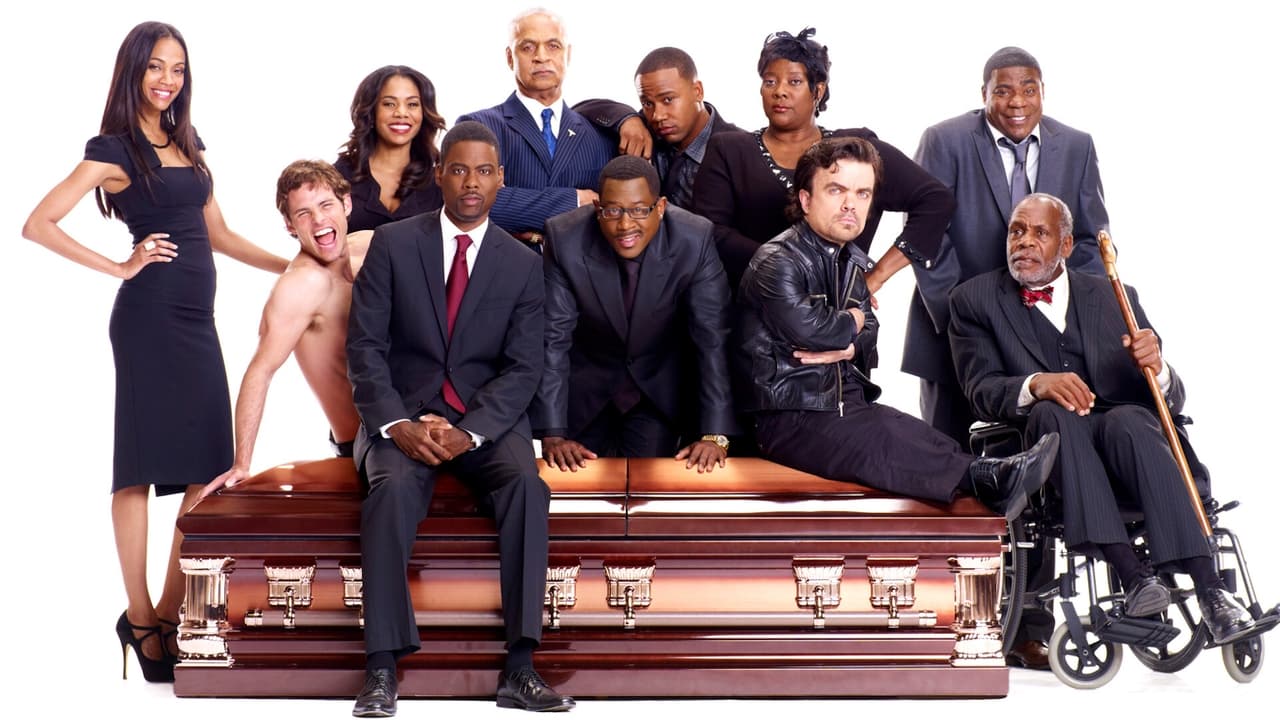
Fast forward three years. Hollywood decides to do what Hollywood does. They remade it. Usually, that’s a disaster. But the 2010 version, directed by Neil LaBute, swapped the English countryside for a Los Angeles backyard and shifted the cultural lens to a Black American family. It worked. It worked because the DNA of the story is bulletproof, but mostly because the casting was inspired. You’ve got Chris Rock, Martin Lawrence, and Danny Glover all playing against each other.
It’s rare to find two movies with the exact same script where both versions are actually worth your time.
The British Original: Where It All Started
In the 2007 version, the lead is Matthew Macfadyen. Long before he was the sniveling, social-climbing Tom Wambsgans on Succession, or the brooding Mr. Darcy, he played Daniel. Daniel is the "responsible" son trying to hold everything together while his more successful novelist brother, Robert (played by Rupert Graves), flies in from New York and refuses to help pay for the funeral.
The chemistry between Macfadyen and Graves is awkward. It’s painful. It feels like real siblings who haven't spoken in three years and deeply resent each other's career choices.
Then you have Peter Dinklage. This is the fascinating part. Dinklage is the only actor to appear in both the 2007 and 2010 death at a funeral cast lists. He plays Peter, the mysterious "friend" of the deceased father who shows up with a manila envelope full of compromising photos. Dinklage is the straight man in a room full of lunatics. His performance is grounded, which makes the chaos around him—specifically a naked James Marsden (2010) or a tripping Alan Tudyk (2007)—even funnier.
Alan Tudyk deserves a statue for his performance as Simon in the original. If you haven't seen it, Simon is a nervous fiancé who accidentally ingests a designer drug. Tudyk spends a significant portion of the movie naked on a roof. His physical comedy is top-tier. Honestly, it’s one of the best "guy on drugs" performances in cinema history because it isn't over-the-top caricatured; it's just pure, panicked sincerity.
The 2010 Remake: A Different Kind of Chaos
When news broke that Chris Rock was spearheading a remake, people were skeptical. Why fix what isn't broken? But the 2010 death at a funeral cast brought a totally different energy.
Chris Rock took the Macfadyen role (Aaron), and Martin Lawrence took the Rupert Graves role (Ryan). The dynamic shifted from "repressed British resentment" to "loud American sibling rivalry." Rock plays the straight man well. He’s the anchor. But the real scene-stealer in the remake is Tracy Morgan.
Morgan plays Norman, a family friend who is hypochondriacal and generally useless in a crisis. While the British version relied heavily on dry wit and escalating social embarrassment, the 2010 version leaned into the comedic heavyweights' ability to improvise.
Breaking Down the Key Cast Parallels
- The "Strait-laced" Son: Matthew Macfadyen (2007) vs. Chris Rock (2010). Macfadyen is more tragic; Rock is more exasperated.
- The "Famous" Brother: Rupert Graves (2007) vs. Martin Lawrence (2010). Lawrence brings a specific "Hollywood ego" vibe that fits the LA setting perfectly.
- The Accidental Druggie: Alan Tudyk (2007) vs. James Marsden (2010). This is the biggest surprise. Marsden, known for being a leading man, is incredible at physical comedy. Watching him hallucinate that the coffin is moving is a highlight.
- The Grumpy Uncle: Peter Vaughan (2007) vs. Danny Glover (2010). Glover’s "Uncle Russell" is meaner, funnier, and arguably more iconic.
Why This Movie Gets Remade So Well
Basically, the script by Dean Craig is a perfect "closed-room" farce. You have a single location. You have a ticking clock (the funeral service). You have a secret that must be kept at all costs.
The death at a funeral cast in both instances had to be an ensemble. There is no single "star." If one person tries to outshine the rest, the timing falls apart. Farce is like a clock; if one gear is slightly off, the whole thing stops ticking.
In the 2007 version, the humor comes from the British obsession with "proper" behavior. The horror isn't just that there is a secret lover; it's that the secret might come out during tea. In the 2010 version, the humor comes from the collapse of family dignity in a community where reputation is everything. Both versions use the cast to highlight these specific cultural anxieties.
The Peter Dinklage Factor
We need to talk about why they kept Peter Dinklage. Usually, remakes change everyone. But Dinklage's character, Peter (or Kevin in the remake), is the catalyst. He is the outsider.
In 2007, Dinklage was a respected indie actor (think The Station Agent), but he wasn't "Game of Thrones" famous yet. By 2010, he was becoming a massive star. Keeping him provided a weird sense of continuity. He plays the role almost exactly the same in both films—deadpan, serious, and deeply motivated by the money. It’s a testament to his range that he can fit into a dry British comedy and a high-energy American comedy without changing his "frequency" at all.
Exploring the Supporting Players
It’s easy to focus on the brothers, but the women in the death at a funeral cast do a lot of the heavy lifting.
In the 2007 version, Daisy Donovan plays Martha (the one whose fiancé is on drugs). She’s the voice of reason. In 2010, that’s Zoe Saldana. Both actresses have the hardest job: they have to react to the insanity while staying believable. If they seem like they’re in a comedy, the stakes disappear.
Then there’s the mother figure. Jane Asher (2007) and Loretta Devine (2010). Asher plays the grieving widow with a sort of fragile, icy grace. Devine plays her with a fierce, protective warmth. Both are grieving, but the way they interact with their "disappointing" sons defines the tone of the respective movies.
Common Misconceptions About the Films
People often think the 2010 version is a shot-for-shot remake. It isn't. While the plot beats are identical—the wrong body in the coffin, the drug mishap, the blackmail—the dialogue is heavily tailored to the actors.
Another misconception is that the 2007 version is "smarter." Honestly, that’s just a bias toward British accents. The 2010 version handles the "Uncle Russell" (Danny Glover) subplot with a bit more bite. It’s cruder, sure, but the comedic timing of the 2010 ensemble is lightning fast.
What You Can Learn from the Casting Choices
If you’re a film student or just a movie nerd, studying the death at a funeral cast is a masterclass in ensemble chemistry.
- Contrast is King: You need a Macfadyen to balance a Tudyk. You need a Rock to balance a Morgan.
- The "Straight Man" is the Hardest Job: Chris Rock and Matthew Macfadyen don't get the biggest laughs, but without them, the funny characters have nothing to bounce off of.
- Physicality Matters: Both casts relied on actors who weren't afraid to look ridiculous. Whether it’s Alan Tudyk’s wide-eyed stare or James Marsden’s frantic energy, the body language tells the story better than the lines do.
How to Watch Them Today
If you haven't seen either, start with the 2007 original. It sets the baseline. It’s shorter, tighter, and the "reveal" of the blackmail plot feels a bit more shocking because of the formal setting.
Then, watch the 2010 version. Look at how Martin Lawrence and Tracy Morgan play off each other. It’s a different beast. It’s louder, but it’s got a huge heart.
The death at a funeral cast for both films represents a specific moment in time. The 2007 film captures the peak of mid-2000s British indie cinema. The 2010 film captures a legendary lineup of Black comedic talent at the top of their game.
Next Steps for Fans of This Style of Comedy:
Check out the original screenplay by Dean Craig. It’s a textbook example of how to write a farce. If you’re looking for more movies with similar ensemble energy, look into Knives Out (for the family dysfunction) or The Birdcage (for the escalating lies and physical comedy).
If you want to see the actors in totally different roles, watch Matthew Macfadyen in Succession or Peter Dinklage in The Station Agent. It’s wild to see how they’ve evolved since these funeral shenanigans.