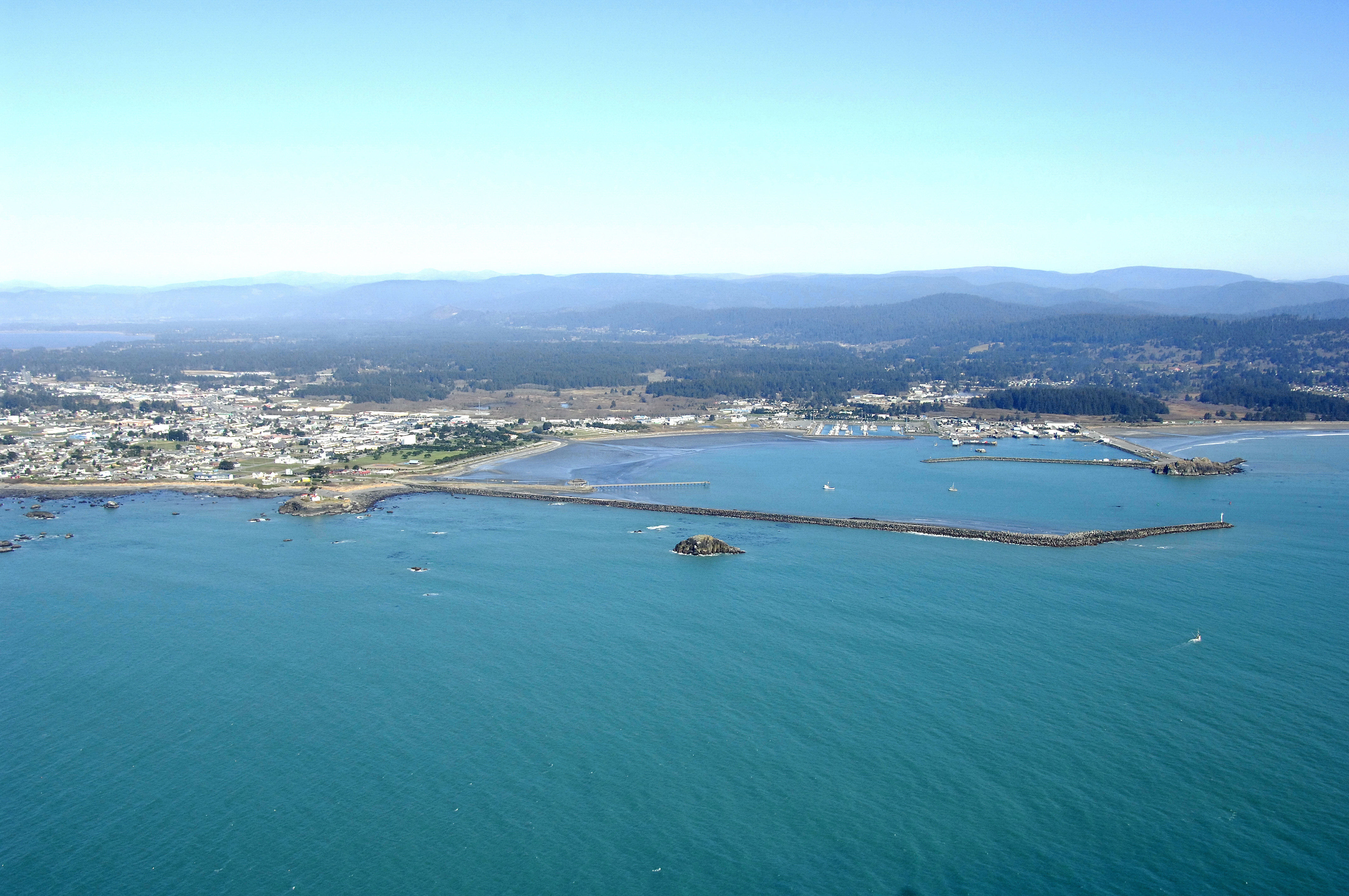
You drive north. Past the vineyards of Sonoma, past the towering giants of Humboldt, and eventually, the road narrows. The air gets saltier. The fog gets thicker. You’ve reached Del Norte County, the northernmost slice of California’s coastline where Crescent City sits as the only incorporated hub. Most people just blow through on their way to Oregon. They’re making a mistake. Honestly, this place is weird in the best way possible. It’s rugged. It’s isolated. It’s a place where the forest literally crashes into the Pacific Ocean, and if you aren’t careful, the tides will remind you exactly who is in charge.
The Geography of Crescent City in Del Norte County
Del Norte is basically a giant sponge for rain. It’s one of the wettest spots in the state, which is why the trees look like they belong in a Jurassic Park sequel. When people talk about Crescent City CA county life, they’re talking about a landscape defined by the Smith River—the last major free-flowing river system in California—and the Redwood National and State Parks.
It’s not just about big trees. The geography is actually pretty treacherous. The city is named for the crescent-shaped sandy beach south of the city, but that same shape makes it a magnet for underwater energy. If you look at the bathymetry—the underwater topography—there’s a massive canyon offshore that funnels surge right into the harbor.
The Tsunami Capital
Local history here is marked by 1964. That year, a massive 9.2 earthquake in Alaska sent a series of waves racing down the coast. Because of the way the seafloor is shaped, the water didn't just hit Crescent City; it amplified. Four waves struck. The fourth one was the killer. It surged through the downtown, destroying 29 blocks and killing 11 people.
You’ll see the high-water marks on some of the older buildings. It’s a sobering reality. Even as recently as 2011, after the Tōhoku earthquake in Japan, the harbor was essentially trashed again. The locals don’t live in fear, but they have a massive amount of respect for the water. You should too. If the sirens go off, you don't stop for a selfie. You head for the high ground.
Redwoods and the Smith River Legacy
The Jedediah Smith Redwoods State Park is the crown jewel here. Unlike the more manicured parks further south, "Jed Smith" feels wild. It’s home to the Stout Grove, which is arguably one of the most photogenic spots on the planet. The light hits the ferns, the 300-foot trunks glow orange, and suddenly you realize why people get so obsessed with these trees.
The Smith River is the other half of the soul of Del Norte County. It has no dams. None. That’s a rarity in California. Because there are no dams to catch silt, the water is an eerie, crystalline emerald green. It’s a haven for Chinook salmon and steelhead. If you’re into fishing, you already know about the Smith. If you aren’t, you just go for the "Smith River Chrome"—that’s what they call the bright, silver fish fresh from the ocean.
- Stout Grove: Best visited in the late afternoon for the "God rays."
- Howland Hill Road: This is a ten-mile winding dirt road. Do not take an RV here. Seriously. You will get stuck and the locals will be annoyed. But in a regular car? It’s the most immersive redwood drive in existence.
- The Boy Scout Tree Trail: A 5.5-mile hike that leads to a massive double-trunked redwood. It’s moderately difficult, but the payoff is incredible.
The Economy of the Far North
Let's be real: life in Crescent City CA county isn't all postcards and salmon. It’s a tough place to make a living. For decades, the economy was built on two things: timber and fish. When the logging industry slowed down due to environmental protections and changing markets, the region had to pivot.
Today, the biggest employer is the government. Specifically, Pelican Bay State Prison. It’s a supermax facility located just outside of town. It opened in 1989 and changed the fabric of the community. You have a weird juxtaposition of world-class natural beauty and one of the most notorious prisons in the United States. It brings jobs, but it also brings a specific kind of gravity to the area.
Tourism is the other big player. The Redwood National and State Parks are a UNESCO World Heritage site. People come from all over the world to stand next to Hyperion (the tallest tree, though its location is a secret to protect it). But tourism is seasonal. In the winter, when the rain dumps inches at a time, the streets get quiet.
Battery Point Light: A Living History
You can’t talk about the harbor without mentioning the Battery Point Lighthouse. It sits on a tiny island that is only accessible at low tide. This is important. Every year, tourists get stranded because they walk across the land bridge, spend too much time looking at tide pools, and realize the ocean has cut them off.
The lighthouse has been active since 1856. It’s survived the tsunamis, the storms, and the brutal Pacific winds. It’s one of the few lighthouses where the keepers actually still live on-site (as volunteers). They’ll give you a tour, show you the 1,000-pound lens, and tell you stories about the wrecks that happened before the light was there.
The Local Vibe and What to Expect
Crescent City isn't Mendocino. It’s not polished or "boutique." It’s a working-class town. You’ll find great fish and chips at the harbor—places like Fisherman's Restaurant or SeaQuake Brewing are staples. SeaQuake is actually a great example of the "new" Crescent City; it’s a craft brewery that wouldn't look out of place in Portland or San Francisco, but it’s rooted right there on Front Street.
The weather is its own character. You might get a 70-degree day in July, or you might get "June Gloom" that lasts until October. Layering isn't a fashion choice; it’s a survival strategy.
Wildlife Encounters
You’re going to see elk. The Roosevelt elk in Del Norte County are massive—way bigger than the Rocky Mountain elk you see in Colorado. They hang out in the meadows near South Beach or along Highway 101. They look docile, like big cows. They are not. Every year, someone gets too close for a photo and realizes that a 1,000-pound animal with antlers can move very fast. Keep your distance.
Down at the harbor, the sea lions are the local choir. They take over the docks and bark 24/7. It’s a constant background noise that you eventually just tune out, but for a first-timer, it’s loud.
Why People Stay
Isolation does something to a community. In Crescent City CA county, people are self-reliant. There’s a grit here. You see it in the surfers who braving 50-degree water at South Beach and the foragers who know exactly where to find chanterelle mushrooms in the damp woods.
There is a sense of being at the edge of the world. When you stand on the cliffs at Castle Rock National Wildlife Refuge and look west, there is nothing but water between you and Japan. It’s humbling.
The air is some of the cleanest in the lower 48. The water is pure. The noise of the modern world feels very far away. For some, that’s terrifying. For others, it’s the only way to live.
Practical Steps for Visiting Crescent City and Del Norte County
If you are planning to head up here, don't just wing it. This isn't the kind of place where you can always find a hotel room at 10:00 PM on a Friday.
1. Check the Tide Tables. This is the most important thing you can do. If you want to see the Battery Point Lighthouse or explore the sea caves at Enderts Beach, you need to know when low tide is. Download a tide app or grab a paper chart from a local shop.
2. Book Your Campsites Early. Mill Creek and Jedediah Smith campgrounds are legendary. They fill up months in advance. If you miss out, look for private RV parks or "dispersed camping" options in the Smith River National Recreation Area, but be prepared for zero cell service.
3. Respect the Redwoods. Stay on the trails. The root systems of these giants are surprisingly shallow. When thousands of people walk off-trail, it compacts the soil and starves the trees of oxygen.
4. Pack for the "Big Wet." Even in summer, bring a waterproof shell. The fog can soak you to the bone in minutes.
5. Visit the Ocean World. It looks like a tourist trap from the outside, but it’s actually a really cool local aquarium that focuses on the species found right in the harbor. It’s great for kids and supports local marine education.
Del Norte County remains one of the last frontiers of the California coast. It is a place of extremes—extremely beautiful, extremely wet, and extremely quiet. Whether you’re there to hike through ancient groves or just to watch the waves crash against the sea stacks at Pebble Beach, it’s a destination that demands you slow down. Take the time to talk to the locals, eat the sourdough, and keep an eye on the horizon. The Pacific has a lot to say up here.