He was the "Millionaire’s Captain." That was the nickname. For decades, Edward John Smith was the most trusted man in the White Star Line’s fleet. He was the safe choice. If you were a billionaire in 1912, someone like John Jacob Astor or Benjamin Guggenheim, you wanted Smith at the helm. He was charming, silver-haired, and possessed an impeccable record that made the idea of a shipwreck seem like a fantasy.
Then came April 14.
The captain of the Titanic is often remembered in one of two ways. He’s either the stoic hero who went down with the ship, standing tall on the bridge as the freezing Atlantic rose to meet him, or he’s the negligent veteran who ignored seven ice warnings because he was trying to set a speed record. The reality? It’s way more complicated than the movies let on. History isn't a screenplay. It's messy. Smith was a man who had spent 40 years at sea and was just weeks away from a comfortable retirement. Instead, he became the face of the greatest maritime disaster in history.
The Myth of the "Speed Record"
Everyone says they were trying to break a record. You've probably heard that J. Bruce Ismay, the chairman of the White Star Line, was whispering in Smith’s ear, pushing him to go faster to impress the New York press. It’s a great story. It adds a layer of corporate greed that makes for a perfect villain arc. But honestly? The Titanic wasn't even built for speed.
The Olympic-class liners were designed for luxury and scale, not for winning the Blue Riband. The Mauretania, owned by the rival Cunard Line, was significantly faster. Smith knew this. Ismay knew this. While there was certainly pressure to arrive on time—and maybe a little early to look good—the idea that Smith was "racing" through an ice field to set a world record is mostly historical fiction. He was maintaining a standard speed for a clear night. Back then, the prevailing wisdom among mariners was that if the weather was clear, you’d see the ice in time to turn.
They were wrong.
Why Didn't He Slow Down?
This is the big one. Why, after receiving multiple wireless reports of "growlers" and "field ice" directly in his path, did Smith keep the engines at 22 knots?
To understand Smith, you have to understand the era. In 1912, captains didn't slow down for ice unless they actually saw it or the visibility dropped. It sounds reckless to us now. It was reckless. But for Smith, it was standard operating procedure. He had millions of miles under his belt and had never had a major accident. He was overconfident. Not just him, but the entire industry. During the British inquiry, it was revealed that most captains of that period did the exact same thing. Smith was following a culture of complacency that had been building for decades.
The Breakdown in Command
Something strange happened after the collision. Once the iceberg scraped the starboard side at 11:40 PM, Smith’s behavior became... erratic. Or perhaps "numb" is a better word. Thomas Andrews, the ship's builder, told Smith point-blank: the ship is going to sink. He gave it an hour and a half. Maybe two.
Smith didn't immediately call for a general alarm. He didn't use the public address systems (because they didn't really have them like we do today), but he also didn't ensure his officers were filling the lifeboats to capacity. Look at the numbers. Boat 7 stayed with 28 people despite having room for 65. Boat 1 left with only 12.
Some historians, like Dr. Paul Louden-Brown, have suggested that Smith may have been in a state of "post-traumatic shock." Think about it. You are 62 years old. You are the most respected captain in the world. And in one ten-second window, you realize you have just presided over the deaths of over 1,500 people. He knew there weren't enough boats. He knew the math.
The Mystery of His Final Moments
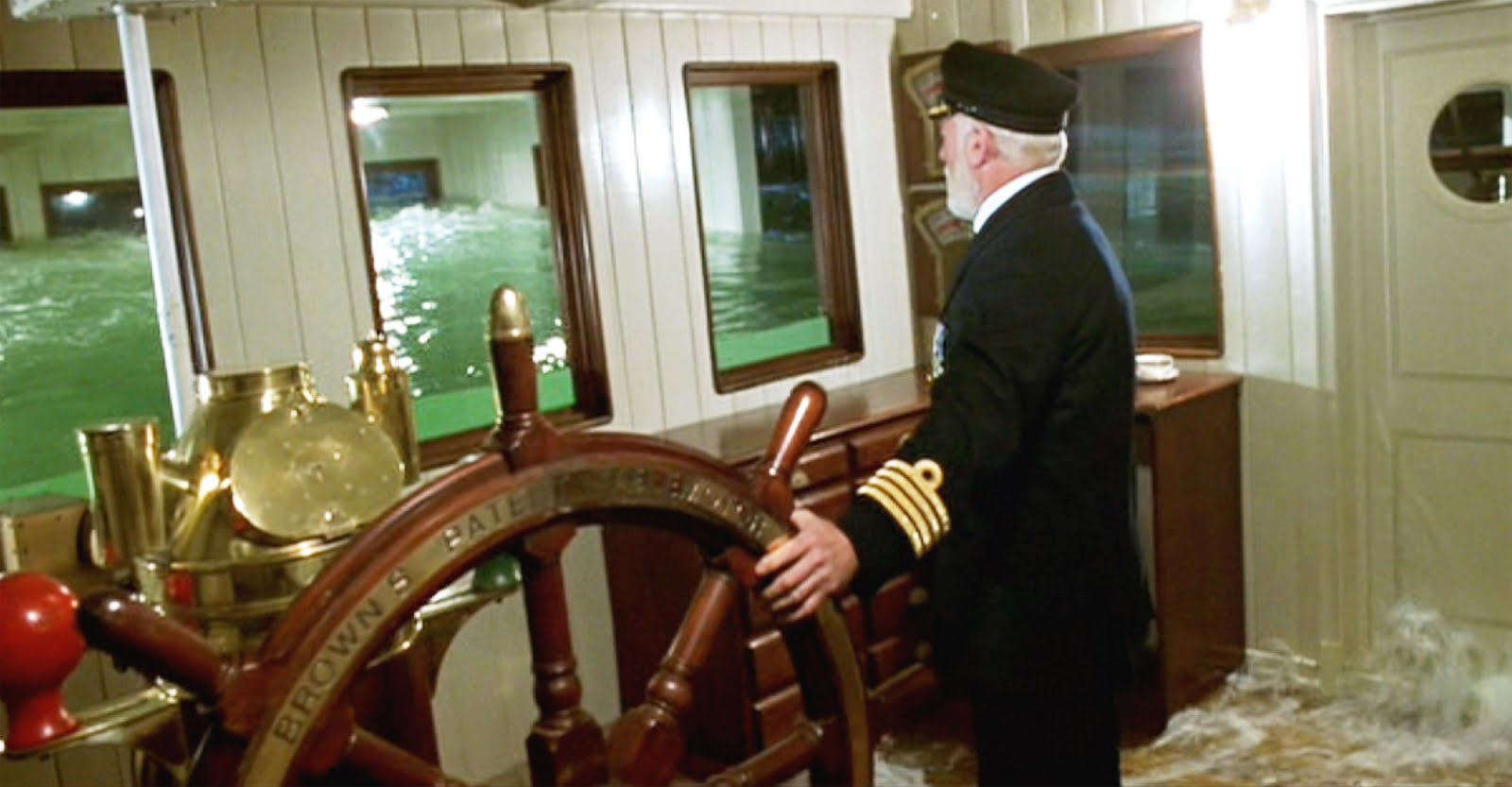
How did the captain of the Titanic actually die? This is where the accounts get really wild. If you watch the 1997 James Cameron film, he’s in the wheelhouse, gripping the wheel as the windows shatter. In the 1958 film A Night to Remember, he’s more active, helping people into boats.
The eyewitness accounts from survivors are a total mess.
- One survivor claimed they saw him jump into the water with a baby and hand it to someone in a lifeboat before sinking.
- Another claimed he shot himself on the bridge. (This is widely disputed and often attributed to Officer Murdoch instead).
- A third account says he was washed off the deck by a wave when the bridge dipped underwater.
The most likely scenario is the least cinematic. He probably just stayed with his ship. His body was never recovered. Unlike some of the crew and passengers whose remains were found by the Mackay-Bennett weeks later, Smith vanished into the North Atlantic.
The Reputation Shift: Hero or Villain?
Initially, the press treated him as a martyr. He went down with the ship! That’s the ultimate captain’s sacrifice, right? There’s a statue of him in Lichfield, England, that calls him a man of "great heart and a brave spirit."
But as the years went by, the "negligence" narrative took over. Modern maritime experts point to the fact that he didn't even attend the final briefing on the ice warnings. He left the bridge at 9:20 PM to go to sleep, even though they were entering the "corner" where ice was most likely. He didn't order a "boat drill" during the voyage. He didn't insist the lifeboats be filled.
He was a man of his time—and his time was ending. The Titanic disaster changed maritime law forever, creating the 24-hour radio watch and the International Ice Patrol. It also ended the era of the "celebrity captain" who could do no wrong.
Key Factors in Smith's Failure
- Over-reliance on technology: He genuinely believed the Titanic’s bulkheads made her "practically unsinkable."
- Institutional arrogance: The White Star Line's culture prioritized passenger comfort and "smooth sailing" over drills and safety redundant systems.
- Communication gaps: The wireless operators, Jack Phillips and Harold Bride, were actually employees of the Marconi Company, not the White Star Line. They were busy sending "Marconigrams" (personal messages for rich passengers) and didn't prioritize some of the most critical ice warnings for Smith.
Lessons from the Bridge
What can we actually take away from the story of Edward Smith? It’s not just a tragedy; it’s a case study in leadership failure during a crisis.
Complacency kills. Smith’s biggest mistake wasn't a single "bad" decision on the night of the 14th. It was 40 years of success that convinced him failure was impossible. When you’ve never hit an iceberg, you start to believe icebergs aren't a threat.
Don't ignore the "weak signals." The ice warnings were the weak signals. They were small data points that, when added up, showed a catastrophic pattern. Smith treated them as isolated incidents rather than a systemic threat.
Communication must be integrated. If the wireless operators had been part of the ship's direct chain of command instead of third-party contractors, that final "Mesaba" warning—the one that placed the ice directly in the Titanic's path—might have actually reached the bridge in time.
How to Learn More About Captain Smith
If you're looking to dig deeper into the actual transcripts of what happened on the bridge, there are two primary sources you should look at. Don't rely on TikTok "theories" or movie scenes.
- The British Wreck Commissioner's Inquiry: This is the most detailed account of the technical failures. It’s dense, but it’s the raw data.
- The United States Senate Inquiry: Conducted by Senator William Alden Smith (no relation), this was done while the memories were still fresh, just days after the survivors arrived in New York. It’s where many of the "speed" and "recklessness" questions were first asked.
Actionable Insights for History Buffs
If you want to truly understand the captain of the Titanic and the era he lived in, stop looking at the disaster as an "accident." It was a series of choices. Here is how you can apply this perspective to your own research or even your own professional life:
- Analyze the "Normalized Deviance": Look into the work of sociologist Diane Vaughan. She coined this term for when people become so accustomed to a risky behavior that they no longer see it as a risk. Smith’s "high-speed in ice" was normalized deviance.
- Verify the Sources: When you see a "quote" from Captain Smith, check if it came from the 1912 inquiries. Most of the famous lines attributed to him were actually written for movies.
- Visit the Memorials: If you’re ever in the UK, go to Lichfield or Southampton. Seeing the physical monuments to Smith helps bridge the gap between the "character" in the movies and the actual human being who had a wife, Eleanor, and a daughter, Helen.
The story of Captain Smith is a reminder that experience is a double-edged sword. It gives you wisdom, but it can also give you a blind spot the size of an iceberg.
To explore the technical side of the sinking, you can look into the Titanic's engineering specifications or the deck logs of the Carpathia, the ship that eventually rescued the survivors. Understanding the context of the 1912 maritime world is the only way to see the man behind the myth.