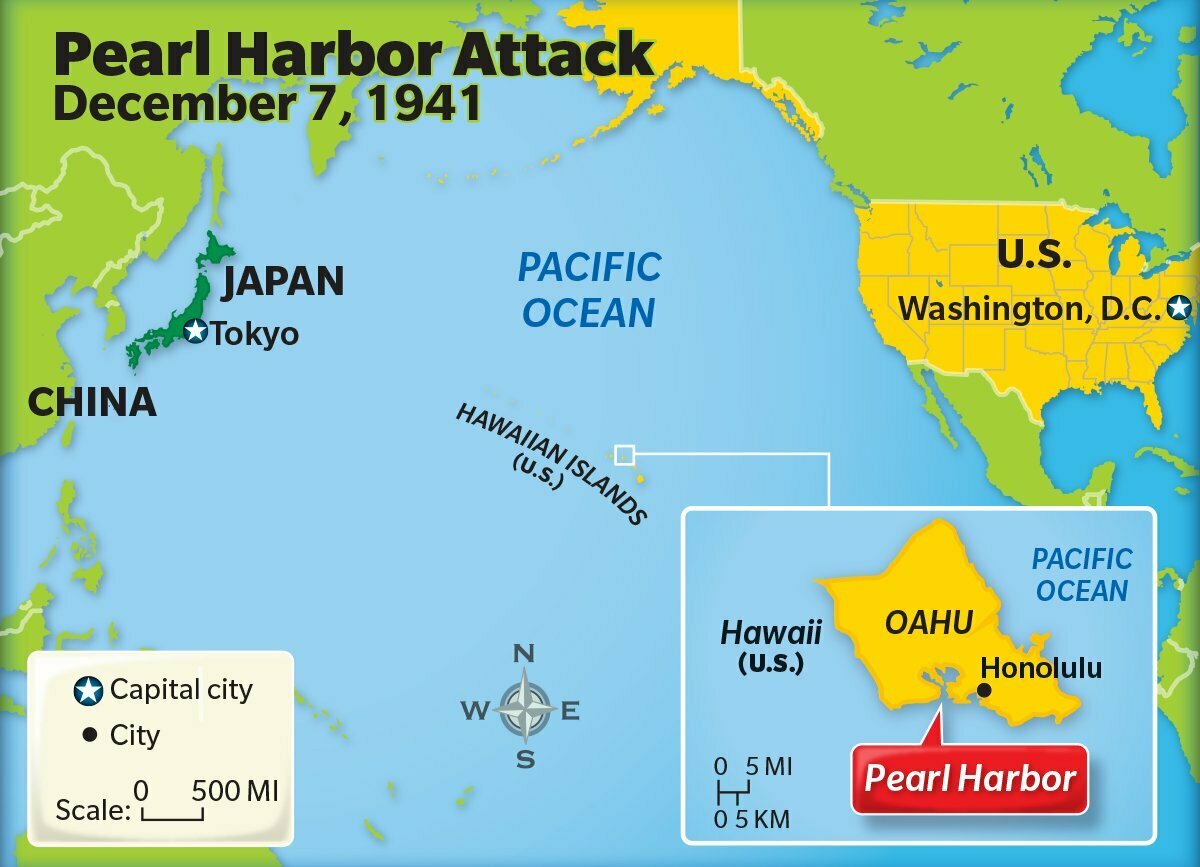
Pearl Harbor isn’t just one thing. When you look at a pearl harbor hawaii map, you aren't just looking at a museum or a single dock. You're looking at a massive, active military base, a complex of four distinct historical sites, and a graveyard that holds over a thousand men.
Most people show up at the Visitor Center thinking they can just walk over to the USS Arizona Memorial. It doesn't work like that. The geography of the place is actually kind of tricky because the harbor is huge and the sites are spread out across several miles of coastline and even an island in the middle of the water.
If you don't understand the layout before you get there, you’re going to waste half your day sitting on a shuttle bus or standing in the wrong line. Trust me. I've seen it happen a hundred times.
The Layout of the Land (and Water)
Basically, Pearl Harbor is a clover-shaped lagoon located on the south shore of Oahu. It’s about 30 minutes west of Waikiki, depending on that legendary Honolulu traffic. When you're staring at a pearl harbor hawaii map, the first thing you’ll notice is the Pearl Harbor National Memorial. This is the "home base" for tourists. It's where the theaters, the two museums (the "Road to War" and "Attack" galleries), and the boat launch for the USS Arizona are located.
But here is the catch.
The USS Utah and the USS Oklahoma memorials, the Battleship Missouri, and the Pearl Harbor Aviation Museum are actually on Ford Island. You can't just drive your rental car onto Ford Island. It’s a restricted military zone. To get there, you have to take a specific shuttle that leaves from the Visitor Center every 15 to 20 minutes.
The pearl harbor hawaii map shows Ford Island sitting right in the center of the harbor, connected to the mainland by the Admiral Clarey Bridge. It's a beautiful bridge. But unless you have a military ID, your GPS will lead you to a security gate where a very polite person with a rifle will tell you to turn around.
The Four Main Pillars of the Map
To really get the most out of your visit, you have to realize that "Pearl Harbor" is an umbrella term for four separate attractions. They all require different levels of planning.
- The USS Arizona Memorial: This is the big one. It’s the white structure you see in every photo, straddling the sunken hull of the battleship. You can only get there by a Navy-operated boat. The boat ride starts at the Visitor Center.
- The Battleship Missouri (Mighty Mo): This is located on "Battleship Row" on Ford Island. This is where the Japanese signed the surrender documents, ending World War II. It’s massive.
- The USS Bowfin Submarine Museum: This is right next to the Visitor Center. You don't need a shuttle for this one. You can literally walk from the ticket office to the sub in about two minutes.
- The Pearl Harbor Aviation Museum: This is also on Ford Island, housed in hangars that still have bullet holes from the 1941 attack.
It's a lot. If you try to do all of it in three hours, you’ll fail. You need at least six. Honestly, seven is better if you actually want to read the plaques and not just snap a selfie and run.
Why the USS Arizona Memorial is the Trickiest Part
The pearl harbor hawaii map makes it look like the Arizona is just a short hop from the shore. It is. But the logistics are a nightmare if you don't book ahead. The National Park Service releases tickets 56 days in advance on Recreation.gov. If you miss that window, they release more the day before at 3:00 PM Hawaii time.
If you don't have a ticket, you're basically stuck hoping for a standby seat. Sometimes it works. Sometimes it doesn't.
Once you have your ticket, you'll watch a 23-minute documentary. Then, you board the shuttle boat. The boat takes you out to the memorial. It’s a quiet place. You can still see "black tears" (oil) bubbling up from the ship’s hull after 80 years. It’s eerie and moving and sort of stays with you long after you leave.
Navigating Ford Island
Let’s talk about Ford Island for a second. Looking at a pearl harbor hawaii map, Ford Island is the heart of the harbor. During the attack on December 7, 1941, the Japanese pilots were mostly focused on the ships moored along the edge of this island.
When you take the shuttle from the Visitor Center to Ford Island, the first stop is the Battleship Missouri. The second stop is the Aviation Museum.
A lot of people skip the Aviation Museum because they think it's just old planes. It's not. They have a P-40 Warhawk and a Japanese Zero, and the hangars themselves are historical artifacts. You can still see the blue glass in the windows that was shattered during the strafing runs.
The USS Oklahoma and USS Utah: The "Other" Memorials
Most people never see the USS Utah. On a pearl harbor hawaii map, the Utah is on the far west side of Ford Island. Because it’s in a more active part of the military base, it’s much harder to visit. You usually need military escort or special permission, though the shuttle bus does pass near the USS Oklahoma Memorial.
The Oklahoma Memorial is right at the entrance to the Battleship Missouri. It consists of 429 white marble pillars, one for each sailor and Marine lost when the ship capsized. It’s incredibly striking. Because it’s right next to the Missouri, there’s no excuse not to walk through it.
Practical Realities of the Geography
Hawaii is hot. The sun at Pearl Harbor is brutal because you're standing on a lot of concrete and open docks.
The pearl harbor hawaii map covers a wide area with very little shade. Bring a hat. Bring water. But here is the catch: you can't bring a bag. No purses, no backpacks, no diaper bags, no camera bags. Nothing larger than "the size of a clutch."
They have a bag storage locker at the entrance. It costs about $7 per bag. This is for security reasons because it's an active base. If you show up with a giant backpack, you're going to spend 20 minutes in the locker line and potentially miss your boat time.
What Most People Get Wrong About the Locations
People often confuse the USS Arizona with the USS Missouri. They are two different ships at two different ends of the war. The Arizona represents the beginning; the Missouri represents the end. On your pearl harbor hawaii map, they are physically near each other, but they are worlds apart in terms of the story they tell.
Another common mistake? Thinking the Pacific Fleet Submarine Museum is somewhere else. It's right there at the entrance. If you have extra time while waiting for your Arizona boat, go through the submarine. It’s cramped, smells like diesel and old metal, and gives you a terrifying appreciation for what submariners went through.
How to Route Your Day
Don't just wander. Have a plan.
- 08:00 AM: Arrive at the Visitor Center. Check your bags.
- 08:30 AM: Explore the "Road to War" and "Attack" galleries. These give you the context for everything else.
- 10:00 AM: Your USS Arizona Memorial boat time. (Assuming you booked ahead!)
- 11:30 AM: Grab a quick lunch at the snack shop near the Bowfin.
- 12:15 PM: Board the shuttle to Ford Island.
- 12:30 PM: Tour the Battleship Missouri. Do the "Heart of the Missouri" tour if you’re a gearhead.
- 02:30 PM: Take the shuttle to the Aviation Museum.
- 04:00 PM: Shuttle back to the Visitor Center and head out.
This schedule is tight. If you move slower or have kids, you might want to pick just two of the four sites. Honestly, the Arizona and the Missouri are the "must-sees" for first-timers.
Looking at the Map Through a Historical Lens
When you look at a pearl harbor hawaii map, try to imagine it without the bridges and the modern Navy ships. On the morning of the attack, the harbor was packed with nearly 100 ships. The "Battleship Row" you see on the map was a line of giants.
The Japanese didn't just fly in from one direction. They came from the north, split up, and attacked from multiple angles. Some came across the central plains of Oahu, others skirted the coast. When you stand at the Pearl Harbor Aviation Museum on Ford Island, you are standing exactly where the first bombs fell on the seaplane hangars.
The geography determined the casualties. The ships that were moored on the inside of the row were somewhat protected from torpedoes, but they were sitting ducks for dive bombers. The Arizona was hit by a modified armor-piercing shell that ignited its forward magazine. It sank in less than nine minutes. That spot on the map is now a sacred tomb.
Actionable Steps for Your Visit
- Download a digital pearl harbor hawaii map before you go. Cell service can be spotty near the metal hangars and large ships, and you don't want to be fumbling with a slow-loading PDF.
- Book your Arizona tickets exactly 56 days out. Mark your calendar. Set an alarm. They go fast.
- Wear comfortable shoes. You will easily walk 3 to 5 miles if you do the full circuit of the Visitor Center and Ford Island.
- Check the "No Bag" policy. It is strictly enforced. Carry your wallet, phone, and camera in your pockets or a very small clear bag.
- Respect the "No Photo" zones. Since this is an active military base (Joint Base Pearl Harbor-Hickam), there are certain areas you aren't allowed to photograph from the shuttle bus. The drivers will tell you when. Listen to them.
The pearl harbor hawaii map is a guide to one of the most significant locations in American history. It’s a place of deep sadness but also incredible resilience. Take your time. Don't rush the experience. Whether you’re a history buff or just a casual traveler, understanding the physical layout of the harbor will make your visit significantly more meaningful.