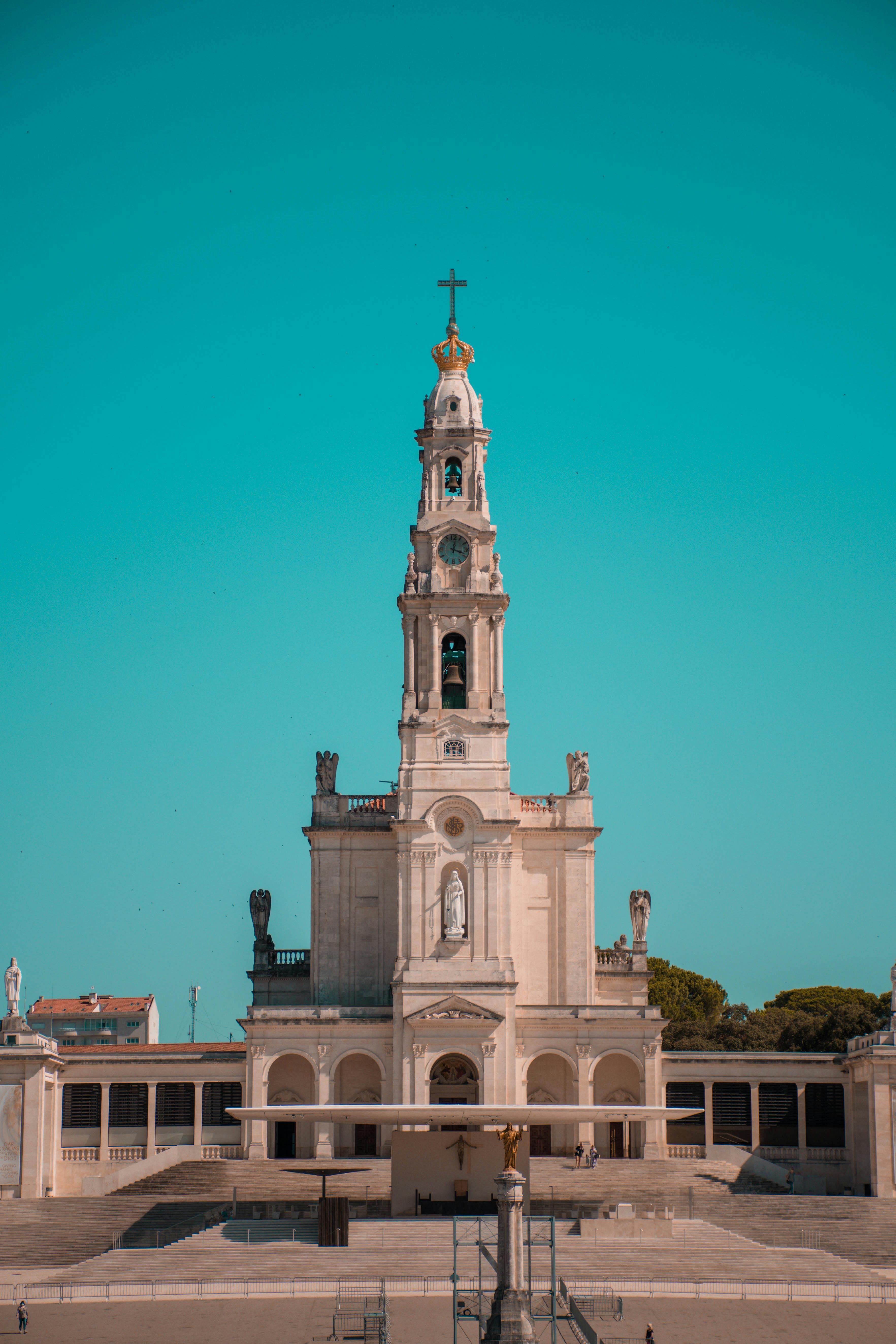
You step off the bus in Cova da Iria and your first instinct is to look for a massive cathedral spire. But Fatima doesn't really work like that. It’s flat. It’s sprawling. Honestly, the first time you see a map of Fatima Portugal, it looks less like a religious site and more like a giant, paved landing strip. This place was built to hold nearly a million people at once, which means the scale is totally weird until you’re standing right in the middle of the prayer square.
Most people think they can just wing it. They figure they’ll walk toward the bells. But the Sanctuary of Our Lady of Fatima is actually a complex network of basilicas, chapels, and hidden statues spread across a massive footprint. If you don't know where the Little Chapel of the Apparitions is compared to the new underground basilica, you're going to spend three hours walking in circles on very hot limestone.
The Layout Most Tourists Completely Miss
When you look at a standard map of Fatima Portugal, the most striking feature is the Recinto. That’s the huge open prayer area. At one end, you’ve got the old school Basilica of Our Lady of the Rosary with its high white tower. At the opposite end, about half a kilometer away, sits the Church of the Most Holy Trinity.
It’s a long walk. Seriously.
The "Old" Basilica is where the tombs of the three little shepherds—Francisco, Jacinta, and Lucia—are located. It’s neoclassical, limestone-heavy, and feels like what you’d expect from a European shrine. But the "New" Basilica (Most Holy Trinity) is a different beast entirely. It’s one of the largest Christian churches in the world, built in a modern, circular style that looks a bit like a UFO landed in the middle of Portugal.
Between these two giants lies the heart of the whole thing: the Chapel of the Apparitions. If you aren't looking at your map, you might actually walk right past it. It’s a small, glass-walled structure built over the exact spot where the Virgin Mary is said to have appeared to the children in 1917. It sits under a massive porch to protect pilgrims from the sun and rain. This is where the "real" action happens—the 24-hour rosaries, the candlelit processions, and the intense silence that somehow exists despite thousands of people being around.
Walking the "Caminho dos Pastorinhos"
Most visitors stay inside the paved sanctuary, but that’s a mistake. About two kilometers south of the main basilicas is Aljustrel. This is the village where the children actually lived. A proper map of Fatima Portugal should show you the path leading from the sanctuary to these homes.
- Casa de Jacinta e Francisco Marto: You can walk through the tiny rooms where the siblings were born. It's jarring to see how small the beds are.
- Casa de Lúcia: Just down the road. It has a small museum and the well where the "Angel of Peace" supposedly appeared.
- The Via Sacra (Stations of the Cross): This path connects the two areas. It winds through olive trees and stone walls. It’s arguably the most beautiful part of the entire region, yet many people skip it because it’s a twenty-minute walk from the main square.
Understanding the "Burning" Area
There is a spot on the map of Fatima Portugal that usually smells like a campfire. Just behind the Chapel of the Apparitions is the Tocheiro, or the candle-burning area.
It’s intense.
People buy wax body parts—legs, hearts, heads—and throw them into a massive furnace. It sounds macabre if you aren't Catholic, but it’s a deeply personal ritual for people praying for healing. If you’re navigating the site, remember that this area gets incredibly crowded and hot, especially during the 12th and 13th of each month from May to October.
Why the High-Tech Underground Exists
Underneath the main prayer square is a world most people don't realize exists until they stumble down a ramp. Because the surface of Fatima is so exposed to the elements, the church built a massive underground complex.
You’ll find the Museum of the Sanctuary here. They have the "Crown of Our Lady," which actually contains the bullet that hit Pope John Paul II in 1981. It’s a strange, chilling piece of history. The underground area also houses dozens of smaller confessionals and chapels for private prayer. If you need a bathroom or a place to hide from a Portuguese heatwave, this is your spot.
Practical Logistics of the Map
Getting there is surprisingly easy, but staying there is tricky. Fatima is basically a town built for the sanctuary.
The main bus station (Rede Expressos) is on the northern edge of the town. From there, it’s about a ten-minute walk to the sanctuary entrance. Most of the hotels are clustered around the perimeter of the Recinto. If you book a hotel "near the map," make sure you check if it's near the entrance or near the village of Aljustrel. Those are two very different vibes. Aljustrel is quiet and rural; the sanctuary area is busy and full of shops selling glowing statues.
Timing Your Navigation
If you’re looking at your map of Fatima Portugal and planning a day trip from Lisbon, you need to account for the processions.
The Candlelight Procession happens every night at 9:30 PM. The entire square fills with flickering lights. The Farewell Procession happens on the morning of the 13th. During these times, moving from point A to point B is almost impossible. You don't "walk" through the square; you drift with the crowd.
If you want a quiet photo of the Basilica of Our Lady of the Rosary, go at 7:00 AM. The light hits the limestone perfectly, and the tourists haven't arrived yet.
The Misconception of "Fatima Town"
Basically, there isn't much to the town of Fatima outside of the religious context. It’s not like Lisbon or Porto where you’ll find trendy bars or ancient Roman ruins. It’s a pilgrimage site through and through.
Some people get disappointed because they expect a quaint Portuguese village. While Aljustrel (the shepherds' village) fits that description, the main part of Fatima is very modern. It was built quickly to handle the massive influx of people after the miracles were officially recognized by the Vatican in 1930.
Actionable Steps for Your Visit
Don't just rely on your phone's GPS. The tall stone buildings and the underground structures can mess with the signal. Instead, follow these specific navigation tips:
- Start at the High Cross: This giant modern cross at the south end of the square is the best landmark. If you get lost, head for the cross.
- Visit the Berlin Wall segment: There is an actual piece of the Berlin Wall located near the entrance of the sanctuary. It’s a weird bit of history that many people walk right past. It’s there to commemorate the "end of communism" which many believe was a result of the Fatima prophecies.
- Walk the Via Sacra backwards: If you want to avoid the crowds, take a taxi to the Shepherds' houses in Aljustrel first, then walk the Stations of the Cross path back toward the Sanctuary. You’ll be walking against the grain of the tour groups.
- Check the schedule at the Information Office: It's located right next to the Chapel of the Apparitions. They have physical paper maps that are actually better than the digital ones because they list the daily mass times in different languages.
To truly experience Fatima, you have to understand that the map is a spiritual one as much as it is physical. The distance between the tombs of the children and the burning wax of the Tocheiro represents a century of faith, controversy, and millions of individual stories. Put the phone away for a minute, stand in the center of the white limestone square, and just feel the scale of the place. It's bigger than any map can really show you.
Grab a physical map from the pilgrim office as soon as you arrive, head straight to the Chapel of the Apparitions to get your bearings, and then make the trek out to Aljustrel before the midday sun hits. That's the only way to do it right.