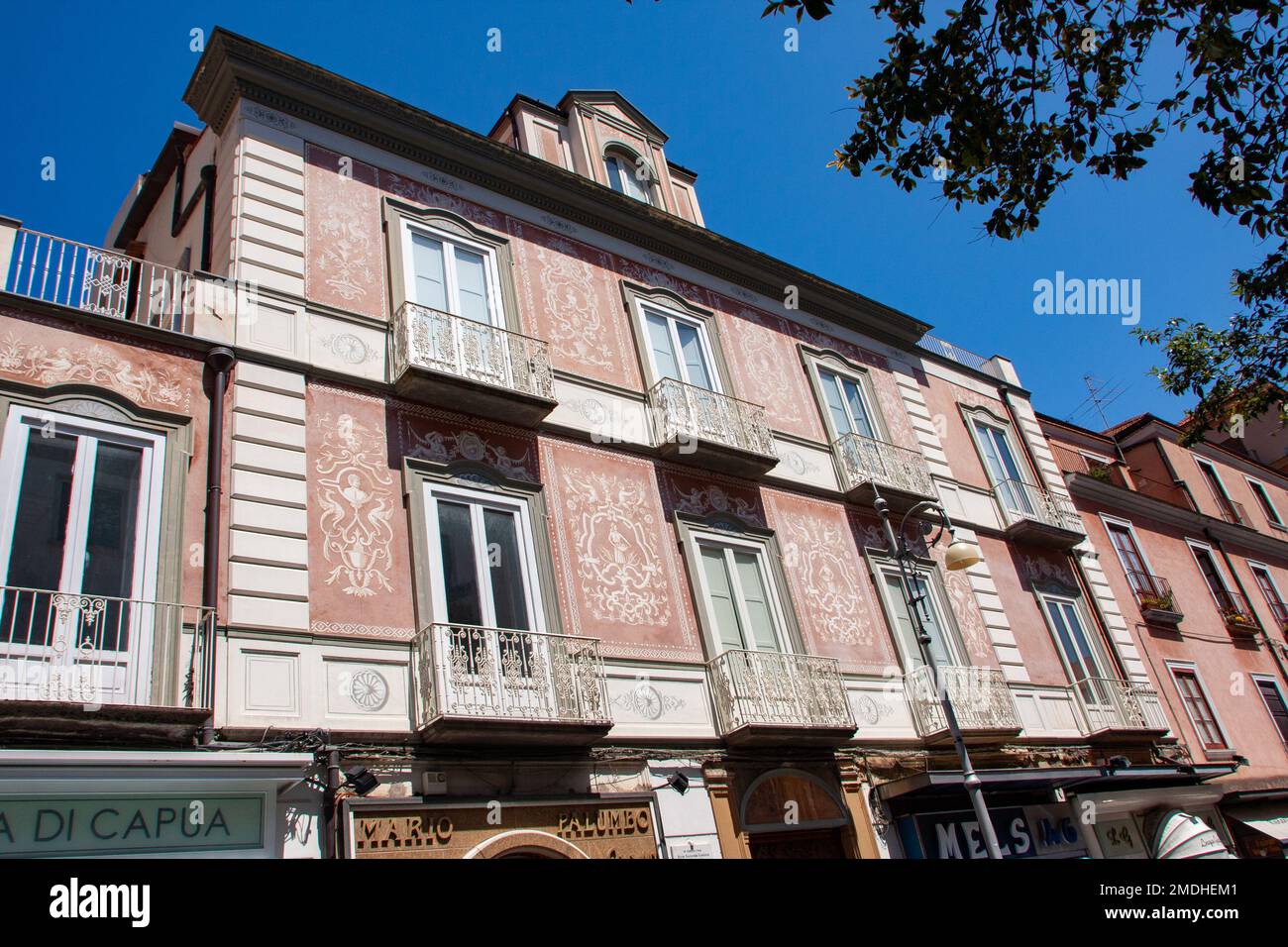
Sorrento is a vertical maze. Honestly, if you just rely on Google Maps while standing in the middle of Piazza Tasso, you’re going to end up staring at a stone wall or a sheer cliff face wondering where the "walking path" went. It’s a beautiful mess. To really understand a sorrento town centre map, you have to stop thinking about 2D navigation and start thinking about layers.
The town is perched on a tufa terrace. It looks over the Gulf of Naples, and while the "centre" seems small, the way the streets are laid out—remnants of an ancient Roman grid—makes it surprisingly easy to get turned around. You’ve got the bustling main square, the narrow "vicoli" (alleys) of the old town, and the sudden drops to the harbors below.
Most people arrive by train or bus and head straight for the shops. That’s fine. But if you don't understand the layout, you'll spend three hours walking in circles around Corso Italia and miss the best parts of the Marina Grande.
The Layout of the Sorrento Town Centre Map
The heart of everything is Piazza Tasso. Think of it as the sun in this little planetary system. From here, the town radiates outward in a few distinct directions. To the east, you have the more modern residential areas and the road leading toward Sant'Agnello. To the west, you dive into the "Centro Storico," which is where the real soul of Sorrento lives.
South of the piazza is the valley—the Vallone dei Mulini. It’s a literal crack in the earth. You can look over the railing and see ancient ruins being reclaimed by greenery. It’s wild. North of the piazza is the sea, but because Sorrento is built on a cliff, you can't just walk "to the beach." You have to find the specific ramps or elevators that take you down to Marina Piccola.
Piazza Tasso and the Main Arteries
If you look at a sorrento town centre map, Corso Italia is the thickest line. It’s the spine. During the day, it's a busy thoroughfare with cars and scooters buzzing like angry hornets. But at night, specifically during the passeggiata, it turns into a pedestrian catwalk.
The main square isn't actually a square. It’s built over a bridge that spans a gorge. If you stand by the statue of Sant’Antonino (the patron saint whose bones are in the basilica nearby), you’re actually standing on a massive piece of engineering that hides the valley below.
- Corso Italia: High-end shopping, gelato spots, and the main flow of traffic.
- Via Cesareo: The "Limoncello Street." It runs parallel to Corso Italia but feels a thousand years older.
- Via Luigi de Maio: The steep, winding road that leads from the piazza down to the port.
Navigating the Old Town (Centro Storico)
This is where your GPS will definitely betray you. The buildings are tall, the alleys are narrow, and the signal bounces around like a pinball. The old town is a grid, mostly. It was laid out by the Romans (they called the city Surrentum), and they loved their straight lines.
But over centuries, those lines got messy. You’ll find yourself on Via San Cesareo, which is basically an outdoor mall for lemons. It’s crowded. It’s loud. It smells like citrus and leather. You’ve got vendors shouting, tourists stopping mid-stride to look at ceramic plates, and the occasional local on a Vespa trying to squeeze through a gap that definitely looks too small for a bike.
The trick to the old town is finding the "decumanus." In Roman urban planning, these were the east-west streets. Today, they are the lanes filled with shops selling inlaid wood (intarsia) and handmade sandals. If you get lost, just keep walking toward the sunset. Eventually, you’ll hit the Villa Comunale park, which offers the best view of Mount Vesuvius in the entire region.
The Vertical Challenge: Marina Piccola vs. Marina Grande
On a flat sorrento town centre map, these two look like they might be right next to each other. They aren't.
Marina Piccola is the "Small Marina." This is where the ferries from Capri and Naples dock. It’s a hub of activity. If you’re at the bottom and need to get back to the town centre, you have three choices:
- The Stairs: Hard on the knees, great for the glutes.
- The Bus: Cheap, but often packed like a sardine can.
- The Lift (Ascensore): It costs a couple of euros and takes you straight to the Villa Comunale park. Best money you’ll spend.
Marina Grande, on the other hand, is the "Big Marina," though it feels much more like a sleepy fishing village. It’s tucked away to the west. To get there, you have to walk through a massive Greek gate—the Porta Marina Grande. It’s a bit of a trek from the main shops, which keeps the crowds slightly thinner. This is where you go for the best seafood. You sit on wooden piers, eat Gnocchi alla Sorrentina, and watch the local fishermen mend their nets. It’s authentic in a way that the fancy hotels on the cliffside can't quite replicate.
Practical Logistics: Parking and Getting Around
Driving in the Sorrento town centre is a nightmare. Don't do it. If you have a rental car, park it in one of the big garages like Parcheggio Achille Lauro and forget it exists until you leave. The streets are mostly ZTL (Zona a Traffico Limitato), meaning if you drive there without a permit, a camera will snap your plate and you’ll get a hefty fine in the mail six months later.
Walking is the only way to see Sorrento. The town centre is mostly flat once you are "up top," making it very accessible for people with mobility issues, provided they stay on the main terrace. The descent to the marinas is the only real hurdle.
Key Landmarks to Use as Anchors
When your sorrento town centre map stops making sense, look for these:
- The Bell Tower (Campanile): Located on Via Pieta. It has a ceramic clock face and is a great "north star" for the old town.
- The Cathedral (Duomo): It’s on Corso Italia. It looks plain from the outside, but the interior is stunning. It’s a good meeting point if you lose your group.
- Sedile Dominova: An ancient noble meeting hall with a huge tiled dome. It’s now a place where old men play cards and tourists take photos. It’s right in the middle of the old town's shopping district.
Why the Map Doesn't Tell the Whole Story
A map shows you distances, but it doesn't show you effort. It doesn't show you the 100-degree heat in August or the way the cobblestones become slick as ice when it rains. It doesn't tell you that the "short cut" to the train station is actually a brutal uphill climb.
There's also the "secret" Sorrento. There are paths that lead through lemon groves behind the main hotels. There are tiny chapels tucked into corners that don't make it onto the standard tourist handouts. For instance, the Basilica of Saint Antonino is often overlooked by people rushing to the beach, but it holds silver votive offerings and whale bones—yes, whale bones—that the saint supposedly saved a child from.
Planning Your Route
Start your day at the Sorrento train station (Circumvesuviana). Walk down the hill toward the town. You’ll hit the main road. Turn left for the shops, or keep going straight to hit the cliff edge.
If you want the "classic" experience, follow this loop:
Start at Piazza Tasso, walk the length of Via San Cesareo to see the shops, emerge at the San Francesco Cloisters (breathtaking architecture), take the lift down to Marina Piccola for a coffee by the water, then take the bus or walk the long way around to Marina Grande for dinner.
By the time you finish that loop, you won't need the sorrento town centre map anymore. You'll have the layout in your bones. You’ll know that the smell of frying fish means you're near the harbor, and the sound of a thousand ceramic bells means you're back in the tourist heart.
Actionable Next Steps for Navigating Sorrento:
- Download Offline Maps: Data signals drop significantly in the narrow vicoli of the old town.
- Locate the Lifts: Save the "Sorrento Lift" location in your phone immediately; your legs will thank you after a day at the beach clubs.
- Identify ZTL Boundaries: If you are arriving by car, check your hotel's position relative to the restricted traffic zones to avoid automated fines.
- Study the Staircases: Look for the stone steps near the Villa Comunale—they are the quickest, albeit most strenuous, pedestrian link between the town centre and the port.
- Check Ferry Schedules Early: The Marina Piccola layout is chaotic during peak morning hours (9:00 AM – 11:00 AM); arrive 30 minutes before any scheduled departure to Capri or Positano.