You just bought a beautiful Betta or maybe a school of neon tetras. You've got the gravel, the plastic plants, and a fish tank water filter system humming away in the corner. The water looks like liquid glass. Then, three days later, your fish are gasping at the surface or, worse, floating upside down.
It makes no sense, right? The water is clear.
Here is the hard truth: clear water is not the same as healthy water. Most beginners think a filter works like a coffee strainer, just catching the "gunk" you can see. Honestly, that is the least important thing a filter does. If you’re relying on that little charcoal cartridge to keep your pets alive, you’re basically playing Russian roulette with your aquarium.
The nitrogen cycle is the only thing that actually matters
The heart of any fish tank water filter system isn't the plastic or the motor. It’s the invisible colony of bacteria living inside it. This is called the Nitrogen Cycle.
Fish poop. They also exhale ammonia through their gills. Ammonia is straight-up poison. It burns their scales and melts their lungs. If you have a brand-new tank, you have zero "good" bacteria to eat that ammonia. You can have the most expensive, high-tech filter in the world, but if it hasn’t been "cycled," your fish are swimming in a toilet that never flushes.
Bacteria like Nitrosomonas and Nitrobacter take weeks to grow. They turn ammonia into nitrites (still bad) and then into nitrates (tolerable in small amounts). This is biological filtration. It’s the backbone of the hobby. Without it, you’re just circulating toxic soup.
Why those "all-in-one" cartridges are kinda a scam
You know those white floss pads with black bits inside? Most manufacturers tell you to throw them away and replace them every month.
Don't do it. When you throw away that cartridge, you are literally throwing your biological filter in the trash. You’re killing the bacteria that keep the water safe. The "carbon" inside only stays active for a few weeks anyway; its main job is removing smells or medications. Unless your tank stinks or you just finished treating a disease, you don't even need it.
Instead, savvy keepers use coarse sponges. They last for years. You just squeeze them out in a bucket of old tank water (never tap water, the chlorine kills the bacteria) and pop them back in. It saves money and keeps your nitrogen cycle stable.
Picking the right fish tank water filter system for your specific setup
Not all filters are created equal. If you put a high-flow power filter in a tank with a long-finned Betta, he’s going to get tossed around like he’s in a washing machine. It’s stressful. It kills them.
Hang-on-Back (HOB) Filters
These are the most common. They sit on the rim and spill water back in like a waterfall. They are great for oxygenation. Brands like the AquaClear series are legendary because they have a big empty basket you can fill with whatever you want—sponges, ceramic rings, or crushed coral. They are easy to clean, but they can be loud if the water level drops.
Sponge Filters
They look like a piece of foam on a stick. They run on an air pump. These are the "old school" secret of professional breeders. Why? Because they are incredibly gentle. They provide massive surface area for bacteria and won't suck up tiny baby fish or fry. If you have a shrimp tank or a quarantine tank, this is basically the gold standard. Plus, if the power goes out, a sponge filter holds onto its bacteria longer than a dry HOB.
Canister Filters
Think of these as the heavy-duty option. They sit under the stand in your cabinet. Fluval and Eheim make some of the best. They have massive amounts of room for "media." You can pack them with biological rings, fine polishing pads, and chemical resins. They are quiet. Like, dead silent. But, man, they are a pain to clean. When you finally open one after three months, it smells like a swamp and weighs fifty pounds.
Mechanical vs. Chemical vs. Biological: The holy trinity
Every fish tank water filter system uses a combination of these three.
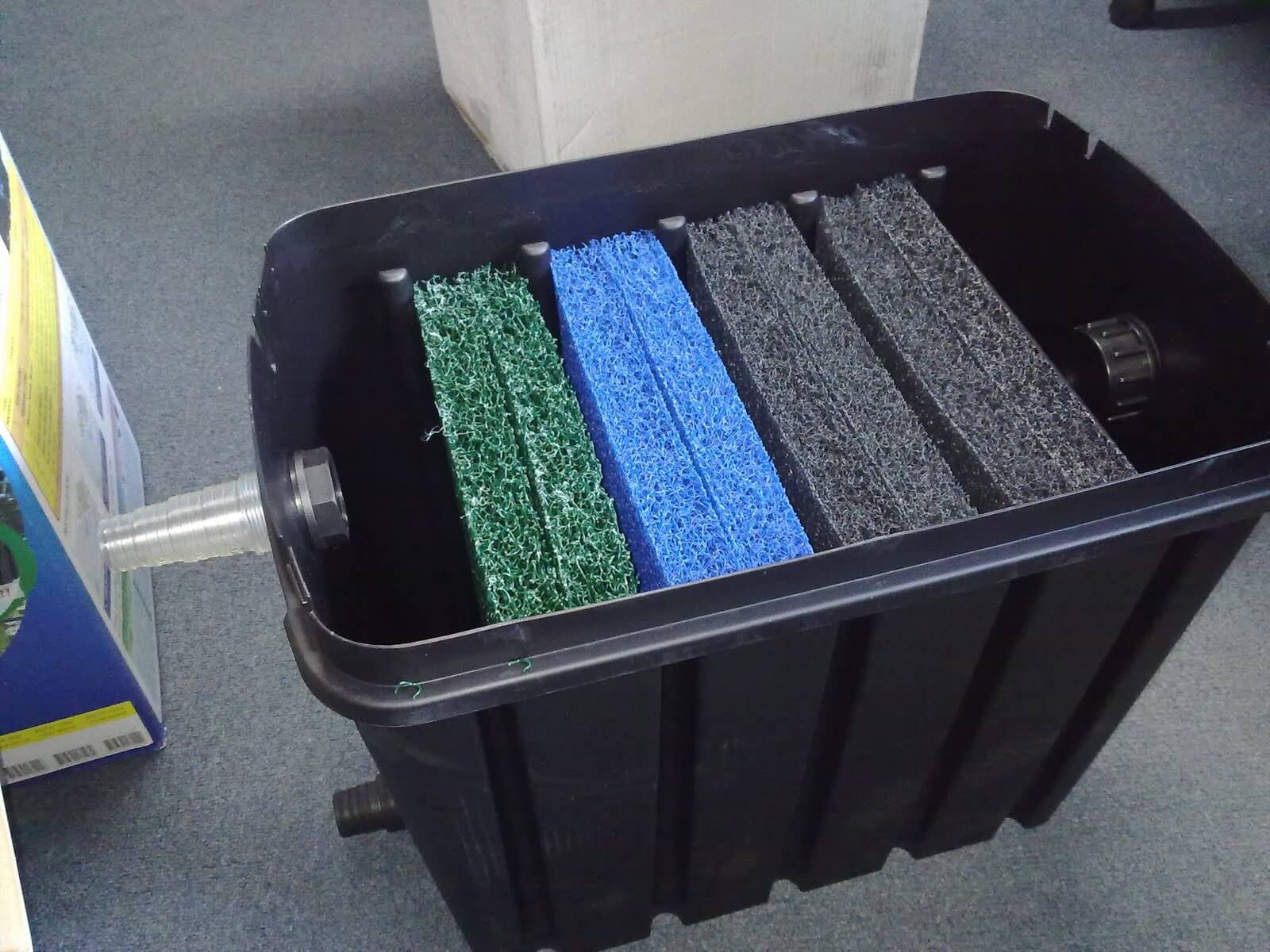
- Mechanical: This is the sponge or floss. It catches the floating fish poop and uneaten flakes. It keeps the water looking pretty.
- Biological: This is the most vital. It’s where the bacteria live. Ceramic rings, bio-balls, or even just a coarse sponge provide the "apartments" for these microbes.
- Chemical: This is usually activated carbon or resins like Seachem Purigen. It removes tannins (that tea-colored tint from wood) and odors.
Most people overdo the chemical and ignore the biological. If you have to choose, always prioritize more biological media. Your fish don't care if the water has a slight yellow tint, but they definitely care if there is 1.0 ppm of ammonia in the water.
The flow rate mistake
People look at the box and see "100 Gallons Per Hour" and think it’s perfect for their 20-gallon tank. Generally, you want to turn over your total water volume about 4 to 6 times every hour. So, for a 20-gallon tank, you want a filter that actually moves about 80–120 GPH.
But remember: as the filter gets dirty, that flow drops. A filter stuffed with gunk might only move half of its rated capacity. Always over-filter. You can't really have water that's "too clean," as long as the current isn't blowing your fish against the glass.
Real-world troubleshooting: When things go wrong
Let's say your filter starts making a grinding noise. It’s usually the impeller—the little spinning magnet fan inside. Snails love to crawl in there and get stuck. Sand is also a killer. If you have a sand substrate and you stir it up during a water change, a grain can get into the motor and chew it up.
If your water turns cloudy white, that’s a "bacterial bloom." It usually happens in new tanks. Your fish tank water filter system isn't broken; the bacteria are just frantically trying to find a place to live. Don't panic. Don't change the water every day. Just wait. It'll clear up on its own once the colony balances out.
And for the love of everything, don't use soap. Ever. One drop of dish soap on a filter sponge can kill an entire tank. If you need to scrub a filter intake, use a dedicated toothbrush and hot water. Nothing else.
Nuance in filtration: Not everyone agrees
There is a whole movement in the hobby called the Walstad Method, named after Diana Walstad. These people don't use filters at all. They use heavy loads of live plants and a dirt substrate to do the work. It’s beautiful, but it's "expert mode."
For 95% of us, we need that mechanical help. But it shows that the filter is just a tool to mimic nature. In a river, the rocks and the flow do the work. In a glass box, the plastic box on the back has to do it.
What to do right now
If you’re staring at your tank wondering if your filtration is up to par, start with the "squeeze test." Is your sponge so clogged that water is bypassing it? Clean it in a bucket of tank water.
Next, check your parameters. A fish tank water filter system is only successful if your Ammonia and Nitrites are at 0. If they aren't, your filter is either too small, too new, or you’re overfeeding your fish.
Actionable Steps for a Healthier Tank:
- Ditch the monthly cartridge replacement. Buy a block of coarse aquarium foam and cut it to fit your filter. It’ll last years and save your bacteria.
- Check your intake. If you have small fish, slip a "pre-filter sponge" over the intake tube so they don't get sucked in.
- Test your water weekly. Use a liquid test kit (like the API Master Kit) rather than strips, which are notoriously inaccurate.
- Increase surface agitation. If your fish are at the top gasping, your filter isn't breaking the surface of the water enough to let oxygen in and CO2 out. Adjust the flow or lower the water level slightly to create a splash.
- Baffle the flow. If your filter is too strong for your fish, tie a piece of filter sponge or a cut-up water bottle to the output to spread the force of the water.