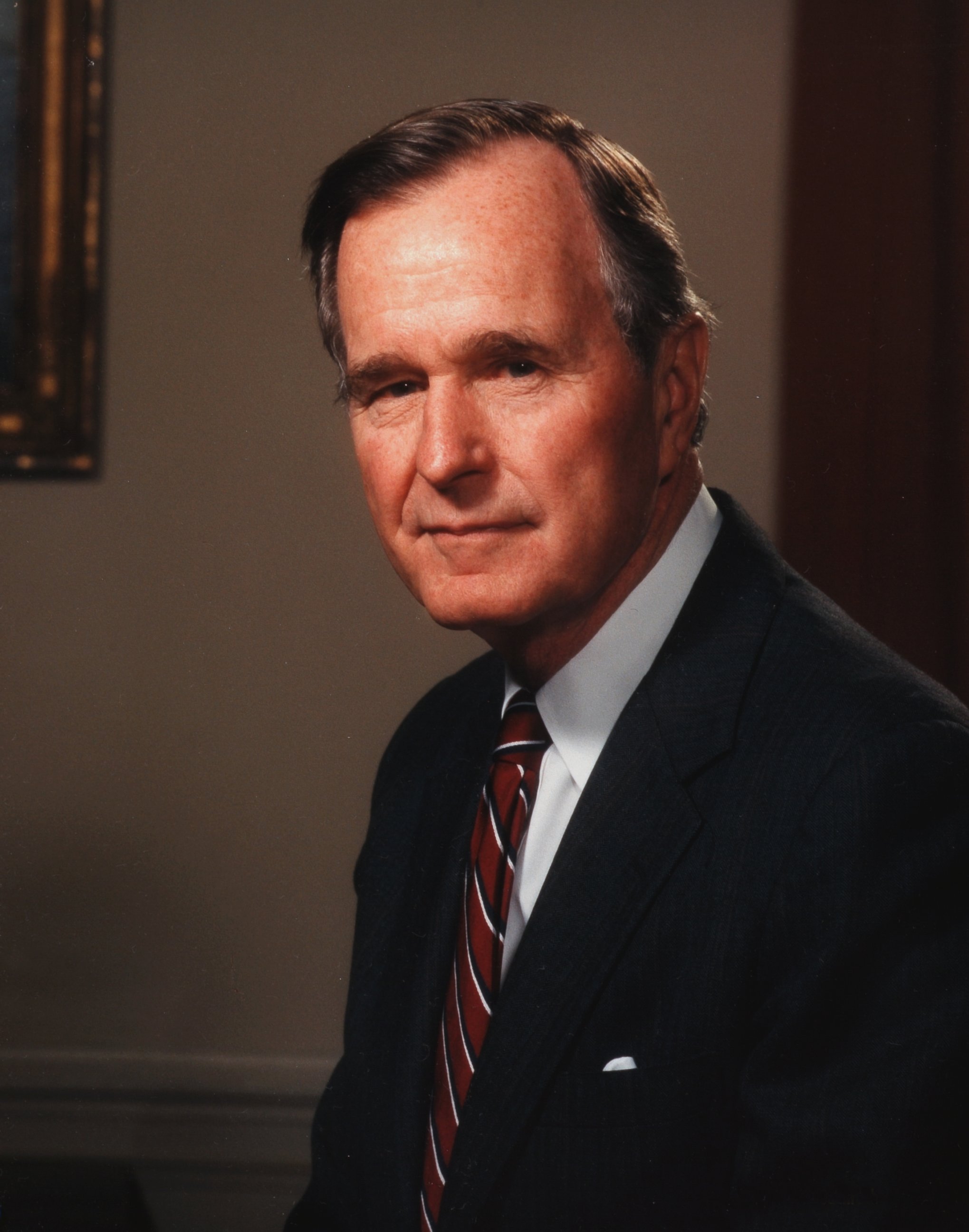
If you’re trying to keep the legacy of George Bush straight, you aren't alone. It is a bit of a mess, honestly. We have two men, same name, one family, and two entirely different eras of American history that somehow bleed into one another. People often talk about "Bush" as if he’s a singular entity, but that’s like saying the 1990s and the 2000s were the same decade. They weren't. Not even close.
One was a World War II pilot who survived being shot down over the Pacific. The other was a Texas Rangers owner who traded Sammy Sosa. One oversaw the end of the Cold War with a sort of quiet, old-school diplomacy that feels like ancient history now. The other launched a "War on Terror" that basically redefined the 21st century.
The "Read My Lips" Problem and George H.W. Bush
Let’s talk about the first George Bush, the father. George Herbert Walker Bush. He was basically the last of a breed. He was a "Yankee Republican" who moved to Texas to make it in oil, but he always kept that New England prep school energy. He was incredibly qualified—CIA Director, Ambassador to the UN, Vice President. On paper, he was the most prepared guy to ever walk into the Oval Office.
But politics is brutal.
He’s mostly remembered by casual history fans for one sentence: "Read my lips: no new taxes." He said it at the 1988 Republican National Convention. It was a smash hit. Then, reality hit. The deficit was exploding, and he had to work with a Democratic Congress. He raised taxes. It was probably the "right" thing to do for the economy, but it was political suicide. He lost his re-election to Bill Clinton in 1992 because he seemed "out of touch." Remember the story about him being amazed by a grocery store scanner? Most historians now say that was a bit of a media hit job—he was actually looking at a new type of scanner that could read torn barcodes—but the image stuck.
He was a one-term president who actually had an incredible foreign policy record. He managed the collapse of the Soviet Union without a nuclear war breaking out. Think about that. The biggest geopolitical shift of the century happened on his watch, and it was... peaceful? That’s rare.
George W. Bush and the 9/11 Pivot
Then you have "Dubya." George Walker Bush.
If his dad was the sophisticated diplomat, the younger George Bush was the guy you wanted to have a beer with. That was his whole brand. He leaned into the Texas brush-clearing, cowboy-boot-wearing persona. He didn't want to be the world’s police officer when he started. In his early debates, he actually argued against "nation-building."
Then September 11 happened.
Everything changed. His presidency became a relentless, decade-long focus on the Middle East. You had the Patriot Act, the Department of Homeland Security, and the invasion of Iraq. It’s hard to overstate how much this version of George Bush polarized the country. In 2001, his approval rating was near 90%. By 2008, as the housing market collapsed and the Iraq War dragged on, he was one of the most unpopular outgoing presidents in history.
It’s a wild arc.
The Policy Differences You Forgot
We tend to lump them together, but their domestic agendas were night and day.
- The father signed the Americans with Disabilities Act (ADA). If you see a wheelchair ramp today, you can thank the first Bush. It was a massive piece of civil rights legislation that he championed.
- The son pushed No Child Left Behind. He was obsessed with "accountability" in schools. It’s still controversial today, but it changed how every single public school in America operates.
- The father was a traditional environmentalist in some ways; he signed the 1990 Clean Air Act amendments to fight acid rain.
- The son was much more focused on "energy independence," which usually meant more drilling and less regulation.
Why the Bush Legacy is Being Re-evaluated
It’s funny how time works.
During the Trump era, both George Bush figures saw a weird spike in popularity among liberals who used to hate them. Why? Because they represented "institutional" Republicanism. They believed in the NATO alliance, free trade, and a certain level of decorum.
George H.W. Bush died in 2018, and his funeral was a massive moment of national nostalgia. People missed the "kinder, gentler nation" he talked about. Even George W. Bush, who was once the target of intense protests, is now seen by some as a "statesman" because he paints portraits of veterans and shares cough drops with Michelle Obama at funerals.
But we shouldn't let nostalgia blur the facts.
The 2003 invasion of Iraq, led by the younger George Bush, remains one of the most consequential and debated foreign policy decisions in American history. It cost trillions of dollars and hundreds of thousands of lives. No amount of "nice guy" vibes changes that reality. Similarly, the father’s "Willie Horton" ad in 1988 is still studied in colleges as a prime example of using racial fear in political campaigning.
How to Tell Them Apart (The Quick Guide)
If you're ever in a trivia night or writing a paper, here is the cheat sheet.
George H.W. Bush (The Father, "41"):
- Served 1989-1993.
- The Gulf War (Operation Desert Storm). This was the "good" war with the high approval ratings where we kicked Iraq out of Kuwait and then left.
- The Berlin Wall fell.
- Vomit-gate. He actually threw up on the Japanese Prime Minister during a dinner. True story.
George W. Bush (The Son, "43"):
- Served 2001-2009.
- The Iraq War and Afghanistan.
- Hurricane Katrina. This was a massive blow to his reputation regarding disaster response.
- The 2008 Financial Crisis.
They are two different men from two different versions of America. One was the end of the "Greatest Generation" leadership. The other was the beginning of the hyper-polarized, post-9/11 world we’re still living in today.
The Family Business
The "Bush Dynasty" is a real thing. It wasn't just the two presidents. You had Jeb Bush, the Governor of Florida, who was supposed to be the "smart one" who became president (until 2016 happened). You have Prescott Bush, the senator grandfather. They are basically the Republican version of the Kennedys, minus the Camelot myth and plus a lot more oil money.
What We Can Learn From the Bush Eras
Looking back at George Bush—either of them—shows how much the Republican party has mutated. Neither of these men would likely survive a modern GOP primary. They were "Globalists" in the sense that they believed America should lead the world through alliances. They weren't "America First" in the way we see now.
When you study their lives, you see the tension between private character and public policy. Most people who worked for the elder Bush described him as the kindest, most decent man in the world. He wrote handwritten thank-you notes to everyone. Yet, his campaigns were some of the toughest ever run.
The younger Bush was known for his loyalty and his "gut" instinct. He famously said he looked into Vladimir Putin’s eyes and "got a sense of his soul." Years later, that looks like a pretty big misreading of the situation.
Actionable Steps for Understanding Presidential History
If you really want to get a handle on the George Bush impact, don't just read Wikipedia.
- Watch the documentaries. 41 is a great look at the father’s life, narrated by him. For the son, the Frontline episode "The Bush's War" is a masterpiece of investigative journalism.
- Visit the Libraries. If you’re ever in College Station or Dallas, the presidential libraries are actually worth it. They don't just show the good stuff; they usually have sections on the controversies, too.
- Read the Biographies. Jon Meacham’s Destiny and Power is the definitive book on the father. It’s long, but it’s worth it. For the son, check out Decision Points—his own memoir—to see how he justifies the Iraq invasion in his own words.
Understanding these two men is the only way to understand how we got to where we are now. You can't explain the current state of American politics without looking at the 1992 recession or the 2003 invasion of Iraq. It’s all connected. The "Bush years" aren't just a chapter in a textbook; they are the foundation of the modern world.
To dig deeper, start by comparing the inaugural addresses of 1989 and 2001. You’ll see a fascinating shift from a focus on "a thousand points of light" (volunteerism) to a "compassionate conservatism" that eventually gave way to a wartime presidency. Look for the specific language they used regarding America's role in the world; it tells you everything you need to know about how the office changed them.