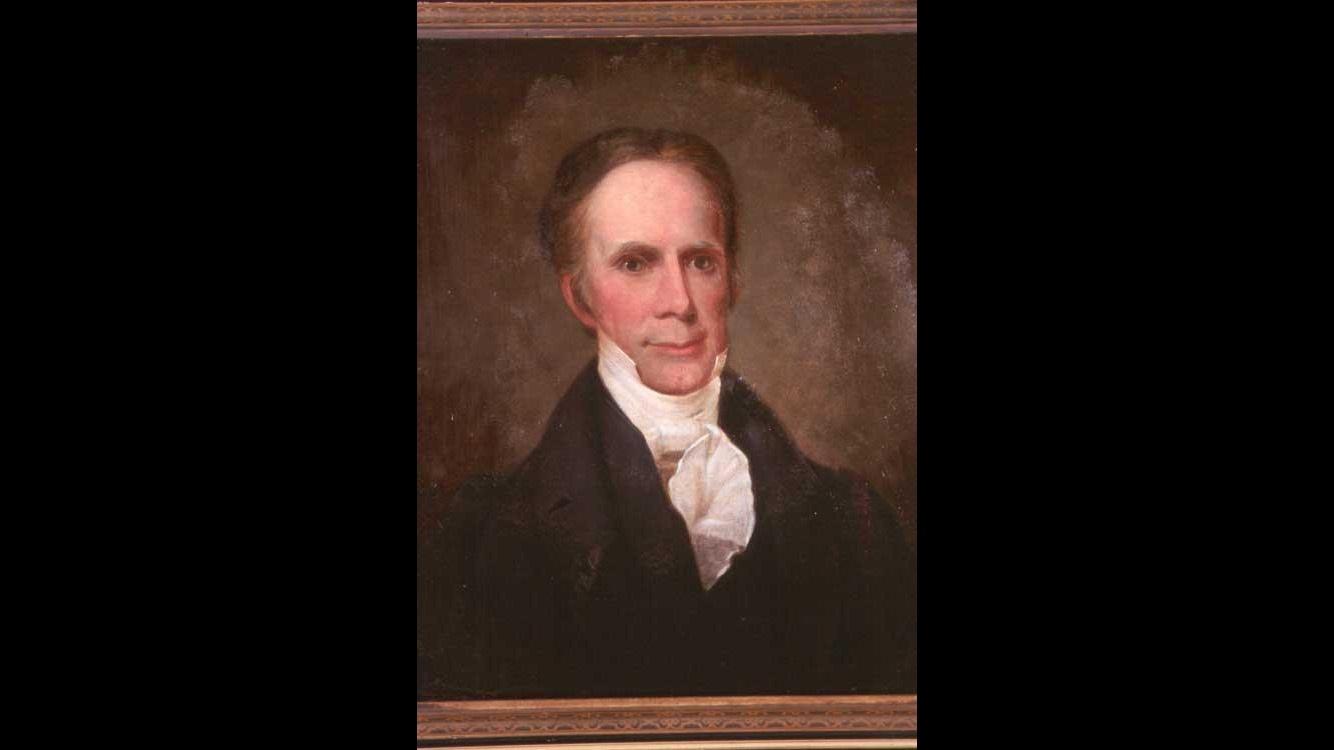
You’ve probably seen the name Henry Clay on a bronze plaque or in a dusty textbook and wondered if he was just another 19th-century guy with high collars and a stern expression. Honestly, most people skip over him. But here’s the thing: without Henry Clay, the United States might have snapped in half decades before the Civil War actually started.
He was the ultimate political "fixer."
Clay wasn't just a politician; he was a force of nature who dominated the American scene for nearly half a century. People called him the "Great Compromiser" and the "Great Pacificator." He was the Speaker of the House, a Senator, and the Secretary of State. He ran for president five times. He lost five times.
What is Henry Clay Known For? The Big Picture
At his core, Henry Clay is known for being the glue that held a fracturing nation together. He lived in a time when the North and South were basically two different countries sharing a single name. He made it his life's mission to keep them from killing each other.
His legacy is built on three massive pillars: the American System, a series of high-stakes legislative compromises over slavery, and his role in the infamous "Corrupt Bargain" of 1824.
The American System: Building a Modern Nation
Clay had a vision. He didn't want the U.S. to be a collection of isolated farms. He wanted an industrial powerhouse. To do that, he pushed the American System. It sounds fancy, but it was basically a three-part plan:
- Protective Tariffs: High taxes on imported goods to make American-made stuff more competitive.
- A National Bank: To keep the currency stable and handle the government’s money.
- Internal Improvements: A 19th-century way of saying "let’s build some roads and canals."
He wanted to link the Kentucky farmer to the New York merchant. It was about making the states depend on each other so they’d be less likely to split up.
The Great Compromiser in Action
If there was a fire in Washington, Clay was usually the one holding the bucket. He’s the guy who hammered out the Missouri Compromise of 1820. The country was screaming about whether Missouri should be a slave state or a free state. Clay stepped in and said, "Look, let’s bring in Missouri as slave and Maine as free. Everyone gets something, nobody is happy, but we stay united."
It worked. For a while.
Then came the Compromise of 1850. This was his last hurrah. He was old, sick with tuberculosis, and could barely stand. But he stood on the Senate floor and pleaded for the Union. This deal brought California in as a free state but also included a stricter Fugitive Slave Act. It was messy. It was controversial. But it bought the U.S. another ten years of peace.
That "Corrupt Bargain" Mess
You can't talk about Clay without mentioning the 1824 election. It was a disaster. Andrew Jackson won the most popular and electoral votes, but not a majority. The decision went to the House of Representatives.
Clay was the Speaker of the House. He hated Jackson—thought he was a "military chieftain" who would be a dictator. So, Clay threw his support behind John Quincy Adams. Adams won, and then immediately named Clay Secretary of State.
Jackson's fans lost their minds. They screamed "Corrupt Bargain!" until their faces turned red. This move basically killed Clay’s chances of ever becoming president. It haunted him for the rest of his life.
A Complicated Man on Slavery
Clay’s personal life was full of contradictions. He called slavery a "great evil," yet he owned slaves his entire life. He was a leader of the American Colonization Society, which wanted to send freed Black people to Liberia. He thought Black and white people couldn't live together in peace.
He wasn't an abolitionist. He was a Unionist. He cared about the map more than the people on it, which is a hard truth to swallow today.
Why He Still Matters
Henry Clay reminds us that politics used to be about the art of the deal. He knew that in a democracy, you rarely get 100% of what you want. He was willing to be hated by both sides if it meant the country survived another Tuesday.
If you want to understand why the Civil War took so long to break out, look at Clay. He was the wall of sandbags holding back the flood.
Next Steps for Your Research
To truly grasp the weight of Henry Clay's impact, you should look into the specific debates of the Compromise of 1850. Specifically, read the speeches of the "Great Triumvirate"—Clay, Daniel Webster, and John C. Calhoun. It shows the exact moment the American experiment almost failed. You might also find it interesting to visit Ashland, his estate in Lexington, Kentucky, which functions as a museum dedicated to his complicated life and legacy.