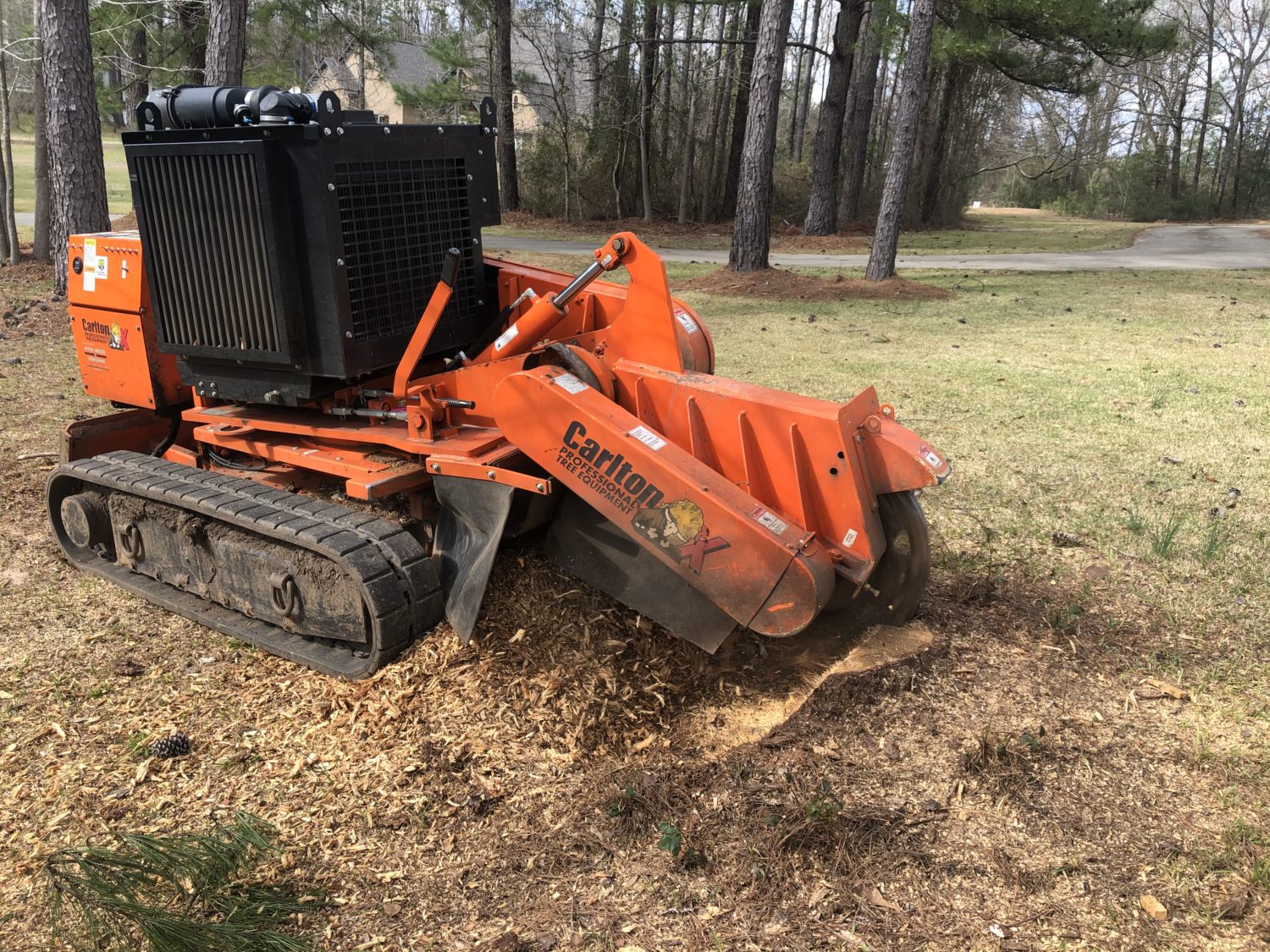
Stumps are a pain. You cut down a beautiful oak or a dying pine, and you're left with this ugly, ankle-breaking monument to a tree that just won't go away. Most people think they can just hook a chain to their Ford F-150 and yank it out. Don't do that. You'll probably leave your bumper in the grass or snap a high-tension line. If you want that eyesore gone, you’ve gotta learn how to use a stump grinder the right way.
It’s loud. It’s messy. It’s actually kinda satisfying once you get the rhythm down.
Rentals usually cost somewhere between $150 and $400 for a day, depending on if you’re getting a small handlebar unit or a massive hydraulic beast on tracks. If you have one massive stump, it's a weekend project. If you have ten, you better drink a lot of coffee because you’re in for a long haul.
Preparation is where most people fail
You can't just wheel the machine over and start chewing wood. Well, you can, but you're going to break a tooth—on the machine, not in your mouth, hopefully.
First, get a shovel. Clear the rocks. Rocks are the natural enemy of carbide-tipped teeth. If the grinder hits a fist-sized granite rock buried in the dirt, it’s going to spark, scream, and potentially dull a $40 tooth instantly. Most rental yards will charge you for damaged teeth. It adds up.
Trim the stump close to the ground. Use a chainsaw. If your stump is sticking up two feet in the air, you’re making the grinder do way more work than it needs to. Get it down to within five or six inches of the soil. It saves time. It saves fuel. It makes the whole process way less of a vertical struggle.
Gear that actually matters
Don't wear your favorite sneakers. You’re going to be standing in a literal hurricane of wood chips and dirt. Use steel-toe boots if you have them. At the very least, wear heavy work boots.
- Hearing protection: These engines are usually 13HP to 25HP and they sit right in front of your face.
- Face shield: Safety glasses aren't enough. Wood chunks fly back at high velocity. A full mesh or plastic face shield is the pro move here.
- Long pants: Jeans. Not shorts. Ever.
Understanding the machine's anatomy
Most rental units are "pedestrian" grinders. You stand behind the handlebars. There’s a massive circular blade at the front with carbide teeth bolted to it. This wheel spins vertically.
The controls are basic but touchy. You have a throttle, a blade engagement lever (often a dead-man’s switch), and a brake on one of the wheels. That brake is the secret. It acts as a pivot point. If you don't lock one wheel, the machine will just wander around your yard like a drunk dog.
How to use a stump grinder without losing control
Position the machine so the wheel is right over the edge of the stump. Not the middle. The edge.
Lock the wheel brake on the side you want to pivot from. Lift the cutter head, engage the drive, and slowly lower it into the wood. You want to take side-to-side swipes. It’s like painting, but with a spinning wheel of death. Move the head across the stump, take out a few inches of depth, then swing it back.
Don't push too hard. If the engine starts to bog down or the belt starts squealing, back off. You're being too aggressive. The wood will tell you how fast it wants to disappear. Pine is like butter. Oak or Hickory? That’s going to take a minute. Honestly, it's a bit of a workout for your forearms.
The deep dive: Dealing with roots
A stump isn't just a circle. It’s an iceberg.
The main trunk is what everyone sees, but the flare—the part where the trunk meets the ground—is often much wider than you realize. You need to grind the "flare" first. If you don't, you'll find yourself trapped by the surrounding roots before you've even finished the core.
Sweep the grinder in wide arcs. Go beyond the visible wood. You’ll see the dirt start to "heave" a bit where roots are hiding just under the turf. Dig the nose of the grinder in there. You want to go about 6 to 8 inches below the soil line. Why? Because if you ever want to grow grass there again, you need enough soil depth for the roots to take hold. If you only grind flush to the ground, you’ll just have a bald spot in your lawn forever.
Why precision beats power
I've seen guys try to use a stump grinder like a lawnmower, just pushing it forward. That’s a great way to snap a drive belt.
The "sweep" is the only way to do it. You’re using the side of the teeth, not just the very tip. If you’re using a hydraulic unit with a joystick, it’s a lot easier on your back. But most DIYers end up with the manual sweep versions. Pro tip: use your hips to swing the machine, not just your arms. You’ll be less sore the next day.
Troubleshooting on the fly
What happens if the machine stops cutting?
Check the teeth. If they look rounded off or if the carbide tips are missing, you’re just rubbing metal against wood. It generates heat and smoke but zero progress. Stop. Call the rental place.
If the machine is vibrating violently, you might have a chunk of wood wedged in the guard. Shut it down completely. Wait for the wheel to stop spinning—this can take a full minute—and then clear the debris with a stick. Never use your hands. Even with the engine off, those teeth are sharp enough to ruin your week.
The mess no one tells you about
Grinding a stump creates a massive volume of debris. It’s not just "some chips." It’s a literal mountain.
Because the wood is mixed with dirt, you can't really use it for high-quality mulch. It’s a "stump mix." It will be roughly three times the volume of the hole you just dug. You’ll have a giant mound of fluff.
Don't just leave it there. It’s acidic and will settle over time. Shovel out the excess. You’ll want to fill that hole with topsoil later. If you leave the chips in the hole, they’ll rot, the ground will sink, and you’ll have a mini-crater in two years. Plus, rotting wood attracts termites and carpenter ants. Get the chips out of there if the stump was close to your house.
Safety realities and local laws
Before you even pick up the rental trailer, call 811. Or whatever your local "call before you dig" number is.
Trees love water. Water pipes and sewer lines are often right underneath or tangled in tree roots. If you chew through a 2-inch PVC water line or a fiber optic cable, your "cheap DIY project" just became a $5,000 nightmare. It’s free to get the lines marked. Just do it.
Variations in stump types
- Freshly cut trees: These are wet. The sap will gum up the grinder. It’s doable, but slower.
- Old, rotted stumps: These are the best. They practically explode into dust.
- Palm trees: These aren't actually wood; they're fibrous. They tend to wrap around the wheel. Be careful and clear the "stringy" bits often.
Practical steps for a clean finish
Once the wood is gone and you’ve ground down deep enough, stop the machine and pull it away. Take a rake and level the area. You’re looking for any "knees" or high spots you missed.
- Rake out the heavy chunks: Throw them in the woods or a green waste bin.
- Fill with topsoil: Buy more than you think. Soil settles.
- Tamp it down: Don't just pour it in loose. Step on it.
- Seed or sod: If you’re seeding, cover it with a bit of straw so the birds don't eat your hard work.
Learning how to use a stump grinder isn't about brute force. It's about patience and pivoting. It’s a rhythmic process. Swing, drop, swing, move.
When you return the machine, wash it off. Rental yards appreciate it when they don't have to scrape five gallons of mud off the chassis. It might even save you a cleaning fee.
Actionable Next Steps:
- Measure the widest part of your stump (including the root flare) before calling the rental yard so they give you a machine with enough swing-width.
- Locate your nearest gas station that sells mid-grade fuel, as many of these small engines run better on it and you'll need to return the tank full.
- Clear a 10-foot radius around the work site of any lawn ornaments, loose rocks, or garden hoses that could get caught in the debris spray.