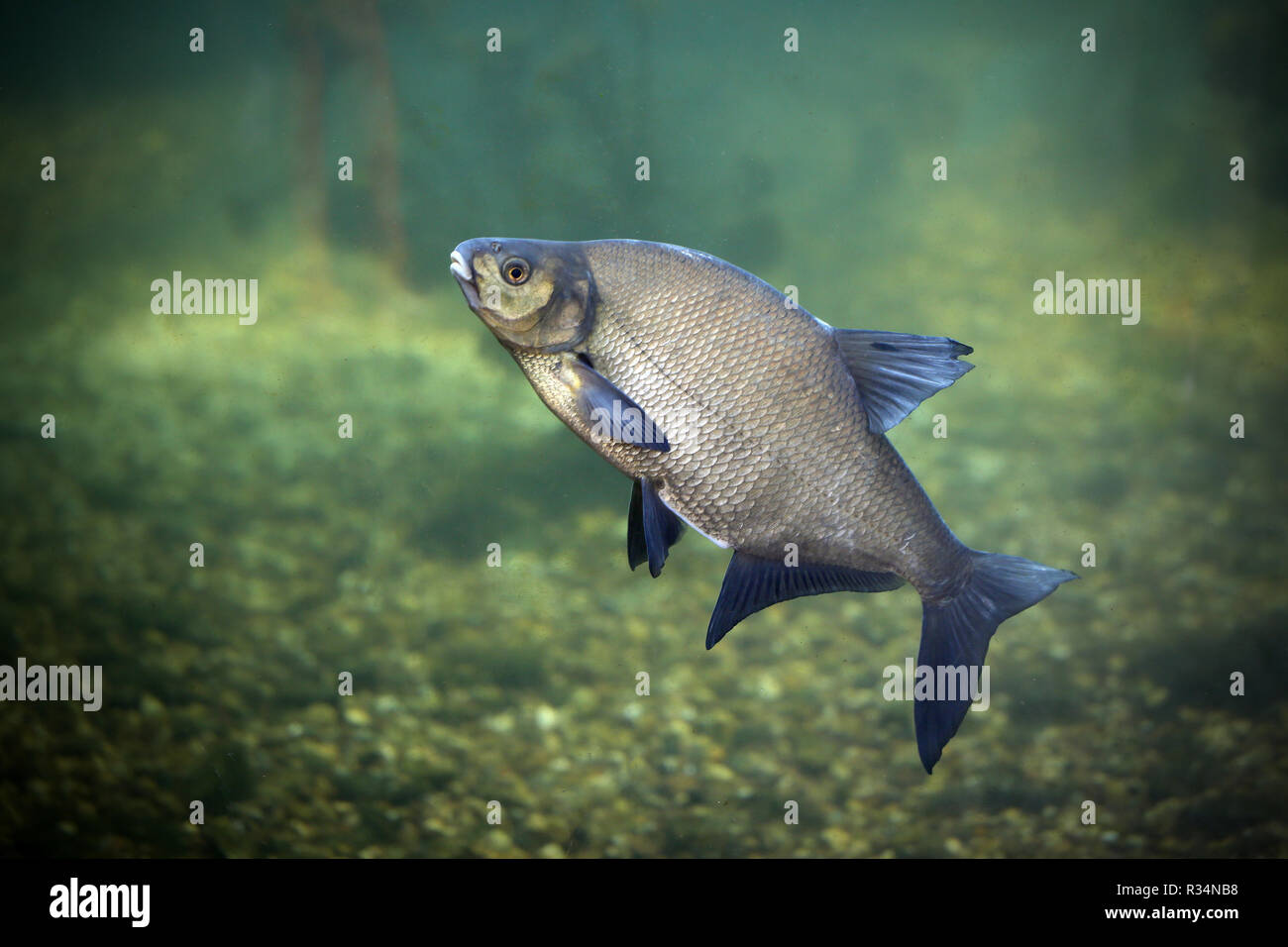
You’re staring at a screen full of pictures of freshwater bream fish and honestly, you're probably more confused than when you started. It’s a mess out there. If you’re in the US, you’re likely looking at a Bluegill or some other type of sunfish. If you’re in the UK or Europe, you’re looking at Abramis brama, a slimy, deep-bodied slab of a fish that lives in slow-moving rivers.
Names matter. But images matter more when you're trying to figure out what just snapped your line or what’s hovering under the dock.
Most people get this wrong because "bream" is a linguistic junk drawer. In the American South, people call almost any small, flat panfish a "brim." In Australia, they have silver seabream, which are saltwater. For the sake of clarity, we’re sticking to the true freshwater heavyweights: the European Bream and the American Sunfish often called by the same name.
Why most pictures of freshwater bream fish are misleading
Go ahead and image search it. You’ll see a chaotic mix of vibrant purple-and-orange fish and dull, olive-grey giants. It’s a nightmare for identification. The problem is that "bream" isn't a single species in the way "Largemouth Bass" is.
The European Bream is a member of the carp family. It’s built like a dinner plate held vertically. When they’re young, they’re called "skimmers" because they’re thin and silvery. As they age, they turn a deep, burnished bronze. If you see a photo of a fish that looks like it was hammered out of an old penny, that’s a mature bronze bream.
On the flip side, the American "bream" is usually a Bluegill (Lepomis macrochirus). These guys are colorful. We’re talking iridescent blues on the gill plates and a dark "ear" flap. They are tiny compared to their European namesakes. While a massive Bluegill might hit two pounds, a European bream can easily top fifteen.
The Anatomy of a Bronze Bream
Look closely at the fins. In authentic pictures of freshwater bream fish from Europe, the anal fin is incredibly long. It starts mid-belly and runs almost to the tail. This is a dead giveaway.
They also have a distinct lack of scales on a small ridge on their back, just behind the head. It’s called a "scale-less keel." Most casual photographers miss this detail, but if you’re looking at a high-res shot, it’s the gold standard for ID.
Their mouths are weird, too. They’re protrusible. This means the mouth actually tubes outward like a vacuum attachment so they can suck bloodworms out of the silt. If the fish in the photo has a tiny, puckered mouth that looks like it’s reaching for something, you’re looking at a bottom-feeder.
Identifying Common Look-Alikes
Silver bream (Blicca bjoerkna) are the most common source of photo confusion. They look almost identical to young bronze bream.
How do you tell them apart? You count the scales.
Seriously. Experts like those at the Canal & River Trust point out that silver bream have larger eyes relative to their heads. If the fish in the picture looks like it’s had too much espresso, it’s probably a silver bream. Also, silver bream have 44 to 48 scales along their lateral line, whereas the common bronze bream has 51 to 60.
Then there’s the hybrid. Nature is messy. Bream frequently breed with Roach or Rudd. These "bastard" fish show up in galleries all the time and drive anglers crazy. They’ll have the body shape of a bream but the bright red fins of a rudd. It’s a genetic mashup that makes a single "perfect" picture impossible to find.
What the environment tells you about the photo
Context is everything.
If you see a photo of a fish being held over a bed of lily pads in a clear, shallow pond in Georgia, it’s a Bluegill. Call it a bream if you want, but scientifically, it’s a sunfish.
If the photo shows a misty, dark river in the Norfolk Broads or a massive reservoir in Ireland, and the fish is covered in a thick layer of protective slime, that’s the Abramis species. The slime is actually a defense mechanism. It protects them from parasites and helps them slip through thick underwater vegetation. Anglers actually joke about "bream slime" because it’s notoriously difficult to get off your clothes.
Lighting and Color Shifting
Water clarity changes how these fish look in photos. In peat-stained water (common in Ireland), bream can look almost black. In clear chalk streams, they stay silvery-blue for much longer into their adulthood.
Don't trust the color alone. Trust the shape.
The "hump-back" is a major indicator. As freshwater bream grow, the area behind the head slopes upward aggressively. It gives them a stooped, powerful appearance. This isn't for speed; it's for stability while they tilt their heads down to feed on the bottom.
How to take a "Scientific Quality" fish photo
If you’re trying to contribute to a database or just want a positive ID from an expert, stop taking "hero shots" where your hands cover the fish.
- The Lateral Profile: Lay the fish flat on a wet unhooking mat. Take the photo from directly above, not at an angle.
- The Fin Spread: Try to capture the dorsal (top) and anal (bottom) fins extended. The ray count in these fins is the only way to be 100% sure about hybrids.
- The Eye-to-Snout Ratio: A clear side-profile of the head helps distinguish between Common and Silver varieties.
- Scale Detail: Modern smartphone cameras are great for this. Get close enough to see the individual scales along the lateral line.
Misconceptions about "Giant" Bream Pictures
You’ve probably seen those "monster fish" photos circulating on social media. Usually, it’s forced perspective. Someone is holding a five-pound fish three feet in front of their body so it looks like a whale.
Real giants exist, though. The British record stands at nearly 23 pounds. That’s a massive animal. When you see a photo of a fish that size, the "dinner plate" analogy fails. It looks more like a trash can lid.
Interestingly, the biggest fish often don't look "healthy" in the traditional sense. They get scarred, their scales get ragged, and they lose that bright metallic sheen. Old fish are often a dull, matte brown.
Why do people even care about these photos?
For scientists, pictures of freshwater bream fish are data points. They track the spread of invasive species or the health of a waterway. For the rest of us, it’s about the connection to a hidden world. Most people walk past a river and see a flat surface. These photos prove there are bronze-colored behemoths vacuuming the mud just ten feet away from the bank.
Actionable Tips for Better Identification
If you’re looking at a photo and trying to play detective, follow this checklist. Forget the name on the caption; trust your eyes.
- Check the mouth: Is it pointing forward or down? (Down = True Bream).
- Look at the tail: Deeply forked tails are standard for the species.
- Observe the slime: Does the fish look "wet" even in dry light? True bream have a much heavier mucus layer than sunfish or perch.
- Examine the fins: Are they dark or red? Dark grey/black fins usually mean a purebred bronze bream. Red or orange tints usually signal a hybrid with a Roach or Rudd.
- Scale size: Large, distinct scales are a hallmark of the Silver Bream. Smaller, more tightly packed scales belong to the Bronze.
To get a definitive ID, compare your photo against the official species galleries on the International Game Fish Association (IGFA) website or the FishBase global database. These sites use verified specimens rather than user-generated content, which filters out the common naming errors found on social media. If you're in the UK, the Angling Trust provides excellent visual ID guides that help separate the common bream from the silver bream and their various hybrids.
The next time you see a "bream" photo, look for that long anal fin and the bronze sheen. You'll know exactly what you're looking at, regardless of what the caption says.