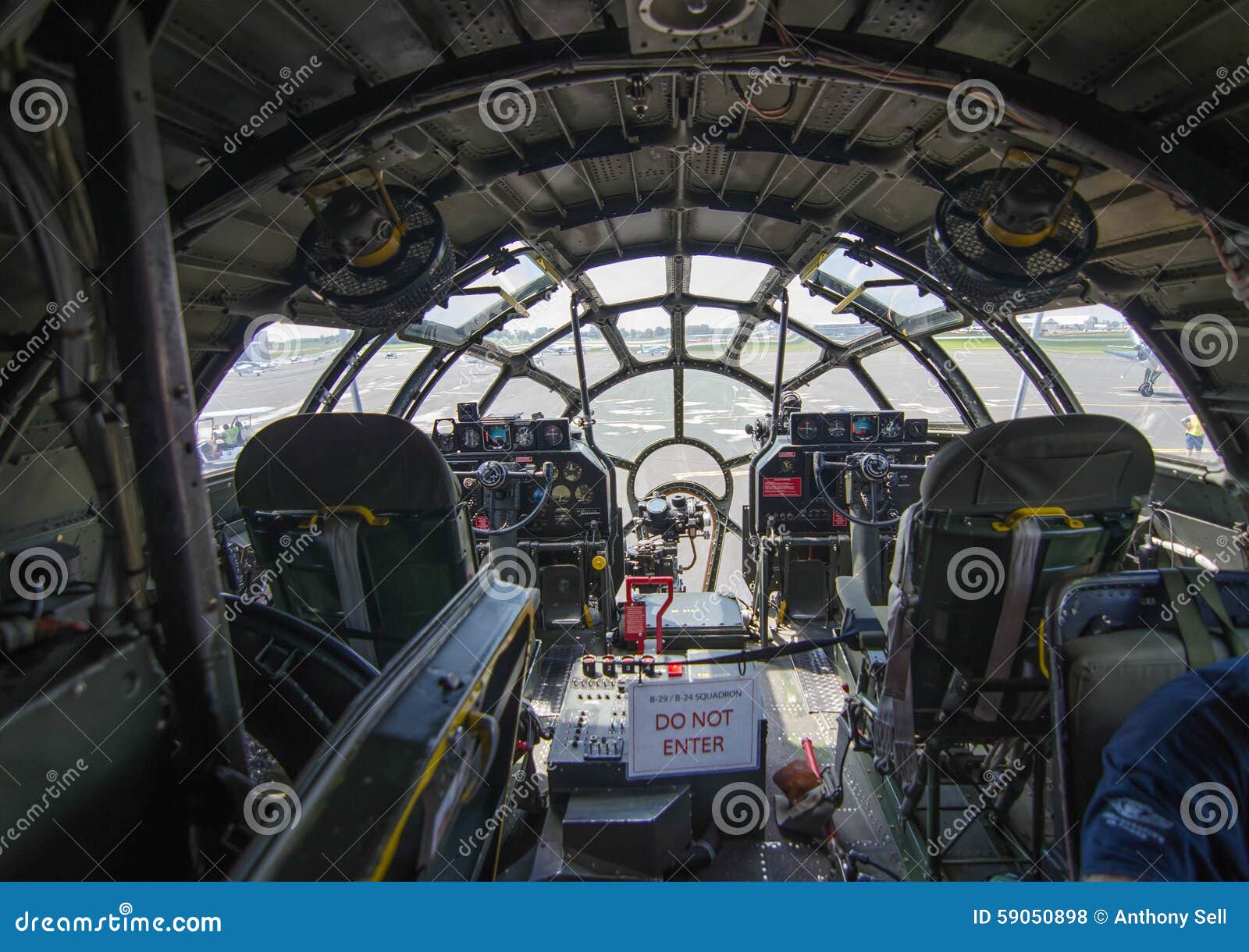
It is basically a windowless office flying at 40,000 feet. Most people imagine the interior of the world’s most expensive aircraft to look like something out of a sci-fi movie—glowing neon lines, holographic interfaces, maybe a sleek, minimalist aesthetic. The reality of being inside a B-2 cockpit is actually a lot more cramped, surprisingly analog in spots, and incredibly beige.
Whiteman Air Force Base is the only place these things live. If you’ve ever seen one on the tarmac, the Spirit looks like a giant black boomerang. It’s smooth. It’s alien. But once you climb that narrow ladder behind the nose gear, the illusion of "the future" hits the harsh reality of 1980s engineering.
The cockpit is tiny.
Seriously. For a plane with a 172-foot wingspan, the crew space is roughly the size of a walk-in closet. There are two seats: the Mission Commander on the right and the Pilot on the left. Unlike a B-52, which carries a small army of crew members, the B-2 Spirit does everything with just two people. That means these two pilots are doing the job of a navigator, a bombardier, and an electronic warfare officer while also actually flying the jet. It’s a lot.
The Glass That Isn't Quite Glass
When you’re inside a B-2 cockpit, the first thing you notice is the "tape." It’s not actually tape, but the cockpit windows are divided by heavy frames and coated in a fine layer of gold. This isn't for luxury. The gold film helps dissipate radar energy, preventing the pilot’s helmet or the metal seat from reflecting a signal back to an enemy dish.
Visibility is... okay. It’s not great.
You can’t see behind you. At all. There are no rearview mirrors like a fighter jet. You are basically looking through four narrow panes of glass. Because the plane is a "flying wing" with no vertical tail, the flight computers are constantly making tiny adjustments to the split rudders on the wingtips to keep the thing stable. If those computers failed, the plane would basically tumble out of the sky like a falling leaf.
The instrument panels are a mix of old-school switches and what pilots call "glass." In the early 90s, it was cutting edge. Today, the CRT-style screens have mostly been replaced by flat-panel displays during various Block upgrades, but the tactile feel is still very much "Cold War era."
Living in a Flying Closet for 40 Hours
The B-2 doesn't just fly short hops.
During missions like Operation Allied Force or the initial strikes in Afghanistan, B-2 crews flew round-trip from Missouri to the Middle East. We are talking 30, 40, or even 44 hours in the air.
How do you survive that inside a B-2 cockpit?
There is a tiny space behind the seats. It’s about the size of a yoga mat. One pilot can unbuckle and lie down to catch a few hours of sleep while the other stays on the stick. But "sleep" is a generous word. You’re lying on a hard floor with a thin foam pad, inches away from vibrating electronics and the hum of the environmental control system.
Then there’s the "toilet." It’s essentially a stainless steel chemical toilet—basically a glorified bucket with a lid—located right behind the right-hand seat. There is no door. There is no privacy. If you’re flying a 40-hour mission, you better be very comfortable with your co-pilot.
- Food: Most pilots bring "dash food." Think Uncrustables, beef jerky, or specialized heaters that plug into the 28-volt DC outlets.
- The "Kitchen": There is a small hot cup heater. It’s used to make coffee or heat up soup. It’s the only luxury in an aircraft that costs roughly $2 billion.
- The Deck: The floor is flat. Pilots often bring a small folding lounge chair (a "lawn chair") to sit in the space behind the seats when they aren't actively flying.
The Mental Toll of Stealth
You can't just turn on a radio and listen to music.
In a stealth environment, emissions control (EMCON) is everything. You are silent. You aren't talking to controllers unless it’s absolutely necessary. You are a ghost. This creates a psychological vacuum. The pilots have to monitor the "Z-axis"—basically making sure the plane's stealth profile isn't being compromised by a flap sticking or a sensor malfunction.
The B-2 uses a system called the PESA (Passive Electronically Scanned Array) radar, though more modern AESA systems have been integrated. The pilots spend hours staring at these screens, looking for "threat rings." These are visual representations of enemy radar range. The goal of the B-2 isn't to outrun a missile; it’s to never be in a position where a missile can see it.
The "Secret" Third Seat
One of the weirdest bits of trivia about being inside a B-2 cockpit is the third seat.
Wait, I thought there were only two pilots?
There are. But the cockpit was originally designed to hold a third crew member. There is a mounting point for a third ejection seat (an ACES II seat, same as the others). While the Air Force eventually decided the automation was good enough for two people, the space remains. Usually, it’s just used for storage or as that aforementioned "sleeping nook."
In some rare training missions, a third person—an instructor or an evaluator—might actually be squeezed in there. It makes an already tight space feel like a submarine.
What You Can't Touch
Everything is classified. Even the way the switches are grouped is sensitive. If you ever see a "sanitized" photo of the B-2 interior, you’ll notice entire panels are blurred out. This isn't just to hide the tech; it’s to hide the "logic" of how the plane operates.
The throttles are located on a center pedestal between the two pilots. They don't look like the throttles in a 747. They are beefy, ergonomic grips designed to be used while wearing heavy flight gloves. Every button on those throttles has a "HOTAS" (Hands On Throttle and Stick) function, allowing the pilot to change radar modes or target weapons without ever looking down.
The Difficulty of Landing a Wing
Landing a B-2 is notoriously stressful.
Because it lacks a tail, it’s very sensitive to crosswinds. When you’re inside a B-2 cockpit during a landing at Whiteman, you feel the plane "hunting" for the centerline. The rudders—those split flaps on the ends of the wings—act as both airbrakes and directional controls.
The landing gear is massive. When it cycles, you can hear the heavy mechanical thud through the floorboards. It’s one of the few times the plane feels like a "heavy" bomber rather than a nimble wing.
Practical Takeaways for Aviation Enthusiasts
If you're fascinated by the engineering of the Spirit, keep these technical realities in mind:
- Low Observable (LO) Maintenance: The cockpit isn't just a flight deck; it's a pressurized bubble within a delicate skin. Every time a panel is opened for maintenance, it has to be painstakingly re-taped and coated to maintain the stealth signature.
- Radiation Shielding: The cockpit is hardened against electromagnetic pulses (EMP). If a nuclear blast goes off nearby, the electronics inside a B-2 cockpit are designed to keep functioning while civilian tech would be fried.
- The "Pink" Lighting: Pilots often use low-intensity red or "NVIS" compatible lighting to preserve night vision. It gives the interior a haunting, subterranean feel during night sorties.
The B-2 is currently being supplemented and eventually replaced by the B-21 Raider. While the Raider looks similar from the outside, the cockpit is expected to be a generation ahead—likely using more augmented reality and even fewer physical switches. But for now, the B-2 remains the king of the "long-haul" strike. It’s a testament to 80s over-engineering that a plane designed on drafting boards is still the most feared asset in the sky.
If you ever get the chance to see a cockpit trainer at a museum like the National Museum of the U.S. Air Force, take it. Just don't expect a lot of legroom.
To truly understand the B-2, you have to look past the stealth coating. You have to look at the two people sitting in Missouri-made chairs, drinking lukewarm coffee, and staring at green screens for 30 hours straight. That is the real "magic" of the stealth bomber. It’s a human endurance test wrapped in a billion dollars of carbon fiber.