Walking into the lobby of One World Trade Center for the first time is weird. You expect it to feel heavy, maybe even a little somber, given the history of the site. Instead, it’s blindingly bright. The white marble floors reflect the massive floor-to-ceiling windows, and the sheer scale makes you feel about two inches tall. It’s not just an office building. It’s a massive, high-tech fortress that happens to house some of the biggest companies in the world.
Honestly, most people think "inside the World Trade Center" just means the observatory at the top. They buy a ticket, ride the elevator, and leave. But there is an entire ecosystem happening behind the security badges. There are newsrooms, tech startups, a massive transit hub that looks like a prehistoric skeleton, and a labyrinth of underground corridors that link everything together. It's a city within a city.
The Architecture of One World Trade Center
One World Trade Center—often called the Freedom Tower, though locals rarely use that name anymore—is the anchor. It’s 1,776 feet tall, a deliberate nod to the year of independence. Inside, the design by David Childs of SOM is all about clean lines and, more importantly, safety.
The base of the building is basically a concrete bunker. You don't see it because it's covered in glass fins, but those first 186 feet are windowless for a reason. Inside this "podium," there are massive mechanical floors and the main lobby. When you stand in that lobby, the ceilings are 50 feet high. It’s airy. It feels like a cathedral of capitalism.
The elevators are a whole different story. They are some of the fastest in the Western Hemisphere. You hit the 102nd floor in about 47 seconds. While you’re going up, the walls of the elevator—which are actually floor-to-ceiling LED screens—show a time-lapse of New York’s skyline from the 1500s to today. It’s a bit of a gimmick, sure, but it’s a good one. Your ears pop exactly at the moment the 1980s skyline fades into the present day.
What’s Actually on the Office Floors?
If you aren't a tourist, you’re there to work. The tenant list is a weird mix. You have Condé Nast, the media giant behind Vogue and The New Yorker, taking up a huge chunk of the middle floors. Then you have tech firms like Celonis and financial companies like BMO.
The floor plans are open. Because the building uses a "central core" design—meaning all the elevators, bathrooms, and stairs are in the middle—the actual office space is a big, uninterrupted ring. There are no columns blocking your view. If you’re a junior editor at a magazine there, you might have a cubicle, but your "window view" is a panoramic shot of the Statue of Liberty. It’s distracting.
Is it quiet? Mostly. The glass is incredibly thick. You’re looking down at the chaos of Lower Manhattan, the yellow cabs looking like ants, but you can’t hear a single honk. It feels detached. It feels like you’re watching a silent movie of the world.
The Oculus: Not Just a Pretty Ribcage
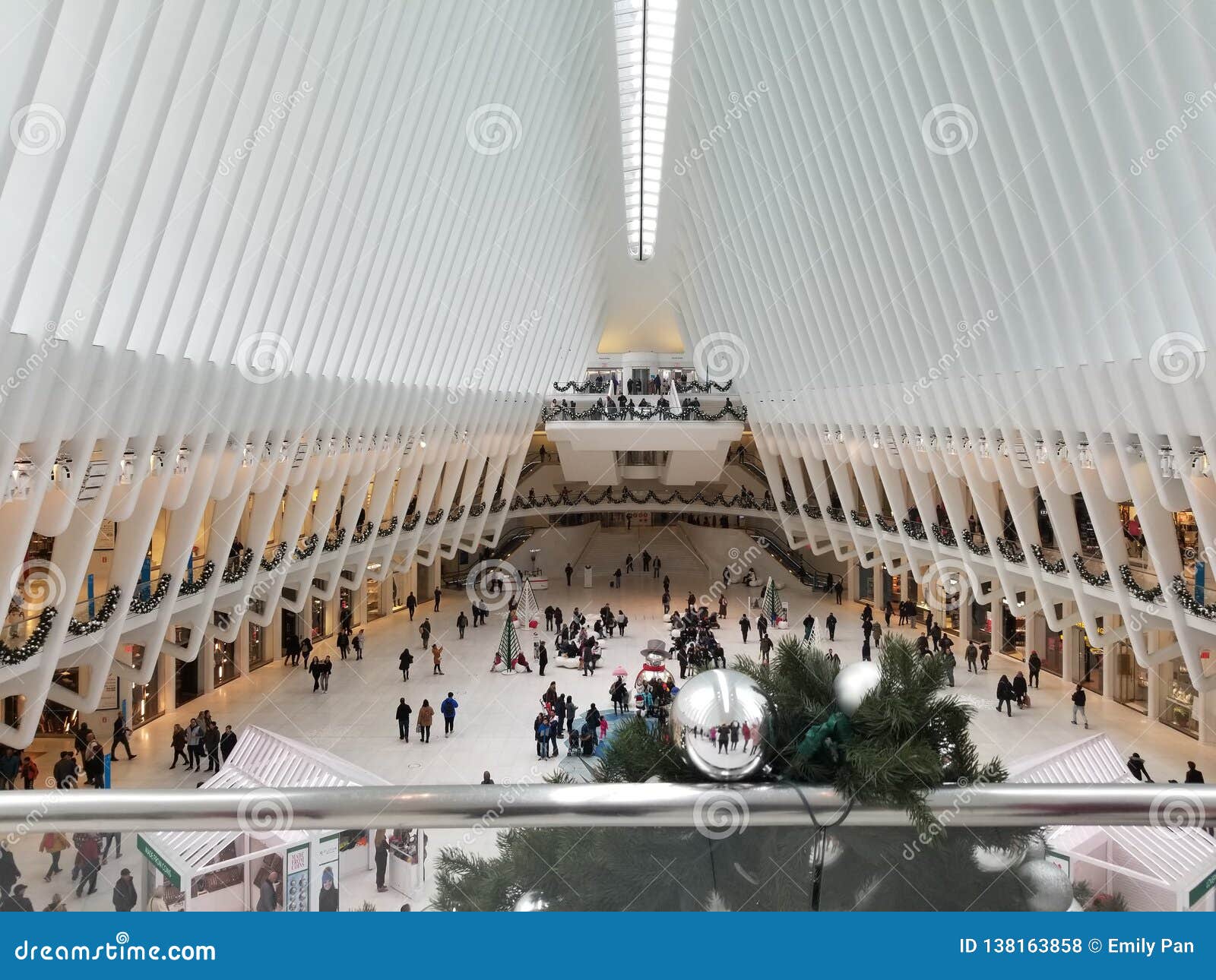
You can’t talk about the inside of the World Trade Center without mentioning the Oculus. This is the PATH station and shopping mall designed by Santiago Calatrava. From the outside, it looks like a white bird being released. From the inside, it looks like you’ve been swallowed by a giant whale.
It’s controversial. It cost roughly $4 billion.
But walking through it is an experience. The floor is Italian white Carrara marble. It’s so white it’s almost painful on a sunny day when the light streams through the skylight. It’s filled with high-end stores—Apple, Dior, Breitling. It’s a mall, but it doesn't feel like a mall in New Jersey. It feels like a museum where you happen to be able to buy an iPhone.
The most interesting part of the Oculus is the "Way of the World." This is the underground corridor that connects the transit hub to the rest of the complex. It’s lined with digital screens that are sometimes art and sometimes just very expensive advertisements. If you follow these tunnels, you can walk from the subways all the way to the Brookfield Place winter garden without ever stepping outside. In a New York winter, this is a godsend.
The Security You Don’t See
Let’s be real: security is the main feature of being inside the World Trade Center. You don't just "walk in" to the office towers.
There are tiers of access. Visitors for the offices have to be pre-registered in a system called Visitor ID. You show your passport or driver's license, get your photo taken, and get a printed badge. Then you go through turnstiles that look like something out of a sci-fi movie.
The building is built with a redundant steel framework and a massive concrete core. The stairwells are extra wide and pressurized to keep smoke out in case of a fire. There’s a dedicated fire command center. You feel it when you’re in there—this sense that the building is incredibly solid. It’s probably the safest office space on the planet.
The View from 100 Floors Up
The One World Observatory occupies floors 100, 101, and 102.
Most people expect to just look out a window. But the "inside" experience is choreographed. You start at the See Forever Theater, where a video of New York life plays on a screen that then lifts up to reveal the actual skyline. It’s a "wow" moment, even for cynical locals.
The 100th floor is the main deck. It’s a 360-degree view. You can see the curvature of the earth on a clear day. You see the bridges—the Brooklyn, Manhattan, and Williamsburg—looking like little strings across the East River.
The dining situation? There’s a place called One Dine on the 101st floor. It’s expensive. You’re paying for the altitude. Honestly, the food is fine, but you’re there to eat a steak while looking down at a helicopter. It’s a weird flex.
Misconceptions About the Complex
A lot of people think the "inside" is just one building. It’s not. There is 3 World Trade Center, 4 World Trade Center, and 7 World Trade Center.
3 WTC is the one with the exposed diamond-shaped bracing. Inside, it has a massive outdoor terrace on the 17th floor that looks right into the memorial pools. 4 WTC is perhaps the most "zen." Its lobby is minimalist, with black wood and huge windows that reflect the park outside. It feels more like a tech campus in San Francisco than a New York skyscraper.
Then there’s the Perelman Performing Arts Center (PAC NYC). It’s that big translucent cube. Inside, the walls are made of thin marble laminated with glass. During the day, it looks solid. At night, the light from inside glows through the stone. It’s a theater, but the interior is modular—they can literally move the floors and walls to change the shape of the stage.
The Basement and the Foundation
If you go deep enough, you hit the "bathtub." This isn't a place to swim. It's the massive concrete slurry wall that keeps the Hudson River from flooding the entire site.
When you go inside the 9/11 Museum, which is located beneath the memorial plaza, you are actually seeing the "inside" of the original foundation. You see the original box columns. You see the "Last Column" covered in inscriptions. It’s the only part of the complex where the "inside" feels connected to the past rather than the future. It’s cold down there. The air feels different.
Practical Advice for Visiting or Working There
If you’re heading inside, don't just wander aimlessly. New York security guards have zero patience for people standing in the middle of the lobby floor.
- For the Observatory: Book the earliest morning slot. The light is better for photos and the crowds are thinner. If you go at sunset, expect to be shoulder-to-shoulder with 500 other people holding iPhones.
- For the Oculus: Don't just stay on the top level. Go down to the bottom floor and stand right in the center of the marble oval. Look up. It’s the best architectural view in the city.
- For Food: Don't eat at the tourist traps inside the Oculus if you're on a budget. Walk through the underground tunnel to Brookfield Place. There’s a high-end food court called Hudson Eats with better options (and a view of the river).
- For Logistics: Wear comfortable shoes. You will walk more than you think. The distance between the subway platform and the actual office elevators can be a quarter-mile trek.
The inside of the World Trade Center is a strange blend of a high-security government facility, a luxury shopping mall, and a corporate powerhouse. It’s efficient, it’s beautiful, and it’s a bit intense. But mostly, it’s a testament to the idea that life in New York just keeps moving, even at 1,700 feet in the air.
To get the most out of your visit, start at the Oculus at street level to appreciate the scale, then take the underground passage toward the towers to see the transition from public transit to private commerce. If you're looking for the museum, remember it's a separate entry on the plaza; don't try to find it from inside the office lobbies. Once you're done, exit toward the West Side Highway for a walk along the water to decompress from the sensory overload.