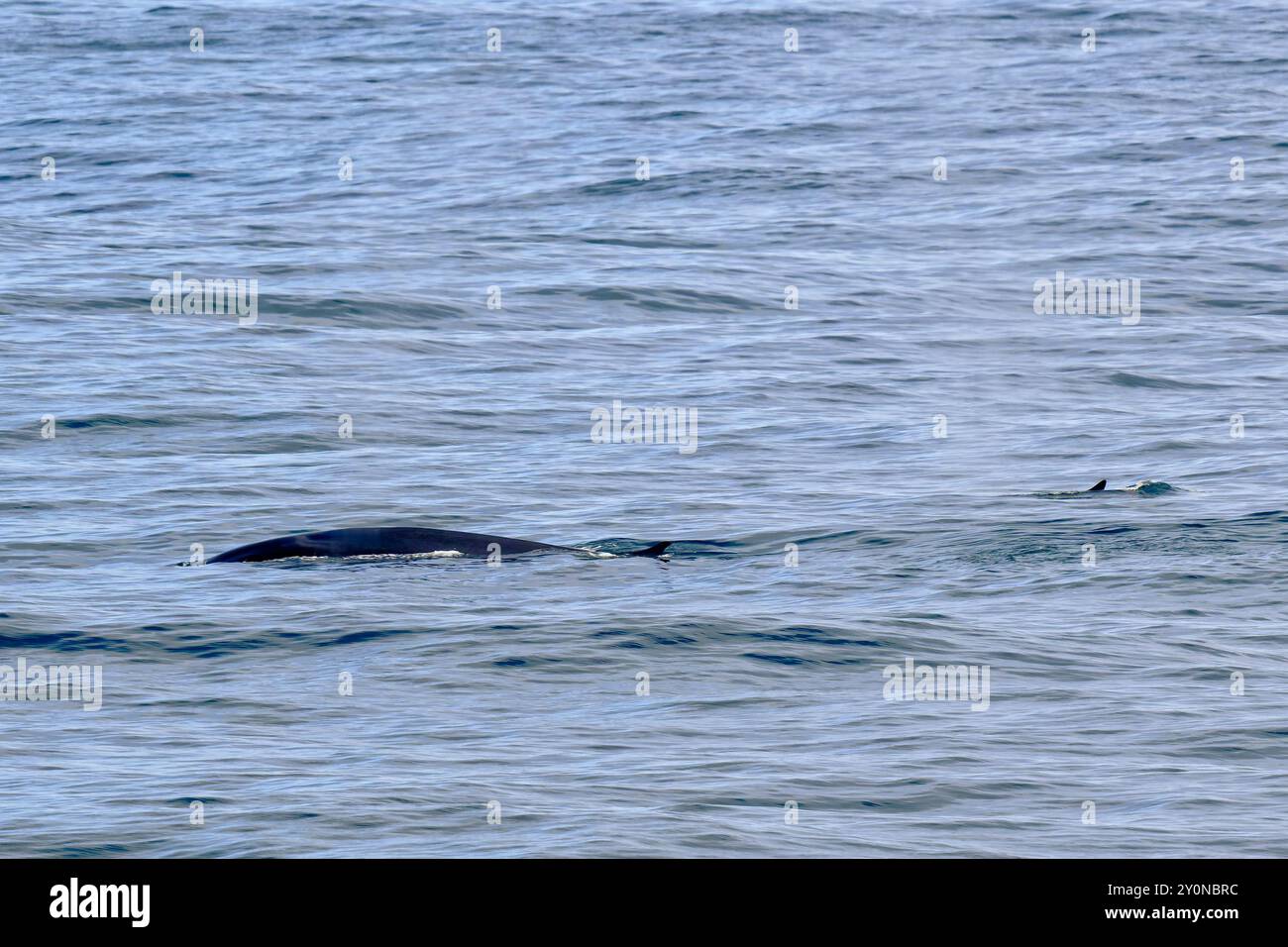
You’ve probably seen the grainy footage of a blue whale surfacing—that massive, mottled back that seems to go on forever before the tiny dorsal fin finally flickers past. It’s hard to wrap your brain around the scale. We’re talking about an animal that can grow to 100 feet long. Their tongues alone weigh as much as an entire elephant. But for all that size, they are incredibly fragile in the face of modern oceans. People always ask: is blue whale endangered species status still a thing? Honestly, the answer is a complicated "yes," but it’s not for the reasons it used to be.
We almost wiped them out. Completely.
Before industrial whaling took off, there were likely over 200,000 blue whales roaming the world's oceans. By the time the International Whaling Commission finally banned the practice in 1966, we had slaughtered more than 360,000 of them in the Antarctic alone. They were reduced to less than 1% of their original numbers. It was a biological catastrophe that we’re still trying to fix sixty years later.
The Current Verdict on Endangered Status
If you look at the official records from the International Union for Conservation of Nature (IUCN), the blue whale (Balaenoptera musculus) remains listed as Endangered. It’s been that way for decades. While some populations, like the ones off the coast of California, have shown amazing resilience, others are still teetering on the edge of extinction.
Numbers are tricky. Scientists at NOAA and the International Whaling Commission estimate there are now between 10,000 and 25,000 blue whales globally. That sounds like a decent amount until you realize how thinly they are spread across the planet’s vast blue voids.
Why recovery isn't a straight line
Biology is working against them. Blue whales are "K-strategists." That basically means they live a long time—sometimes 80 to 90 years—but they reproduce incredibly slowly. A female only gives birth every two or three years after a year-long pregnancy. If a population loses just a few breeding-age females to a ship strike or entanglement, it sets the recovery of that entire group back by a decade.
It’s a slow game.
The Modern Threats Nobody Saw Coming
Back in the early 1900s, the threat was a harpoon. Today, it’s a cargo ship carrying your latest Amazon order.
Ship strikes are arguably the biggest silent killer. Blue whales often feed in areas that overlap with major shipping lanes—think the Santa Barbara Channel or the waters off Sri Lanka. These whales are so big and move so relatively slowly near the surface that they often can’t get out of the way of a massive container ship moving at 20 knots. Most of these deaths go unrecorded because a struck whale usually sinks to the bottom of the ocean.
Then there’s the noise.
The ocean is loud now. Between shipping sonar, oil exploration, and military exercises, the "acoustic landscape" is a mess. Blue whales communicate using low-frequency pulses that can travel hundreds of miles. Imagine trying to have a conversation with a friend across a football field while a jet engine is idling right next to you. That’s their life. This noise pollution interferes with their ability to find mates and, more importantly, find food.
The Krill Problem
They eat krill. Almost exclusively. A single blue whale can eat four tons of these tiny crustaceans in a day. But climate change is warming the poles, and krill rely on sea ice to survive their larval stage. Less ice means fewer krill. If the "all-you-can-eat" buffet shuts down, the whales don't have a Plan B. They can't just start eating tuna or seals. They are specialized giants, and specialization is a dangerous gamble in a rapidly changing environment.
Are There Any Success Stories?
It isn't all gloom. The Eastern North Pacific population—the ones that migrate between Alaska and Central America—is a beacon of hope. Research led by Dr. Cole Monnahan has suggested that this specific group might actually be near "carrying capacity." This means they’ve recovered to a point where the environment can naturally support them again.
It proves that if we leave them alone, they can bounce back.
But the Antarctic blue whale? That’s a different story. They were hunted more relentlessly than any other group. Even today, their numbers are estimated to be only a tiny fraction of what they were in the 19th century. They are technically "Critically Endangered" as a subspecies.
What’s Being Done Right Now?
We aren't just sitting back watching them disappear. Real work is happening.
- Vessel Speed Reduction (VSR): In places like the Channel Islands National Marine Sanctuary, there are voluntary and sometimes mandatory speed limits for big ships. Slowing down from 20 knots to 10 knots drastically reduces the chance of a lethal strike.
- Satellite Tagging: Researchers at Oregon State University’s Marine Mammal Institute use tags to track whale movements in real-time. This data helps shipping companies move their lanes away from "hotspots" where whales are feeding.
- The Blue Whale Project: Multi-year studies are using photo identification (looking at the unique pigment patterns on their skin) to track individuals over decades. This helps us understand survival rates better than just guessing at total numbers.
The Reality of the "Endangered" Label
Is blue whale endangered species still an accurate description? Yes. But "Endangered" is a legal and scientific tool, not a death sentence. It provides the framework for international laws like the Marine Mammal Protection Act in the U.S., which makes it illegal to harass, hunt, or even get too close to one without a permit.
Without these protections, the "blue gold" of the whaling era would have been completely extinguished.
The fight has shifted from stopping the hunt to managing the habitat. We have to decide if we’re willing to slow down our global trade or change our carbon footprint to make room for them. They are the largest animals to ever live on Earth—bigger than any dinosaur. Losing them because we couldn't be bothered to move a shipping lane a few miles to the left would be a permanent stain on our history as a species.
Actionable Next Steps for Conservation
If you want to move beyond just reading and actually contribute to the survival of these giants, here is how you can practically engage with blue whale conservation:
Support Citizen Science
You don't need a PhD to help. Websites like Happywhale allow travelers and boaters to upload photos of whale flukes and skins. Their AI matching software identifies the individual whale, helping scientists track migration patterns and health without the need for expensive, invasive tagging expeditions.
Choose Sustainable Seafood
Entanglement in fishing gear is a major threat. Look for "whale-safe" or MSC-certified seafood. This ensures that the gear used to catch your fish has lower "bycatch" rates and is less likely to leave "ghost nets" drifting in the water where whales feed.
Reduce Your Carbon Footprint
Because the blue whale's food source (krill) is directly tied to ocean temperature and acidity, every bit of carbon reduction helps. Ocean acidification makes it harder for krill to form their shells. Transitioning to renewable energy and reducing plastic waste (which often ends up in the bellies of filter feeders) are long-term wins for whale habitat.
Advocate for Quiet Oceans
Support organizations like the Natural Resources Defense Council (NRDC) that lobby for regulations on oceanic noise pollution. Pushing for quieter ship engines and stricter rules on seismic testing for oil can give these whales the "acoustic space" they need to communicate and survive.
The recovery of the blue whale is one of the greatest potential comeback stories in nature. It's up to us to make sure the ending is a good one.