You know that feeling when you watch something you probably shouldn't have? Not because it’s illegal, but because it feels wrong. Like the images are physically staining your brain. That’s the specific brand of dread John Carpenter delivered with Masters of Horror Cigarette Burns. It wasn’t just a TV episode. Honestly, it felt like a curse.
Back in 2005, the Showtime anthology Masters of Horror was supposed to be a victory lap for the genre’s legends. But most of the entries were... fine. Serviceable. Then Carpenter showed up. After a string of box office duds and a general sense that the "Master" had lost his edge, he dropped a story about a movie that literally drives people to murder. It was meta. It was gruesome. It reminded everyone that the man who made The Thing could still make your skin crawl without even trying that hard.
The Myth of the Lost Film
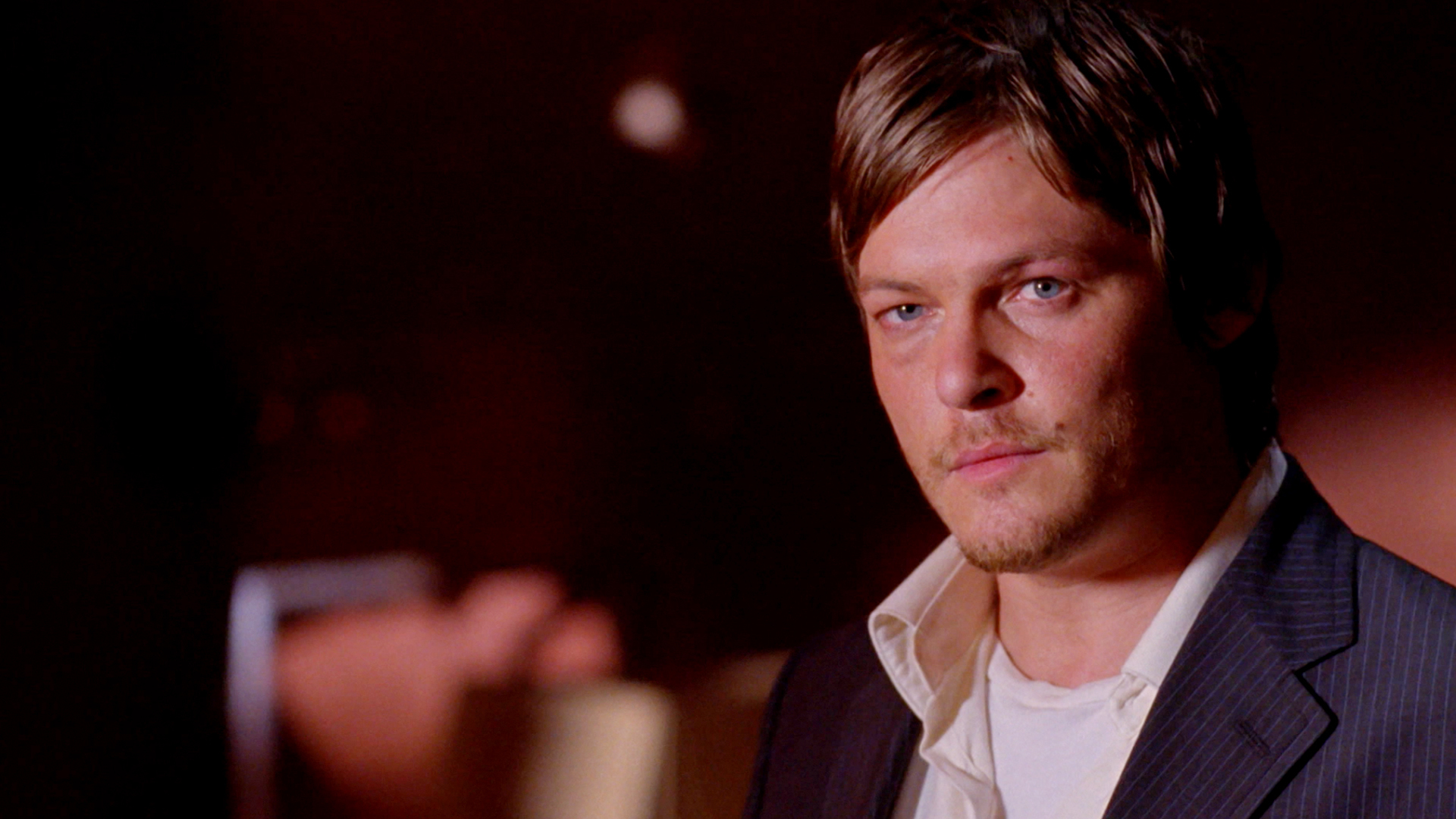
The plot is pretty straightforward, yet it gets under your skin. Norman Reedus—long before he was Daryl Dixon—plays Kirby Sweetman. He’s a guy with a messy past and a small theater, tasked by a bizarrely wealthy cinephile (played with glorious camp by Udo Kier) to find the only surviving print of a film called La Fin Absolue du Monde.
The title translates to The Absolute End of the World.
The legend goes that at its only screening, the audience went into a homicidal frenzy. We’re talking full-blown riots. Blood on the screen, blood in the aisles. Naturally, Kirby goes looking for it. He’s a "film hunter," a niche profession that feels incredibly cool until you realize he’s basically a private investigator for nerds with too much money.
What is a Cigarette Burn, Anyway?
Carpenter uses the title as a double meaning. In the world of analog film, a "cigarette burn" is that little circular flash in the top right corner of the frame. It signals the projectionist that the reel is about to end. It’s a cue. A flicker.
In Masters of Horror Cigarette Burns, these flashes become hallucinations. Kirby starts seeing them in his real life. They represent the bleeding of the "film" into "reality." It’s a brilliant metaphor for obsession. If you’ve ever stayed up until 4:00 AM researching an obscure topic or hunting for a rare piece of media, you know that blur. The world outside stops existing. Only the hunt matters.
Why It Hit Different in 2005
The mid-2000s were a weird time for horror. We were knee-deep in the "torture porn" era defined by Saw and Hostel. People wanted gore, but they often forgot the atmosphere. Carpenter, being an old-school technician, understood that the gore only works if the vibes are rancid.
He didn't just show you blood; he showed you a literal angel.
One of the most haunting images in the episode is a captured "angel" whose wings have been surgically removed. It’s grotesque. It’s sacrilegious. It’s exactly the kind of thing that makes you want to look away but keeps your eyes glued to the screen. The score, also by Carpenter (with help from his son Cody), is vintage synth-dread. It doesn't jump-scare you. It just hums in the background like a migraine.
The Meta-Commentary on Cinephilia
Let's talk about the ending. It’s messy. It’s violent. Udo Kier’s character eventually gets the film, and the way he "incorporates" himself into the screening is something you can't unsee. He literally feeds his own intestines into the projector. It’s a literalization of the idea that we give ourselves over to the art we love.
We consume media, but media also consumes us.
Carpenter was clearly processing his own relationship with the industry. After decades of fighting studios and dealing with "the business," he made a movie about how cinema is a dangerous, infectious medium. He’s telling us that some things aren't meant to be seen. But of course, because we’re human, that just makes us want to see them more.
Real-Life "Cursed" Films
While La Fin Absolue du Monde is fictional, the concept of a "lost" or "dangerous" film is rooted in real history. Think about the rumors surrounding The Exorcist or The Omen—the accidents on set, the deaths, the feeling that the celluloid itself was haunted.
Then there’s Atuk, the screenplay that supposedly kills anyone who tries to star in it. Or The Day the Clown Cried, Jerry Lewis’s unreleased Holocaust film that he kept locked in a vault because it was too misjudged to ever see the light of day. Carpenter taps into that specific anxiety: the idea that there is a piece of media out there so potent it could break your mind.
Technical Mastery on a Budget
What’s impressive is how much Carpenter achieved with such a limited budget and timeframe. These episodes were shot fast. Usually around ten days. For a guy used to big studio sets, that’s a sprint.
Yet, Masters of Horror Cigarette Burns feels expensive. The lighting is deliberate. The pacing is slow, almost hypnotic, until the final act when everything goes to hell. It’s a masterclass in "less is more." You don't see much of the actual "cursed" film. You only see the reactions of the people watching it. Their faces tell the story. Their screams do the heavy lifting.
Why You Should Revisit It Now
In an era of endless streaming and "content" (God, I hate that word), this episode feels like a relic from a more dangerous time. It’s a reminder that movies shouldn't just be background noise while you scroll on your phone. They should demand something from you.
Maybe don't watch it right before bed. Unless you want to start seeing those little circles in the corner of your eyes.
How to Experience "Cigarette Burns" the Right Way
If you’re looking to dive back into this piece of horror history, don't just stream it on a tiny phone screen. This is a story about the power of the image.
- Watch the High-Def Restoration: The Masters of Horror series has been released on Blu-ray. The physical media version captures the grain and the "burns" much better than a compressed stream.
- Contextualize the Creator: Watch it as part of a John Carpenter marathon. Slot it in between In the Mouth of Madness and Prince of Darkness. It’s part of his unofficial "Apocalypse Trilogy" vibe—the idea that the world is ending not with a bang, but with a weird, reality-warping whimper.
- Track Down the Soundtrack: The music is a huge part of why this works. It’s available on vinyl and digital. It’s perfect for when you need to feel deeply unsettled while doing the dishes.
- Explore the Source Material: The episode was written by Drew McWeeny and Scott Swan. If you like the "cursed object" trope, look into their other work or the short stories of Ramsey Campbell, who excels at this kind of "unreliable reality" horror.
The ultimate takeaway from Masters of Horror Cigarette Burns is a warning about the price of curiosity. Some mysteries are better left unsolved. Some films are better left unmade. But for horror fans, that warning is basically an invitation.