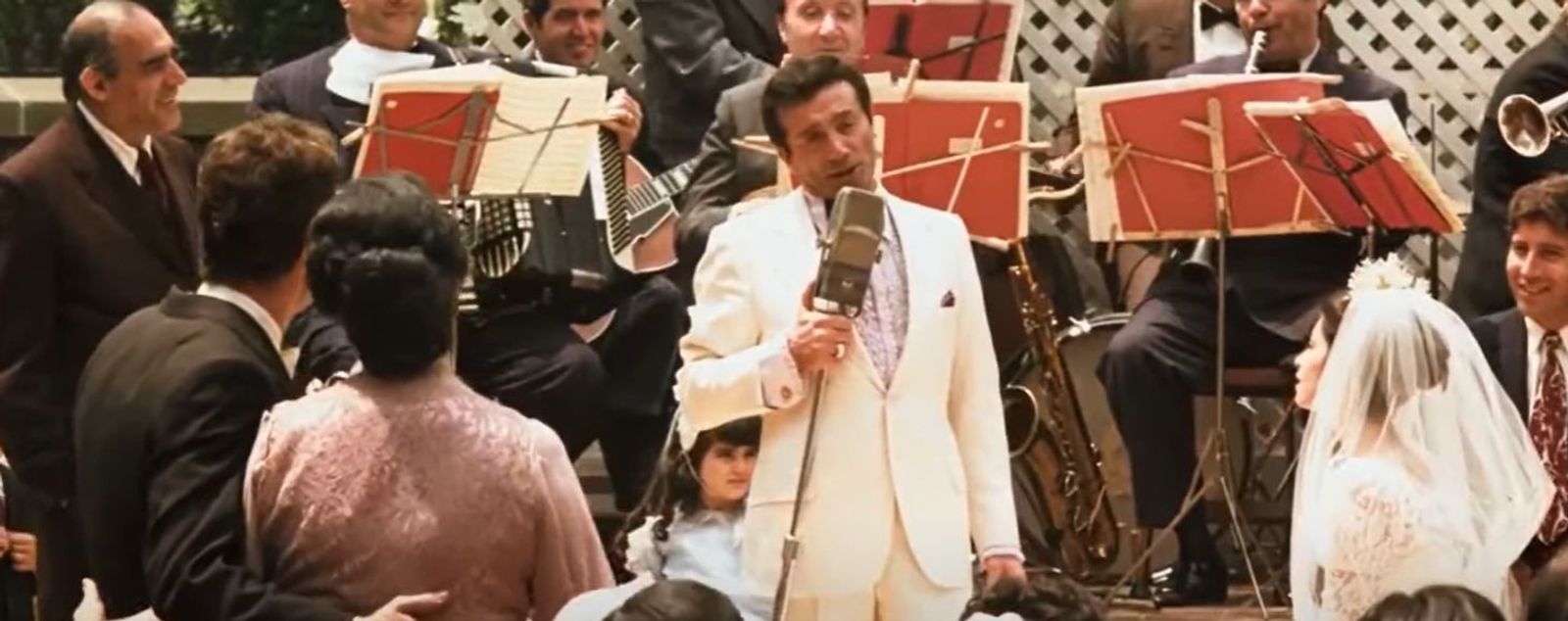
Ever watch that scene where Vito Corleone screams, "You can act like a man!" and slaps the soul out of a weeping crooner? Most people just see a funny meme or a quick plot device to get us to the horse head. But Johnny Fontane is actually the anchor for the entire Hollywood side of the Corleone empire. Without him, the movie loses its biggest bridge to the "legitimate" world.
Honestly, the way we talk about Johnny Fontane usually begins and ends with Frank Sinatra. It’s the most famous "secret" in cinema history. Puzo always played it cool, claiming Johnny was just a composite of different guys. Sure. And I’m the Pope.
The Sinatra Connection: More Than Just a Rumor
Let’s be real—the parallels between Johnny Fontane and Ol' Blue Eyes are pretty much a 1:1 map. You’ve got a singer whose voice is failing. He’s coming off a string of flop movies. He’s desperate for a part in a war flick to save his career. In real life, Sinatra was desperate for the role of Maggio in From Here to Eternity.
In the story, Johnny needs a role in a Jack Woltz production. Woltz is a monster, basically a stand-in for the old-school studio tyrants like Harry Cohn. Sinatra actually hated the character so much he reportedly confronted Mario Puzo at a restaurant called Chasen’s in 1970. He didn't just walk over; he screamed at him. He called Puzo a "pimp" and threatened to beat the hell out of him.
The irony? Al Martino, the guy who played Johnny Fontane in the movie, actually used mob connections to get the role. Life didn't just imitate art; it mugged it in a back alley. Martino was a real-life singer who’d been pushed out of the part by Francis Ford Coppola. Coppola wanted Vic Damone. Martino didn't take "no" for an answer and went straight to his own godfather—the actual mob boss Russell Bufalino. Suddenly, Coppola realized Martino was the "perfect" choice. Funny how that works.
Why the Book Version is Basically a Different Character
If you’ve only seen the movie, you’re missing about 80% of who Johnny Fontane is. In the film, he shows up to the wedding, sings a song, gets yelled at, and then we just assume he’s off winning an Oscar while Michael is out in Sicily.
The book is... different. Mario Puzo dedicated massive chunks of the novel to Johnny. It’s almost a soap opera. We get chapters on his divorce, his second marriage to a Hollywood starlet who cheats on him, and his bromance with a childhood friend named Nino Valenti.
- The Vocal Cord Surgery: In the novel, Johnny doesn't just "get better." He has a medical procedure to remove warts from his vocal cords.
- The Producer Life: Johnny eventually starts producing his own movies. He becomes a power player.
- The Vegas Link: He’s the one who helps the Corleones establish their footprint in Las Vegas. He’s not just a singer; he’s a strategic asset.
People often complain that the Fontane chapters in the book are boring "filler." Some fans even skip them. But those chapters exist to show that the Corleone influence isn't just about shooting people in toll booths. It’s about owning the culture. It’s about having a godson who can sway public opinion and funnel money through the movie business.
The Erasure of Johnny Fontane in the Sequels
Ever wonder why Johnny barely exists in The Godfather Part II? He’s basically a ghost. There’s a deleted scene where he talks to a dying Vito, but that’s about it.
Part of it was definitely the Sinatra heat. Sinatra was a powerful man in 1974, and he was making life difficult for the production. But the bigger reason is simpler: Michael Corleone.
Michael didn't care about Johnny the way Vito did. For Vito, being a Godfather was about the sacred bond of the "compar." It was personal. For Michael, Johnny was just another "finocchio" who didn't fit into the cold, corporate structure of the new Corleone family. Johnny Fontane represents the warmth and old-world loyalty of the first film. By the second film, that warmth is dead.
What We Can Actually Learn from Johnny
If you look past the tuxedo and the crying, Johnny Fontane is a study in the "price of admission." He got his career back, but he owed his soul to a family that could demand anything from him at any time.
You’ve gotta realize that Fontane is the only "civilian" who truly understands the Don’s power without being a soldier. He’s the mirror for the audience. He shows us what happens when an ordinary person—someone with talent and fame—becomes a "friend of the family." You get the Oscar. You get the voice back. But you never, ever get to say "no" again.
To really understand the depth of this character, you should check out the 1972 novel—specifically the chapters involving his friend Nino. It changes the way you see the "funny singer" at the wedding. He wasn't just a guest; he was the first piece of the puzzle in Vito's plan to go legitimate.
If you're looking for more insight into how the movie differs from reality, looking into the history of the Bufalino crime family and their influence on the production of The Godfather is a great place to start. It adds a layer of grime to the glitz of Hollywood that makes the film feel even more dangerous.