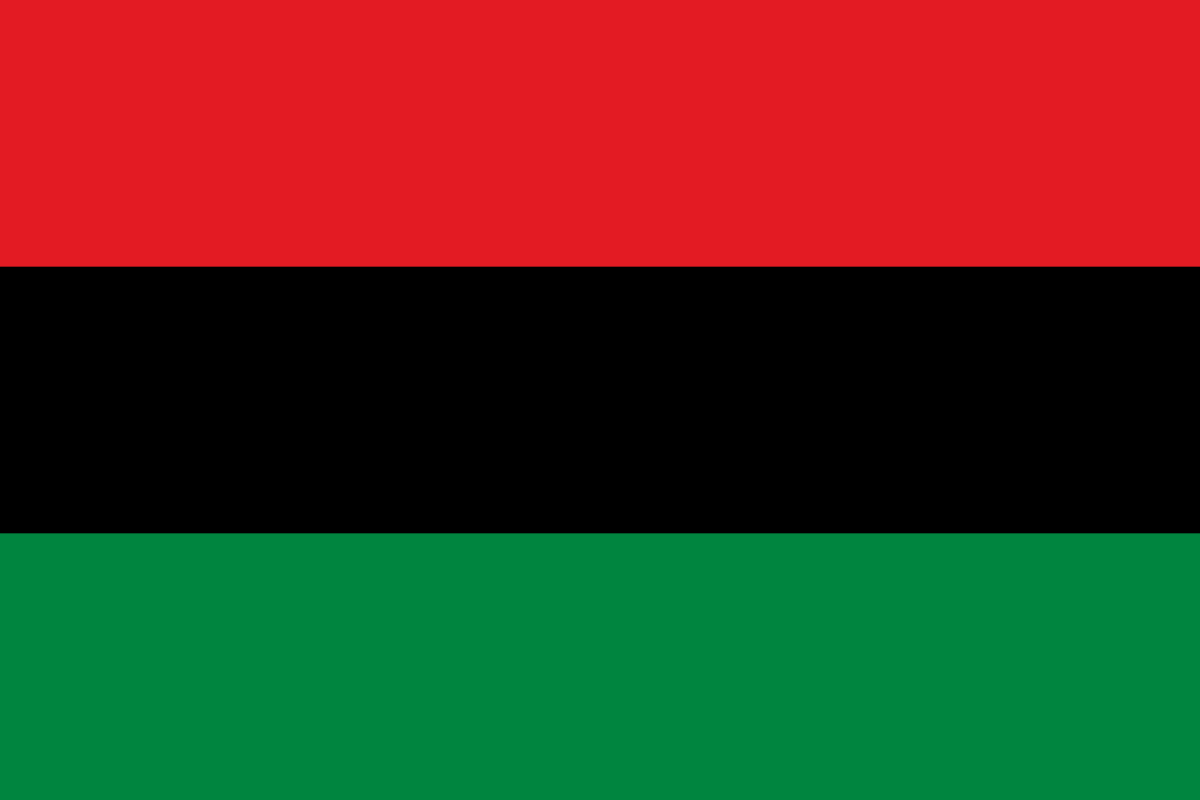
Ask anyone about the birth of modern East Africa and one name usually hits the table first. Jomo Kenyatta. He wasn't just a president; he was a symbol. For decades, the man known as "Mzee" stood as the definitive pan african leader of kenya, a figure who bridged the gap between tribal tradition and the high-stakes world of international diplomacy. But here’s the thing—history is rarely as clean as a textbook chapter makes it look. While he was a titan of the Pan-African movement, his legacy is a messy, fascinating mix of visionary liberation and controversial governance.
He was the "Burning Spear."
To understand how a man from a small village in Ichaweri ended up leading a nation, you’ve got to look at the 1945 Manchester Pan-African Congress. This wasn't some boring boardroom meeting. It was a gathering of giants. Kenyatta was there alongside Kwame Nkrumah and W.E.B. Du Bois. They weren't just chatting about politics; they were literally drawing the map for a continent's freedom. Kenyatta didn't just attend; he was the credentials secretary. He was right in the thick of it, helping to organize the very ideas that would eventually dismantle the British Empire in Africa.
The Making of a Pan-African Icon
Kenyatta’s journey started long before he took the oath of office in 1963. Born Kamau wa Ngengi, he spent roughly 15 years in Europe. That's a huge chunk of time. Think about it—living in London and Moscow during the 1930s as a Black man from a colony. He studied at the London School of Economics under the famous anthropologist Bronisław Malinowski. His book, Facing Mount Kenya, wasn't just an academic paper. It was a bold defense of Gikuyu culture against the colonial narrative that African societies were "primitive."
He was basically telling the West, "We have our own systems, our own laws, and we don't need your 'civilizing' mission." This intellectual defiance is what cemented his status as a pan african leader of kenya. He wasn't just fighting with guns; he was fighting with ideas.
The Kapenguria Six and the Road to Power
Then came the 1950s. The Mau Mau Uprising turned Kenya into a pressure cooker. The British, desperate to keep control, arrested Kenyatta in 1952. They called him the leader of the Mau Mau. Funny enough, most historians today agree he was actually quite moderate and even denounced the violence of the rebellion at times. But the British made him a martyr anyway.
By locking him up with five others—the "Kapenguria Six"—they turned a political activist into a national messiah. He spent nearly nine years in prison and internal exile. When he finally walked out in 1961, there was no doubt who would lead the new Kenya. He had the "suffering credentials" that every great liberation leader of that era seemed to possess.
What Being a Pan-Africanist Actually Meant for Kenya
When people talk about Pan-Africanism, they usually mean the unity of all people of African descent. For Kenyatta, this was a practical tool. He knew Kenya couldn't survive as an island. He was a driving force behind the creation of the East African Community (EAC) alongside Julius Nyerere of Tanzania and Milton Obote of Uganda.
They had this dream. A single currency. A single passport. One massive, unified economic powerhouse.
It didn't quite work out as planned—politics and egos got in the way—but the effort itself was pure Pan-Africanism. Kenyatta’s brand of leadership was "Harambee," a Swahili word meaning "all pull together." It wasn't just a slogan; it was a national philosophy intended to bridge the gaps between Kenya’s 40+ ethnic groups. Honestly, it was a brilliant way to build a nation from scratch, even if the implementation wasn't always perfect.
The Ideological Split
You can't talk about Kenyatta without mentioning his rivalry with Jaramogi Oginga Odinga. This is where the Pan-African dream got complicated. Kenyatta was a capitalist at heart. He wanted to keep close ties with the West. Odinga, his vice president, looked toward the Soviet Union and China.
This split defined Kenyan politics for decades. It's why some people see Kenyatta as a pragmatist who saved the economy, while others see him as someone who didn't go far enough in breaking colonial ties. He was a pan african leader of kenya who believed in "African Socialism," but his version looked a lot more like Western capitalism than Nyerere’s "Ujamaa" in Tanzania.
The Nuance Nobody Talks About
We love to put leaders on pedestals. Or throw them in the trash. The reality of Jomo Kenyatta is somewhere in the middle.
- Land Reform: He presided over the "Million Acre Scheme," which bought land back from British settlers to give to Kenyans. Sounds great, right? Well, a lot of that land ended up in the hands of the political elite.
- Centralized Power: As he aged, Kenyatta moved away from the democratic ideals of the liberation struggle. He shifted power toward the presidency, creating a system that his successors would use—and sometimes abuse—for years.
- The assassination of Tom Mboya: In 1969, the murder of Tom Mboya, another brilliant Pan-Africanist, shook the country to its core. Many felt the "old guard" was removing anyone who threatened their grip on power.
Despite these shadows, his impact on the continent is undeniable. He proved that an African nation could transition from a colony to a stable, functioning state without collapsing into immediate civil war. That was a massive win in the 1960s.
Why We Still Study Him in 2026
Kenyatta’s life is a masterclass in political survival. He navigated the end of the British Empire, the Cold War, and the messy birth of a new nation. He wasn't a saint. He was a politician. But he was a politician with a vision that extended beyond Kenya’s borders.
When we look at the African Union today, or the renewed efforts for an East African federation, we are seeing the echoes of the work Kenyatta started. He was the pan african leader of kenya who taught a generation that "black skin is not a badge of shame, but rather a glorious symbol of national greatness." Those are his words, and they still carry a lot of weight.
How to Dig Deeper into Kenyan Political History
If you're actually interested in the gritty details of how Kenya became Kenya, don't just stick to the surface level. History is a rabbit hole.
1. Read the primary sources.
Go find a copy of Facing Mount Kenya. It’s a bit dense, sure, but it shows you the mind of a man who was trying to prove his people's worth to a world that didn't want to listen. It's fascinating to see how he uses anthropology as a weapon.
2. Visit the sites.
If you’re ever in Nairobi, go to the Jomo Kenyatta Memorial at the Parliament buildings. Then, head over to the Kenya National Archives. You'll see the original photos from the Manchester Congress. Seeing those grainy images of Kenyatta, Nkrumah, and the others makes the whole "Pan-African" concept feel a lot more real and less like a dusty historical term.
3. Watch the footage.
There’s incredible archival footage on YouTube of his Independence Day speech. Look at his face. Listen to the cadence of his voice. You can hear the influence of his years in London mixed with the traditional oratorical style of a Gikuyu elder. It’s a wild contrast.
4. Study his contemporaries.
To understand Kenyatta, you have to understand the men he was arguing with. Look into Tom Mboya’s speeches on "African Socialism" and compare them to Kenyatta’s actual policies. The tension between those two men tells you more about Kenya’s soul than any general history book ever could.
The story of the pan african leader of kenya isn't just about one man. It's about a moment in time when anything seemed possible for Africa. Kenyatta was the face of that moment. Whether you view him as a hero who liberated a nation or a leader who focused too much on his own inner circle, you can't ignore him. He built the foundation. Now, the modern generation is the one deciding what to build on top of it.