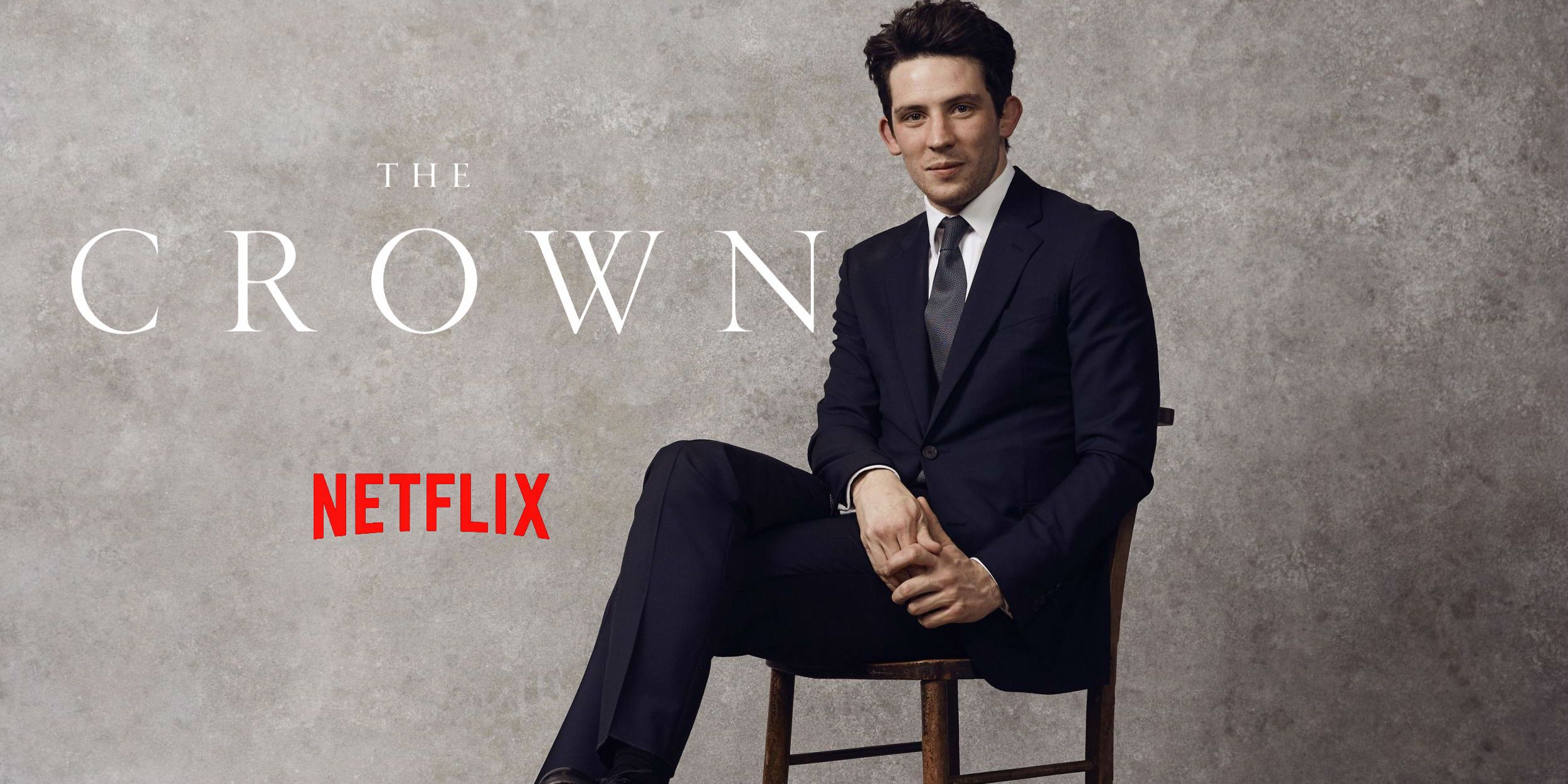
Josh O’Connor didn’t actually want the part. That’s the weirdest thing about it. When the casting directors for The Crown first came knocking, he basically said "no thanks." He didn’t think he had anything to offer a character that, to him, just seemed like a "rich, posh man" with no real "juice."
Honestly, it’s lucky for us he changed his mind.
By the time he wrapped his two-season stint as a young Prince Charles, O'Connor hadn't just played a role; he’d completely shifted how a generation of viewers looked at the British monarchy. He took a public figure who many saw as a caricature—thanks to decades of tabloids and Spitting Image puppets—and turned him into a shivering, slumped-shouldered Greek tragedy.
The "Sticky Out" Ears and the Slouch
If you watch Josh O'Connor in The Crown closely, you’ll notice he doesn't just look like Charles; he feels like him. He worked with a movement director named Polly Bennett to nail that specific royal awkwardness. It wasn’t just about the voice. It was the way Charles leans forward as if the weight of the crown is literally pulling his neck down.
He once joked about his "sticky out ears" being his biggest asset for the role. But the physical transformation went way deeper than prosthetics or natural features. O'Connor realized that Charles is a man who spent his entire life being told where to stand, what to say, and how to breathe.
That creates a certain kind of tension. You can see it in the way he keeps one hand tucked behind his back or fiddles with a signet ring. It's the body language of someone who is perpetually uncomfortable in his own skin.
Why Season 3 Was a Trap
The brilliance of the writing—and O’Connor’s performance—is that Season 3 was designed to make you love him. It was a total setup.
We saw the lonely boy at Gordonstoun. We saw the young man sent to Wales to learn a language he didn't want to speak. In the episode "Tywysog Cymru," O’Connor delivers a speech in actual Welsh (which he learned phonetically, having no idea what he was saying half the time).
He played Charles as a "lost boy." He portrayed him as someone who shared his mother with an entire nation and was, in his own words, "waiting for his mother to die in order for his life to take meaning."
It was heartbreaking. You wanted to reach through the screen and give the guy a hug. He was the underdog in a family of cold, distant giants. And then Season 4 happened.
The Villain Arc Nobody Expected
When Emma Corrin joined the cast as Diana, the vibe shifted. Fast.
Suddenly, the "sensitive" Charles we’d rooted for turned into something much darker. O'Connor didn't shy away from the ugliness. He leaned into the petulance and the jealousy. He played the version of Charles that screamed at his wife in the middle of the mountains because she was more popular than him.
He admitted in interviews that Charles is "horrible" in Season 4. But he didn't play him as a cartoon villain. He played him as a man who was so starved for affection that when his wife finally received the love he’d always craved from the public, he couldn't handle it. He snapped.
This nuance is why he swept the awards. He won the Primetime Emmy for Outstanding Lead Actor in a Drama Series in 2021. He grabbed a Golden Globe. He got the Critics' Choice. The industry realized that it’s incredibly hard to play someone who is simultaneously a victim of a system and a perpetrator of emotional cruelty.
Life After the Palace
For Josh O'Connor, The Crown was a "f***ed-up time." That’s how he described the fame that followed.
He’s a guy who loves pottery and quiet sets. Suddenly, he couldn't walk down the street without being recognized as the Prince of Wales. He’s spent the years since then trying to shed that skin.
You’ve probably seen him in Challengers recently, playing a sweaty, trash-talking tennis pro. It’s about as far from Prince Charles as you can get. He’s also done La Chimera and The History of Sound. He’s intentionally choosing roles that are "messy" and "unrefined" to prove he’s more than just a royal silhouette.
What Most People Get Wrong
The biggest misconception about his performance is that it was a "biopic" portrayal. It wasn't. O'Connor has been very clear that he wasn't trying to be the real Charles. He was playing Peter Morgan’s version of Charles.
"The Crown is a work of fiction," he told Screen Daily. That gave him the freedom to invent. He wasn't mimicking; he was interpreting. He viewed the whole thing as a Shakespearean drama rather than a historical record.
The Legacy of the Performance
Even now, years after he "passed the baton" to Dominic West, O’Connor’s version of the character remains the definitive one for many. He captured a specific window of time—the transition from hopeful youth to bitter middle age—that defined the modern British monarchy.
If you’re looking to revisit his work or understand why he’s currently one of the most sought-after actors in Hollywood, here is how to track his evolution:
- Watch Season 3, Episode 6 ("Tywysog Cymru"): This is the peak of his "sympathetic" Charles. The scene where he pleads with the Queen (Olivia Colman) for a simple acknowledgement of his feelings is masterclass acting.
- Contrast it with Season 4, Episode 9 ("Avalanche"): Watch the shift in his eyes. The vulnerability is gone, replaced by a cold, hard resentment.
- Check out God's Own Country (2017): If you want to see the "raw" version of O'Connor before the royal polish, this is the indie film that originally got him the job.
Josh O'Connor didn't just play a prince; he built a character study on the cost of duty. He showed us that even a life of unimaginable privilege can feel like a cage if you're not allowed to love who you want. It’s a performance that holds up because it’s human, not because it’s royal.
To truly appreciate the range he showed, compare his hunched-over posture in The Crown to his kinetic, aggressive energy in Challengers. It's the same actor, but you'd hardly know it. That's the hallmark of someone who isn't just a star, but a craftsman.
Next Steps for Fans:
To get a full sense of his range, watch his 2017 breakout film God's Own Country. It features the same "inarticulate" emotional depth he brought to Charles but in a completely different, rugged setting. After that, move to his 2024 film Challengers to see how he has successfully moved away from the "royal" typecasting.