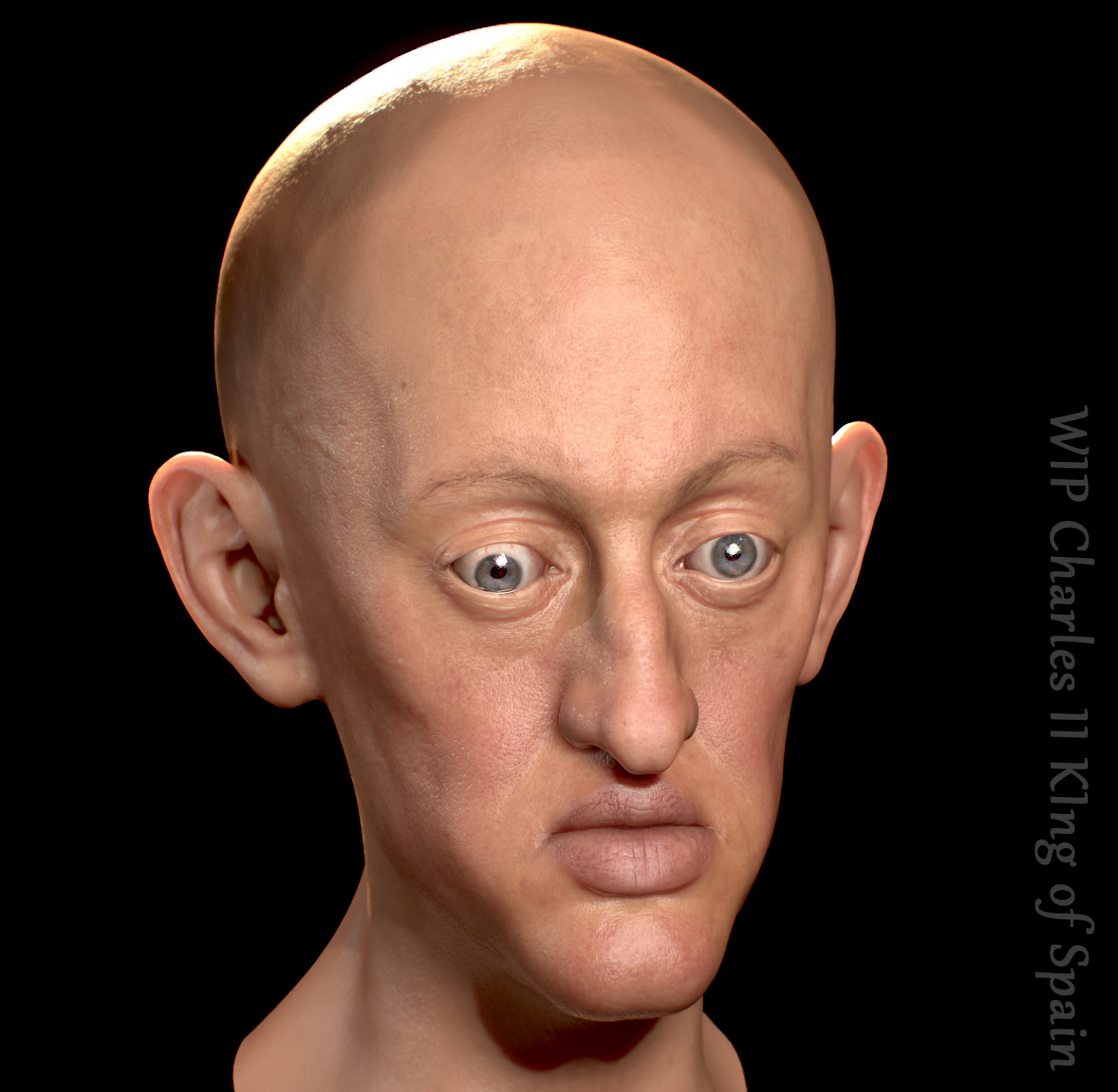
He was the man who shouldn't have been. Honestly, when you look at the life of King Charles II of Spain, it feels less like a royal biography and more like a medical horror story that somehow lasted nearly forty years. History hasn't been kind to him. We've all seen the memes and the cruel caricatures of the "Habsburg Jaw." But there is a massive gap between the "bewitched" monster of legend and the actual human being who tried to hold a crumbling global empire together while his own body was essentially a biological wreck.
He was born in 1661. By that time, the Spanish Habsburgs had been marrying their own cousins and nieces for so long that Charles’s family tree wasn't even a tree anymore. It was more like a single, tangled root.
The Biological Debt of a Dynasty
To understand King Charles II of Spain, you have to understand the math of inbreeding. Most people have eight great-grandparents. Charles had six. His father was his mother’s uncle. This wasn't just "keeping it in the family"—it was a genetic catastrophe.
Modern researchers, like those who published in PLOS ONE back in 2009, calculated his inbreeding coefficient at 0.254. For context, that’s actually higher than the offspring of a brother-sister union. He was born into a body that was already failing. He didn't speak until he was four. He didn't walk until he was eight.
His jaw—the famous mandibular prognathism—was so severe that his upper and lower teeth couldn't meet. Imagine trying to eat when you can't actually chew. He basically swallowed his food whole, which led to a lifetime of agonizing digestive issues and chronic "melancholy," which we'd just call severe clinical depression today.
Was He Actually "Bewitched"?
The nickname El Hechizado stuck because nobody in the 17th century understood recessive genetic disorders. People saw a king who suffered from seizures, hallucinations, and "rubbery" limbs and assumed it had to be demons. Or a hex.
He actually believed it himself.
In a desperate, sort of heartbreaking move, the King even underwent exorcisms. He had the tombs of his ancestors opened so he could look at their corpses, hoping for some kind of spiritual intervention. It’s a grisly image, but it shows how desperate the guy was. He wasn't some cackling villain; he was a man who felt his own life slipping away from him every single day.
Beyond the Jaw: The Hidden Competence
Here is where the narrative usually gets it wrong. Most history books paint Charles as a total vegetable, a puppet for his mother, Mariana of Austria. But that’s not the whole truth.
While Charles was never going to be a military genius like his ancestor Charles V, the Spanish Empire didn't actually collapse under him. Surprisingly, the economy in several Spanish regions actually started to recover during his later years. He was shy, sure. He was definitely physically limited. But he was also described by some foreign diplomats as kind and surprisingly attentive when he wasn't in the middle of a health crisis.
- The Marriage Problem: He was married twice. First to Marie Louise of Orléans, whom he actually seemed to love. When she died, he was devastated.
- The Second Wife: Maria Anna of Neuburg was much more politically aggressive. She basically turned the court into a battlefield between pro-French and pro-Austrian factions.
- The Succession: Because Charles was almost certainly infertile (likely due to Klinefelter syndrome or similar genetic issues), the entire world was just waiting for him to die.
The Grusome Autopsy and the End of an Era
When he finally died in 1700, just before his 39th birthday, the doctors performed an autopsy that read like a piece of dark fiction. They claimed his heart was the size of a peppercorn and his head was full of water.
While some of that is likely 17th-century exaggeration, it highlights the point: he was a medical miracle just for surviving as long as he did.
His death triggered the War of the Spanish Succession. It was a massive, bloody mess that reshaped Europe. Since he had no heir, the crown passed to the Bourbons (the French line), and that was that. The Habsburg era in Spain ended with a whimper, buried under the weight of its own DNA.
Why This Still Matters in 2026
We talk about "genetic legacy" today in terms of CRISPR and DNA testing, but Charles is the ultimate "Patient Zero" for what happens when power and biology collide. He wasn't a monster. He was a victim of a system that valued "purity" over health.
If you want to understand the real King Charles II of Spain, stop looking at the distorted paintings for a second. Look at a man who was handed the world's most powerful empire while being unable to even stand up on some days.
Next Steps for History Buffs:
If you're interested in the medical side of this, check out the 2009 study "The Role of Inbreeding in the Extinction of a European Royal Dynasty." It breaks down the pedigree of the Habsburgs with brutal scientific clarity. For a more "on the ground" feel of what the Spanish court was like, read the letters of Madame d'Aulnoy—she traveled through Spain during this era and her observations of the King's daily life are fascinating, if a bit snarky.
The real takeaway here is pretty simple: genetics always wins. No amount of royal blood or "divine right" could save a man from the reality of his own biology.