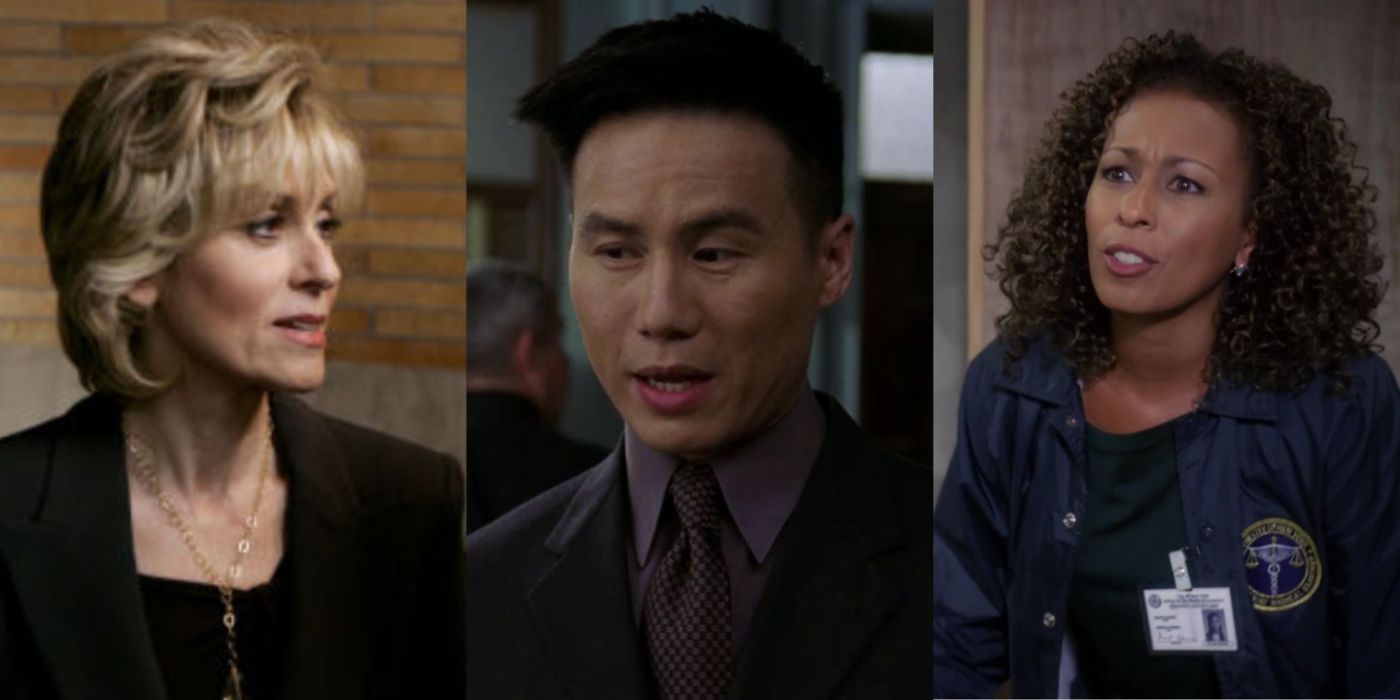
Dick Wolf changed everything in 1990. He didn't do it with explosions or high-speed chases, though. He did it with a specific formula and a rotating door of faces that somehow felt like family even when we barely knew their middle names. Law and Order characters aren't like the people on Grey’s Anatomy. You don't usually see them crying in elevators or having messy affairs in the breakroom. They’re workers. They’re weary. Honestly, they’re mostly just trying to get a conviction before the 44-minute mark hits.
It's a weird magic trick.
Usually, when a lead actor leaves a show, the ratings tank. Not here. When George Dzundza left after just one season as Max Greevey, the show didn't blink. It just brought in Paul Sorvino. Then Jerry Orbach. That’s when the show actually found its heartbeat. Lennie Briscoe wasn’t just a detective; he was the cynical, wisecracking soul of New York City. You felt like you could find him at any dive bar in Manhattan, nursing a ginger ale and complaining about the DA's office.
The Lennie Briscoe Effect and Why Consistency Matters
If you ask any die-hard fan about their favorite Law and Order characters, Lennie Briscoe is the undisputed king. Jerry Orbach played him for 12 seasons. Think about that. Twelve years of leather jackets and deadpan one-liners over fresh corpses. But why did it work? It worked because Lennie had a past he didn't talk about much—his struggles with sobriety, his failed marriages, his estranged daughter. We learned these things in tiny, breadcrumb-sized pieces over a decade.
It wasn’t a soap opera.
It was a portrait of a guy doing a job that was slowly eating him alive. That’s the secret sauce of the original series. The characters are defined by their ethics and their friction with the system, not their dating lives. When Chris Noth’s Mike Logan got sent to Staten Island, it felt like a genuine punch to the gut because we’d watched his hot-headedness boil over for years. He wasn't a "character arc" in the modern, binge-watch sense. He was just a guy who eventually pushed the wrong button.
The Dynamics of the DA’s Office
Then you’ve got the lawyers. Jack McCoy is basically the final boss of the legal system. Sam Waterston brought this frantic, "win-at-all-costs" energy that occasionally skirted the line of legal ethics. He wasn't always the "good guy." Sometimes he was just the guy who wanted to win.
Contrast that with his various Executive Assistant District Attorneys.
- Claire Kincaid (Jill Hennessy) brought a moral compass that often clashed with Jack’s pragmatism.
- Abbie Carmichael (Angie Harmon) was the conservative firebrand who wanted to throw the book at everyone.
- Serena Southerlyn (Elisabeth Röhm) was the idealist who eventually got fired for "bleeding heart" tendencies (and that infamous "Is it because I'm a lesbian?" exit line that still haunts TV forums).
The show stayed fresh because these different viewpoints forced the audience to argue with their TV screens. You weren't just watching a trial; you were watching a debate about the law itself.
Why the 2022 Revival Faced a Character Crisis
When the show came back for Season 21, something felt... off. It wasn’t the writing, exactly. It was the weight. Law and Order characters in the original run felt like they had been living in New York for fifty years before the camera started rolling. In the revival, characters like Frank Cosgrove (Jeffrey Donovan) or Jalen Shaw (Mehcad Brooks) felt a bit too "TV-ready."
They were good. They just weren't lived-in yet.
It takes time to build that grime. You can't just put a suit on an actor and expect them to carry the weight of 20 seasons of history. However, bringing back Sam Waterston as a mentor figure helped bridge that gap. It reminded us that the institution of the DA’s office is the real main character. The people are just passing through.
The Unsung Heroes: The Lieutenants and Medical Examiners
We have to talk about S. Epatha Merkerson. Anita Van Buren is the longest-running character in the original series’ history. She was the steady hand. In a world of maverick detectives who wanted to kick down doors without a warrant, she was the one saying, "Get me probable cause or get out of my office."
And don't forget the morgue.
Elizabeth Olivet and Emil Skoda gave us the psychological profiles, but the M.E.s provided the grit. Leslie Hendrix as Dr. Elizabeth Rodgers was a masterclass in "I have seen too many dead bodies to care about your feelings." Her dry delivery was the perfect foil to the detectives' urgency.
How to Spot a "Classic" Law and Order Archetype
If you’re writing your own procedural or just trying to understand why this show is the "comfort food" of television, look at the archetypes. You always have the "Vial of Truth" (the junior detective who asks the questions the audience is thinking) and the "World-Weary Mentor."
In the courtroom, it’s the "Idealist" vs. the "Pragmatist."
When the show strays too far from this, it fails. If the detectives become too perfect, it’s boring. If the DA always wins, there’s no stakes. The best Law and Order characters are the ones who fail. They lose cases. They let suspects walk because of a technicality. They go home to an empty apartment and a microwave dinner.
That’s the reality of the American legal system. It's messy. It’s tiring.
Actionable Takeaways for Superfans and Writers
If you want to dive deeper into the world of these characters or even apply their character-building techniques to your own work, keep these points in mind:
- Study the "Transition" Episodes: Watch the hand-off from Logan to Curtis, or from Curtis to Briscoe’s later partners. Notice how the show uses the veteran character to "validate" the new one for the audience.
- Focus on Professional Conflict: If you're analyzing the writing, look at how the characters' personal beliefs interfere with their professional duties. This is where the real drama happens, not in their romantic lives.
- The "Walk and Talk" Mastery: Pay attention to the background actors. The characters are always busy. They are moving, drinking coffee, flipping through files. It creates a sense of urgency that defines the show's pace.
- Value the Guest Stars: Many of the most impactful characters only appeared for one episode. The "defendant of the week" often has more screen time and emotional depth than the leads.
The longevity of the franchise isn't about one person. It's about the machine. But without the specific, weary faces of people like Lennie Briscoe and Jack McCoy, that machine would have run out of gas decades ago. They made the law feel human.
To truly appreciate the evolution of these roles, start a rewatch from Season 3. This is widely considered the "Golden Era" where the casting alchemy finally hit its stride. Observe how the dialogue shifts from pure exposition to character-driven insights. This transition is why the show remains the gold standard for procedurals worldwide.