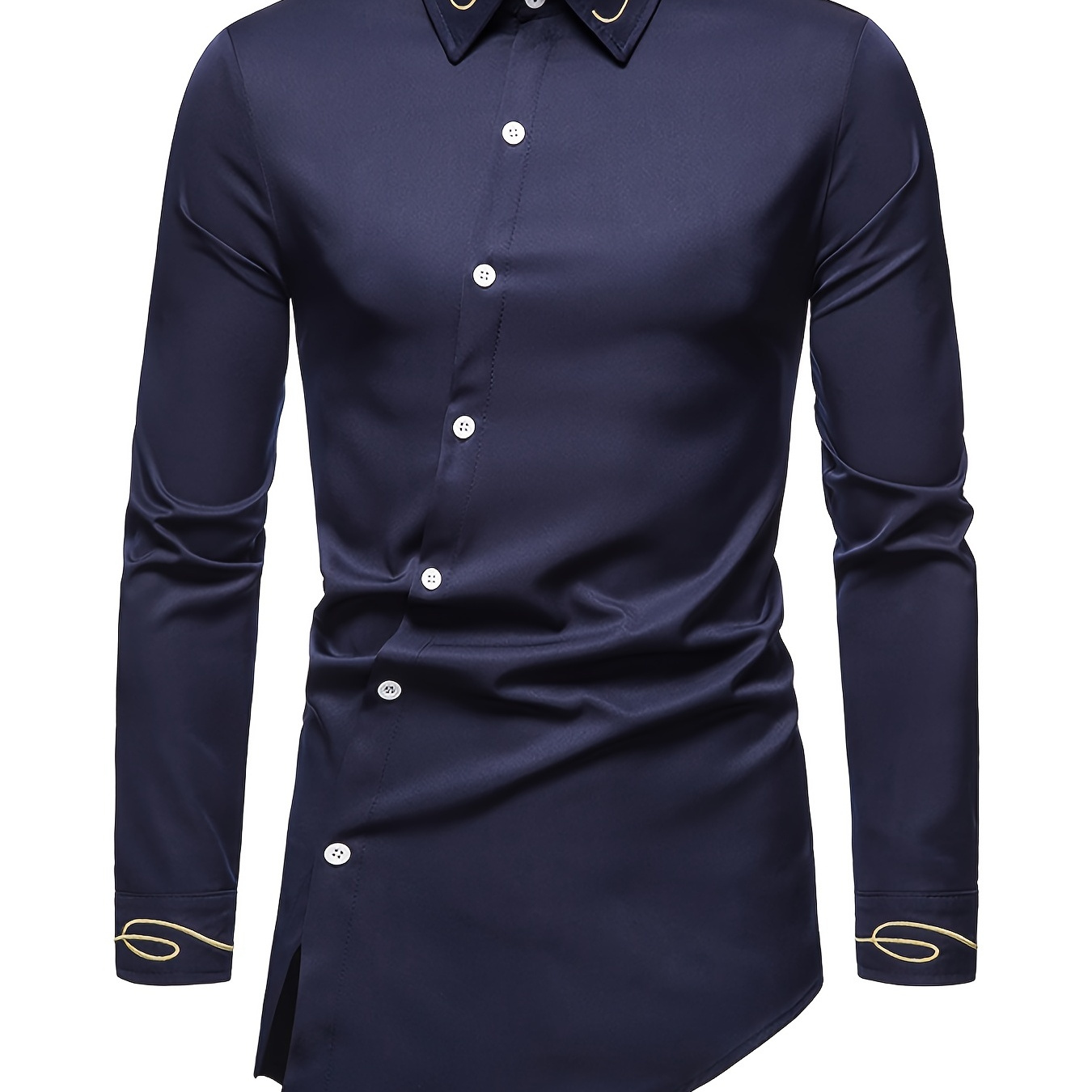
Most people treat the long sleeve t shirt as a total afterthought. It’s that thing you grab when it’s too chilly for a tee but too warm for a heavy wool sweater. You probably have a few crumpled at the bottom of a drawer, likely promotional giveaways with stiff cuffs or that one heather gray shirt that fits okay but makes you look like you’re headed to a middle school gym class. Honestly, we’ve been settling for mediocre basics for way too long.
The reality is that a truly great long sleeve t shirt is a foundational piece of engineering. It’s not just a short sleeve shirt with extra fabric tacked on the ends. If the sleeves are too tight, you look like you’re wearing a wetsuit; if they’re too loose, you look like you’re wearing a pajama top. Finding that middle ground where the fabric drapes correctly and the cuffs actually stay pushed up on your forearms—that’s the dream.
Why long sleeve t shirts are harder to get right than you think
Cotton matters. Everyone says "100% cotton" like it’s a gold standard, but that's a bit of a lie. You have to look at the staple length. When companies use short-staple cotton, the fibers poke out after three washes. This creates that fuzzy, pilled look that makes a shirt look five years old in three weeks. You want Pima or Supima. Or, if you’re feeling fancy, Egyptian cotton. These have longer fibers, which means a smoother surface and a shirt that actually holds its shape instead of turning into a boxy mess.
Then there’s the weight. A "heavyweight" long sleeve t shirt is a completely different beast than a standard undershirt. Brands like Los Angeles Apparel or Camber have built entire cult followings just based on the GSM (grams per square meter) of their fabric. If you’re wearing a shirt that’s 6oz or higher, it’s basically a lightweight sweatshirt. It hides the "lumps and bumps" better. It feels substantial. Cheap, thin shirts cling to all the wrong places. Nobody wants that.
The cuff dilemma: Ribbed vs. open
This is where the debate gets heated in the menswear world. Some people swear by the ribbed cuff. It’s practical. It keeps the heat in. It allows you to push your sleeves up to your elbows when you’re working without them sliding back down every five seconds.
Others hate them. They think it looks too much like a thermal or an undershirt. The "open" or "hemmed" cuff is sleeker. It looks more like a sweater. It’s the kind of thing you can wear under a blazer and actually get away with. But if that sleeve is even a quarter-inch too long, you’re constantly pulling it back from your palms. It’s a delicate balance.
The technical side of the fit
Let’s talk about the armholes. Most mass-produced long sleeve t shirts have huge, low-hanging armholes to accommodate as many body types as possible. It’s a "one size fits nobody well" situation. When the armhole is too low, every time you reach for something, the entire hem of your shirt pulls up out of your pants. It’s annoying. You want a higher armhole—it gives you a better range of motion and keeps the silhouette clean.
- The Neckline: A sagging crew neck is the fastest way to look unkempt. Look for a bound neck or a double-needle stitch. It prevents the "bacon neck" effect.
- The Side Seams: Cheap shirts are often "tubular," meaning they have no side seams. While this sounds comfortable, it means the shirt will eventually twist in the wash. Side seams keep the garment's structure intact.
- Shoulder Slant: A lot of cheap brands cut the shoulders straight across. Humans aren't shaped like coat hangers. A slight slope in the shoulder seam makes the fabric lay flat instead of bunching up near your collarbones.
Fabric blends you should actually care about
You’ll see a lot of "performance" long sleeve shirts these days. Usually, that’s just a fancy word for polyester. While polyester gets a bad rap, a 5% elastane or Lycra blend can actually be a lifesaver in a long sleeve shirt. It gives it "memory." You know how the elbows of your favorite shirt get all baggy and stretched out by 2:00 PM? A little bit of synthetic fiber prevents that. It snaps back.
Merino wool is the secret weapon, though. Companies like Icebreaker or Smartwool have turned long sleeve t shirts into high-tech gear. It doesn't stink. You can wear a merino long sleeve for three days straight (honestly, even longer if you're hiking) and it won't smell like a locker room. It’s also thermoregulating. It keeps you cool when it’s warm and warm when it’s cool. It’s basically magic, though it’ll cost you three times as much as a cotton shirt.
How to style it without looking like you're in pajamas
The easiest way to ruin the look is by pairing a baggy long sleeve t shirt with baggy sweatpants. You look like you've given up. Instead, try the "high-low" approach. A crisp, heavyweight white long sleeve tucked into some dark selvedge denim or even chinos. Throw on some leather boots. Suddenly, you're not "wearing a t-shirt," you're wearing an outfit.
Layering is where this garment shines. It’s the perfect middle layer. Try a long sleeve shirt under a denim jacket or a flannel. It provides a clean, solid base that doesn't add the bulk of a hoodie. If you’re going for a more "streetwear" vibe, the oversized look works, but you have to be intentional. Look for "drop shoulders." If the shoulder seam is hanging off your arm but the rest of the shirt fits wide and cropped, it looks stylish. If it’s just a 3XL shirt on a Medium-sized person, it looks like a hand-me-down.
Maintenance: Stop killing your shirts
You are probably washing your long sleeve t shirts wrong. Stop using high heat. Heat is the enemy of cotton fibers; it makes them brittle and causes that microscopic breakage that leads to holes.
- Wash cold. Always.
- Turn it inside out. This protects the outer face of the fabric from rubbing against other clothes.
- Air dry if you can. If you must use a dryer, use the lowest heat setting and take it out while it’s still slightly damp.
- Fold, don't hang. Gravity is a jerk. Hanging a long sleeve shirt will eventually stretch out the shoulders and leave those weird "nipple" marks from the hanger.
The sustainability factor
We have to talk about the "five-dollar shirt" problem. If you’re buying a long sleeve t shirt for the price of a latte, someone, somewhere, is paying the price. Fast fashion relies on exploitative labor and low-quality materials that end up in landfills. It’s better to buy two $40 shirts that last five years than ten $8 shirts that last six months.
Brands like Buck Mason or Outerknown are focusing on more ethical supply chains. They use organic cotton and recycled materials. It’s not just about feeling good morally; these shirts generally feel better on your skin. They haven't been soaked in the same level of harsh industrial chemicals used to mass-produce "disposable" clothing.
What most people get wrong about "Premium" brands
Just because a shirt has a designer logo doesn't mean it’s a good shirt. I've seen $200 long sleeve t shirts that are 100% thin, jersey-knit cotton that loses its shape after one wear. You’re paying for the marketing. Conversely, some workwear brands like Carhartt (the original K87 line) offer shirts for $25 that are virtually indestructible. They’re heavy, they’re tough, and they’re built for actual labor. They might not be the "trendiest" fit, but the quality-to-price ratio is off the charts.
Don't ignore the "hand feel." When you're in a store, grab the fabric and give it a slight tug. Does it snap back? Does it feel cool to the touch or kind of fuzzy and "hairy"? You want that cool, dense feeling. That’s the sign of tightly twisted yarns and high-quality construction.
Actionable steps for your next purchase
Before you go out and buy another pack of cheap basics, take a look at what you already own. Most of us have a "favorite" shirt. Lay it flat on a table and measure it.
Measure from armpit to armpit (the chest width) and from the top of the shoulder to the bottom hem. Now you have your baseline. When you're shopping online, don't just look at "Small, Medium, Large." Look at the actual size chart. Every brand is different. A "Medium" at Uniqlo is not a "Medium" at Iron Heart.
- Check the GSM: If the website doesn't list the weight, it's probably light. Look for "Heavyweight" or "200+ GSM" if you want something that lasts.
- Inspect the cuffs: Decide now if you're a ribbed cuff person or an open cuff person. It changes the whole vibe of the shirt.
- Look for "Garment Dyed": These shirts are dyed after they are sewn. This means they won't shrink much more in your laundry, and they have a cool, lived-in color depth that looks better over time.
- Invest in a "Beefy" White Tee: A thick white long sleeve is the most versatile item you can own. It works under a suit, over a swimsuit at the beach, or just with jeans.
When you find a brand that fits your shoulders perfectly, buy two or three in different colors. Good fits are hard to find. Colors like navy, olive, and oatmeal are much more forgiving than bright white or black, which tend to show stains or fading more quickly. Stick to the basics first, get the fit right, and your morning routine becomes about ten times easier.
Focus on the texture of the knit. A "slub" cotton has intentional irregularities that give the shirt a rugged, vintage look. A "supima" knit will be silky and almost shiny. Choose the one that matches your personal style—rugged or refined. Once you stop treating these shirts as disposable, you'll realize they’re actually the most important part of your daily uniform.