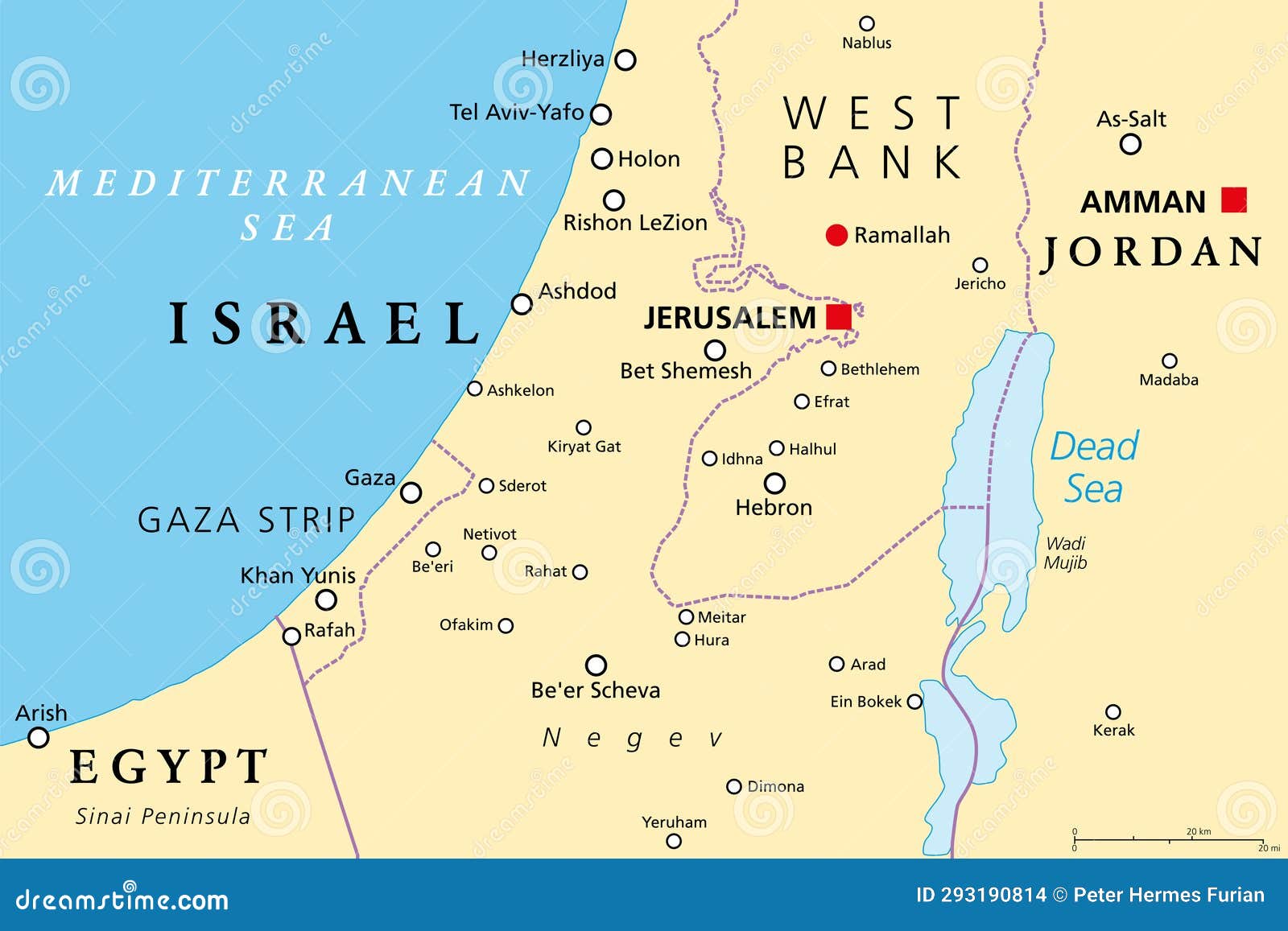
You’ve probably seen the maps. They’re everywhere. Little slivers of red, green, or shaded grey appearing on news tickers and social media feeds, usually accompanied by some frantic-sounding analysis. But if you actually look at a map of Gaza Strip and Israel, you realize it isn't just a static drawing. It's a living, breathing, and incredibly tense geography that has shifted more in the last year than it did in the previous two decades.
It’s small. That’s the first thing that hits you.
The Gaza Strip is only about 25 miles long. You could literally run the length of it in a few hours if the world were a different place. When you overlay it on a map of a major U.S. city like Philadelphia or Chicago, it’s tiny. Yet, this tiny rectangle of land, bordered by the Mediterranean Sea to the west, Egypt to the south, and Israel to the north and east, is the most scrutinized piece of dirt on the planet.
Understanding the Hard Lines of the Map of Gaza Strip and Israel
The physical borders you see on a map of Gaza Strip and Israel today are largely defined by the 1949 Armistice Agreements, often called the Green Line. It isn't a "natural" border. There are no mountain ranges or massive rivers separating these two entities. It’s a man-made boundary of fences, concrete walls, and high-tech sensors.
To the south lies the Rafah Crossing. This is Gaza's only gateway to Egypt and the only major exit point that doesn't lead directly into Israel. If you look at a satellite map, you can see the dense urban sprawl of Rafah literally bisected by the border. On one side, Egyptian Sinai; on the other, the southern tip of the Strip.
Israel surrounds the rest.
The Erez Crossing in the north was, for a long time, the primary point for people—laborers, journalists, and medical patients—to move between Gaza and Israel. Then there's Kerem Shalom in the south, the industrial hub where trucks used to line up to bring in everything from fuel to flour. When people talk about a "blockade" or "closure," they’re talking about these specific dots on the map being squeezed shut.
Why the "Buffer Zone" Changes Everything
Recently, the map of Gaza Strip and Israel has gained a new, controversial feature: the "buffer zone."
Basically, the Israeli military (IDF) has been clearing a perimeter inside the Gaza side of the border. It’s about a kilometer wide in some places. If you look at recent satellite imagery from providers like Maxar or Planet Labs, you can see a distinct "brown zone" where buildings once stood. This isn't just a line on a map; it's a physical transformation of the landscape.
This change is massive.
It shrinks the livable area of an already overcrowded space. For farmers in areas like Beit Hanoun or Khan Yunis, this buffer zone isn't a geopolitical concept. It's their orchard. It's their livelihood. Israel argues this is necessary for security, to prevent the kind of cross-border raids seen on October 7. Critics, including many international human rights groups, point out that it effectively nibbles away at the territory of the Strip.
The Netzarim Corridor: A New Internal Border
There is a line cutting Gaza in half right now. You won't find it on old maps from 2022.
It’s called the Netzarim Corridor.
Named after a former Israeli settlement that existed before the 2005 pullout, this is a fortified road and military zone established by the IDF. It runs from the Israeli border all the way to the Mediterranean Sea, just south of Gaza City.
Why does this matter? Because it fundamentally changes the map of Gaza Strip and Israel by creating a "North Gaza" and a "South Gaza." It prevents the free movement of people between the two halves. On a tactical map, it's a strategic bypass. For the people living there, it’s a permanent reminder of the total fragmentation of their world.
Geography as Destiny
It’s worth mentioning the maritime border too. Usually, a coastal territory gets several miles of fishing rights. In Gaza, that "line" in the water moves constantly. Sometimes it’s 6 nautical miles out; sometimes it’s 15; sometimes it’s zero. When you see a map of the Mediterranean coast here, remember that the "border" in the water is just as strictly patrolled by the Israeli Navy as the land borders are by the Army.
Then there is the Philadelphi Corridor.
This is the 14-kilometer strip of land along the border between Gaza and Egypt. Control over this specific line is perhaps the most contentious point in ongoing ceasefire negotiations. Israel wants to prevent smuggling through tunnels; Egypt insists on its sovereignty; Hamas demands a total withdrawal. This tiny strip of sand is essentially the "hinge" upon which the entire region's stability swings.
Navigating the Map Today
Honestly, looking at a map of Gaza Strip and Israel requires understanding that what you see on Google Maps isn't the whole story. Google Maps often blurs or uses lower-resolution imagery for security reasons in this region. To get the real picture, researchers often turn to "Open Source Intelligence" (OSINT) accounts on platforms like X (formerly Twitter) or specialized sites like Gaza Geo-Confirm.
These mappers use everything from thermal heat signatures to shadows cast by new walls to update the map in real-time.
Here is what the map tells us right now:
- The North is largely depopulated and heavily destroyed.
- The "Middle Camps" (Nuseirat, Maghazi) are incredibly dense.
- The "Al-Mawasi" area on the coast is designated as a humanitarian zone, but it lacks the infrastructure for the hundreds of thousands of people packed into it.
- The border crossings are mostly controlled by the military, not civilian authorities.
Practical Steps for Staying Informed
If you are trying to track changes on the map of Gaza Strip and Israel, don't just look at one source. Maps can be political tools. An Israeli military map will emphasize "security zones," while a UN map (like those from OCHA) will emphasize "access and movement" and humanitarian "red zones."
- Follow UN OCHA (Office for the Coordination of Humanitarian Affairs): They provide the most detailed maps regarding where aid can actually go and which roads are destroyed.
- Check Liveuamap: This is a "live" map that updates based on social media reports and official statements. It’s great for seeing where active fighting is happening, though you should always take it with a grain of salt until verified.
- Compare Satellite Timelines: Use tools like Google Earth Pro’s historical imagery to see how the border has physically changed over the last year. You can literally watch the buffer zones expand.
- Understand the Terminology: When you hear "Area A," "Green Line," or "1967 Borders," know that these refer to different historical iterations of the same map. Most current maps focus on the "2005 Disengagement Line."
The map isn't just about where things are. It's about who is allowed to be where. In this tiny corner of the Middle East, a line on a map isn't just ink—it's a wall, a checkpoint, or a home. Knowing the difference between the official borders and the "de facto" military lines is the only way to actually understand the news coming out of the region today.