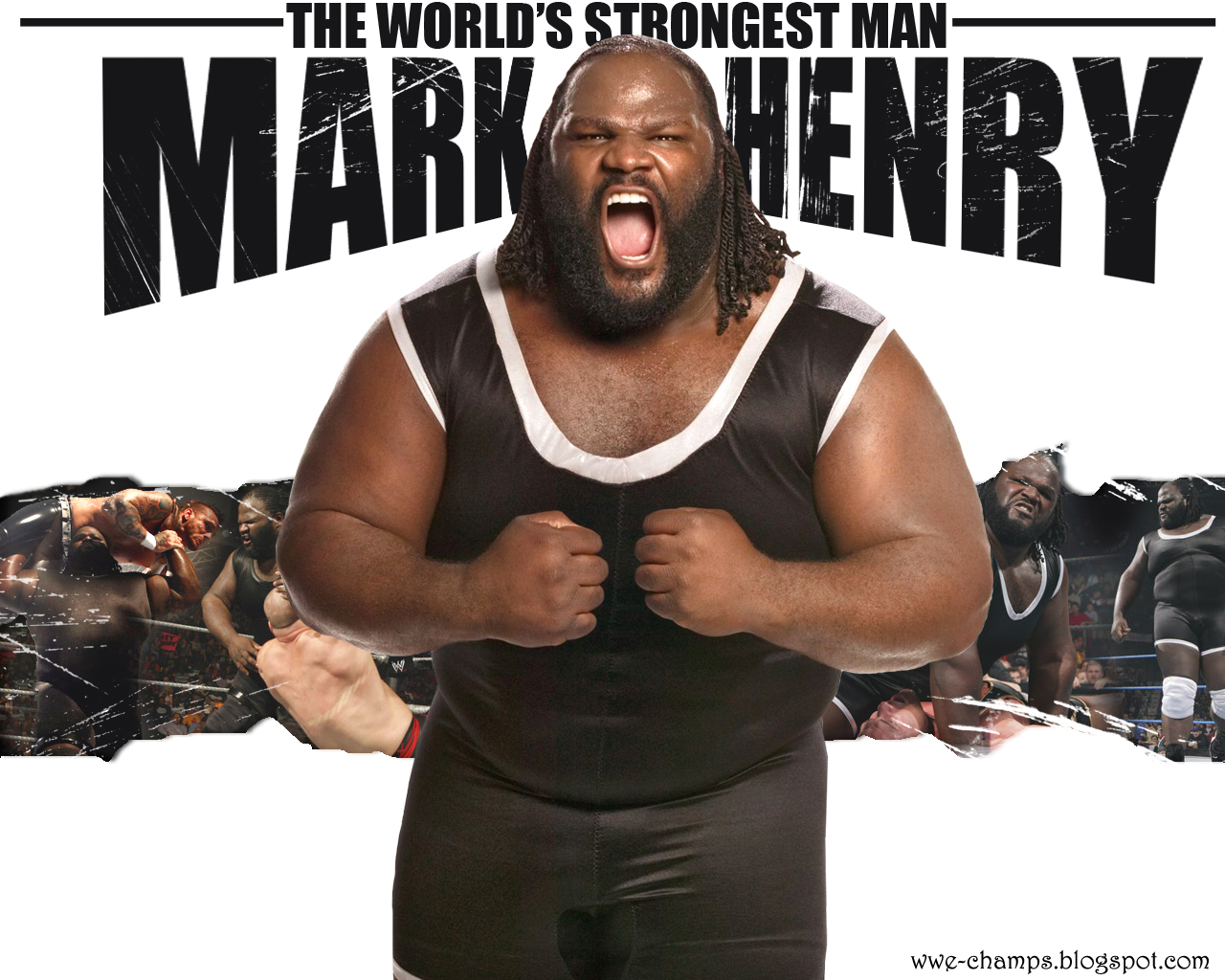
Most people think "World's Strongest Man" is just a catchy marketing line. A gimmick to sell wrestling tickets or move some merchandise. In the case of Mark Henry, you've actually got it backward. The man was a global strength phenomenon long before he ever laced up a pair of wrestling boots. Honestly, his career is kinda bizarre when you look at the raw data.
He didn't just win a few local meets. He broke records that had stood for decades. And he did it while being drug-tested. That's a huge distinction in the iron world.
The Silsbee Powerhouse
Mark Jerrold Henry came out of Silsbee, Texas, like a freight train. By the time he was eighteen, the media was already calling him the "World's Strongest Teenager." It wasn't hyperbole. At the 1990 National High School Powerlifting Championships, he posted a total of 2,033 lbs. That’s a 832 lb squat, a 525 lb bench, and a 700 lb deadlift.
As a teenager.
Think about that. Most grown men who spend their lives in the gym will never sniff a 500 lb squat. Henry was doing over 800 while his classmates were worrying about prom. He wasn't just big; he was a biological anomaly.
He moved into Olympic weightlifting shortly after. This is where it gets really impressive. Powerlifting is about raw, grinding force. Olympic lifting—the snatch and the clean and jerk—requires explosive speed and elite flexibility. Most people are good at one or the other. Henry was top-tier in both.
He made the 1992 Olympic team in Barcelona after only about ten months of specialized training. That's basically unheard of. He finished tenth, but the world saw the potential. By the 1996 Atlanta Games, he was the captain of the weightlifting team. A back injury hampered his performance there, but his status as a "dual-threat" lifter was cemented.
Why Mark Henry is Legit
If you ask a lifting historian like Herb Glossbrenner, they’ll tell you Henry might be the strongest human to ever walk the earth. Why? Because of the "Five Lift Total."
When you combine his best competition lifts in the Snatch, Clean and Jerk, Squat, Bench Press, and Deadlift, the number is staggering.
- Squat: 953.5 lbs (Raw, no squat suit)
- Deadlift: 903.9 lbs (Raw)
- Bench Press: 585 lbs
- Snatch: 396.8 lbs
- Clean and Jerk: 485 lbs
His combined total for those five lifts is 3,324.5 lbs.
Nobody else is even close. It’s one thing to be a specialist who can deadlift a house. It’s another thing entirely to have that kind of cross-disciplinary dominance. Most of the guys winning the "World's Strongest Man" (WSM) TV show use straps, suits, and specialized equipment. Henry did his biggest powerlifting numbers "raw." Just a belt and some chalk.
The Arnold Classic and the "Unliftable" Dumbbell
There is a common misconception that Mark Henry never won a strongman title. That’s technically wrong. While he didn't win the specific "World's Strongest Man" competition produced for Tuff-N-Uff or Giants Live, he won the inaugural Arnold Strongman Classic in 2002.
Many strength purists actually consider the Arnold a harder contest than the WSM. It focuses on heavy, static strength rather than the "moving" events like the Atlas Stones or truck pulls.
In that 2002 contest, Henry faced the legendary Apollon’s Wheels. It's a massive, fixed axle bar with train wheels on the ends. It doesn't rotate. It’s awkward. Henry handled it like a toy.
Then there was the Thomas Inch Dumbbell. This thing is the stuff of legends. It weighs 172 lbs, but the handle is nearly 2.5 inches thick. It’s designed so your hand can’t wrap all the way around it, making it almost impossible to grip. For over a century, very few men could even lift it off the ground.
At the Arnold, Henry didn't just lift it. He cleaned it to his shoulder with one hand. Multiple times. The look on the faces of the other competitors—elite strongmen in their own right—said everything. They knew they were looking at a different species of human.
Transitioning to the Squared Circle
In 1996, Vince McMahon signed Henry to a ten-year contract. It was a massive gamble. Henry was a legitimate athlete, but he had zero wrestling experience.
The early years were... rough.
WWE didn't really know what to do with him. They tried making him a "white meat" babyface in a blue singlet. Then came the "Nation of Domination" heel turn. Then, the era everyone tries to forget: "Sexual Chocolate."
It was a weird time. He was involved in some of the most "cringe" storylines of the Attitude Era. But through all the nonsense, the "World's Strongest Man" moniker stayed. It wasn't a nickname they had to protect with trademarks; it was just a fact.
It took fifteen years for the wrestling persona to finally match the real-life monster.
In 2011, the "Hall of Pain" era began. Henry stopped trying to be a character and just became a force of nature. He threw people around like they were laundry. He beat Randy Orton to win the World Heavyweight Championship. He finally looked like the guy who could clean and jerk 500 lbs.
His retirement "swerve" in 2013 is still cited as one of the best segments in TV history. Walking out in that salmon-colored suit, crying, talking about going home to his family—only to slam John Cena into the mat. It was brilliant. It showed that underneath all that muscle, Henry actually had the acting chops to be a top-tier entertainer.
The Reality of His Strength
Is he the strongest ever? It's a debate with no end. You have guys like Žydrūnas Savickas or Brian Shaw who have more trophies. But if you put everyone in a room with a standard barbell and no specialized suits, most experts bet on Mark.
His "raw" totals are the gold standard.
He didn't need a "multiply" suit that adds 200 lbs to a squat. He didn't use straps for his deadlift. He just walked up to the bar and moved it.
How to Apply the Mark Henry Mindset
You aren't going to squat 900 lbs. Let’s be real. But Henry’s career offers some genuine insights for anyone looking to get stronger or just improve their physical life.
- Master the Basics First: Henry spent years on the "Big Three" (Squat, Bench, Deadlift) before ever trying a strongman event. You can't build a penthouse on a weak foundation.
- Versatility Wins: He was an Olympian and a Powerlifter. Don't just do "cardio" or just "weights." True functional strength comes from being able to move your body and move external loads.
- Consistency over Decades: Henry stayed relevant in the WWE for over 20 years. That requires immense discipline in recovery and injury management.
- Know Your Value: He didn't let the "Sexual Chocolate" era define him. He knew what he was capable of and eventually forced the industry to see him as a champion.
If you want to dive deeper into the mechanics of his lifts, look up the Stark Center for Physical Culture and Sports. They have his training diaries from the 90s. It’s a fascinating look at the volume required to reach that level. You can also track his current work as a scout and mentor; he’s a massive proponent of finding the next generation of "undiscovered" athletes in small towns, just like he was in Silsbee.