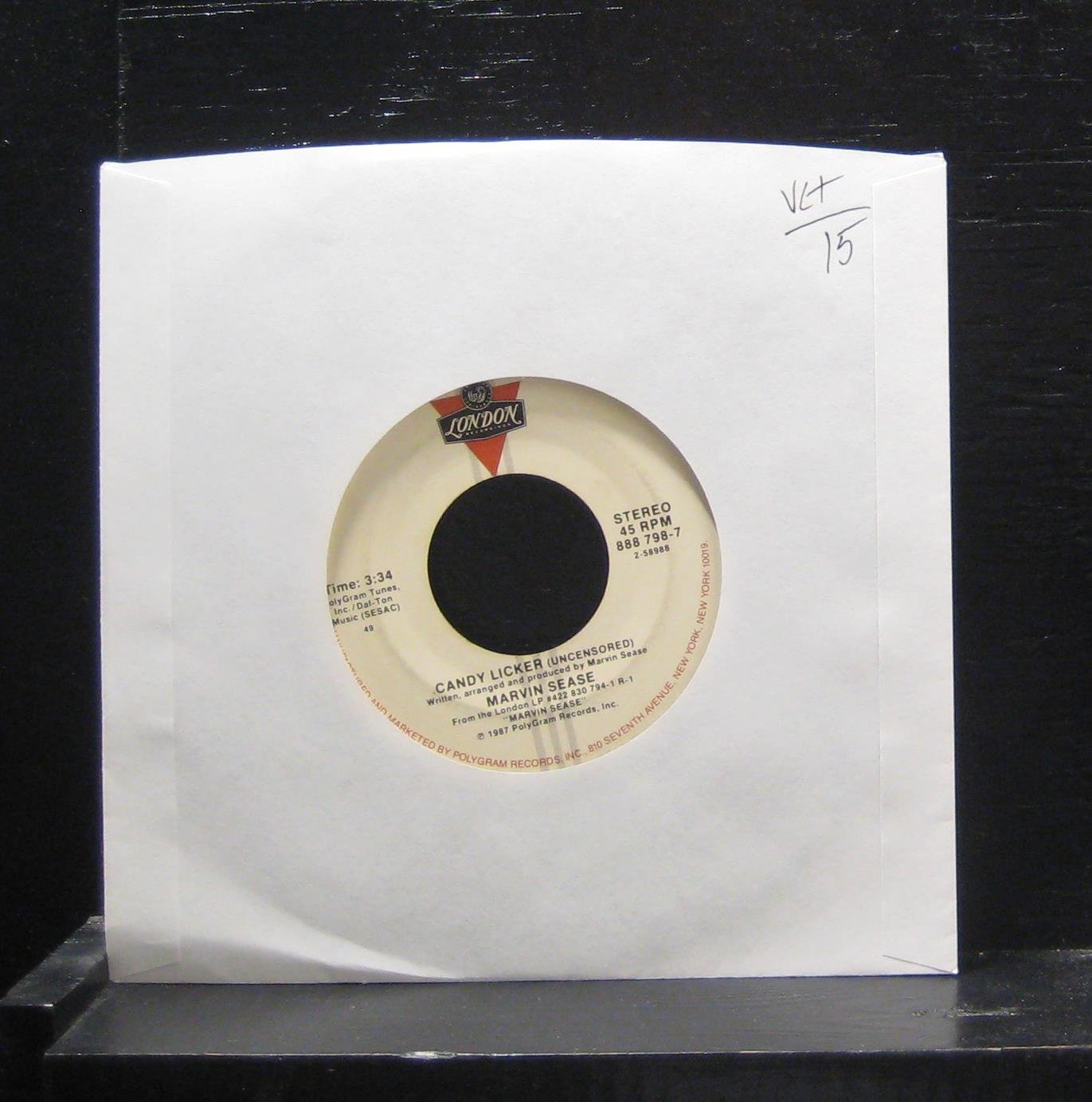
If you’ve ever found yourself in a dimly lit juke joint in the Mississippi Delta or a backyard barbecue in Alabama, you’ve heard it. That smooth, rolling bassline starts, a woman’s voice begins to gasp in the background, and then comes that unmistakable, gravelly baritone. Marvin Sease didn't just sing a song when he dropped Candy Licker in 1987; he basically created a whole new subgenre of Southern Soul that thrived where the radio wouldn't dare to go.
Most people think of it as just a "dirty song." But honestly, there is a lot more to the story than just the X-rated lyrics. It’s a track that saved a career, defined the "Chitlin’ Circuit," and proved that you don't need a single second of mainstream airplay to become a legend.
The Dream That Changed Everything
Marvin Sease wasn't always the "Candy Licker." He actually started out in the church. Born in Blackville, South Carolina, in 1946, he spent his youth singing gospel with groups like the Five Gospel Singers and the Gospel Knights. When he finally made the jump to R&B, things didn't go smoothly right away. He moved to New York in the 60s, tried to start a group with his brothers, and it flopped.
He was scuffling. Hard.
By the mid-80s, he was self-releasing music on his own tiny label, Early Records. He had a decent local hit with a song called "Ghetto Man," but he needed something bigger to fill out an album Polygram was interested in re-releasing.
The idea for Candy Licker didn't come from some calculated marketing meeting. It came from a dream. Sease woke up at 4:30 in the morning with the melody and the hook in his head. Kinda wild, right? He actually admitted later that he was scared to record it. He thought it was too much. He even considered giving the song to someone like Millie Jackson or Clarence Carter because he didn't feel comfortable singing it himself.
His girlfriend at the time (who later became his wife) was the one who pushed him. She told him he had to do it. So, he took a self-recorded cassette tape of the ten-minute track to Polygram right before they were about to press his album. They added it, and the rest is history.
Why Candy Licker Was Different
You have to understand the landscape of 1987. While Prince was pushing boundaries on the pop charts, Southern Soul was a bit more traditional. Then comes this ten-minute odyssey about oral satisfaction.
It wasn't just the lyrics. It was the "sermon."
The Structure of a Southern Soul Classic
The song isn't a three-minute radio edit. The full version is a sprawling epic where Sease basically stops singing and starts preaching. He talks to the men in the audience. He tells them why their women are unhappy. He argues that "it ain't what you got, but how you use it."
- The Tempo: It’s an ironically romantic, mid-tempo groove.
- The Vocal: Sease uses his gospel training to give the "dirty" lyrics a weirdly soulful, almost spiritual weight.
- The Impact: It became an immediate smash on jukeboxes.
Because radio wouldn't play it, the song became an underground phenomenon. It spread through word of mouth, tape dubbing, and jukebox play in Black-owned bars and clubs across the South. It turned Sease into a massive draw on the Chitlin’ Circuit, where he’d perform to sold-out crowds of mostly women who absolutely loved the unapologetic nature of the song.
The Legacy of the "X-Rated" Ladies' Man
A lot of critics at the time—and even some today—dismissed Sease as a gimmick. They called the song "cringe-worthy" or "bad." But that ignores the connection he had with his fans. Marvin Sease wasn't just being vulgar for the sake of it; he was tapping into a very real, very adult conversation about pleasure and relationship dynamics that mainstream music ignored.
He built a "cottage industry" out of this persona. He sold "Candy Licker" merchandise and followed up with songs like "A Woman Would Rather Be Licked" and "I Ate You For My Breakfast." He knew his lane and he owned it.
Sadly, Marvin Sease passed away in 2011 from complications of pneumonia in Vicksburg, Mississippi. He was 64. Even though he never had a massive Billboard Top 40 hit, his funeral was attended by thousands. His music still pulls millions of views on YouTube today.
What to Listen to Next
If you want to understand the full scope of Sease's talent beyond the "licker" tracks, you should check out:
- "Ghetto Man" – His first real breakthrough that showed his storytelling roots.
- "Quiet As It's Kept" – A vintage-sounding soul track that proves he could sing "clean" soul as well as anyone.
- "I'll Take Care of You" – A deep soul ballad (not the Bobby Bland version) that showcases his vocal range.
Actionable Takeaway for Music Fans
If you're looking to dive into the world of Southern Soul or the Chitlin' Circuit, don't just stop at the surface-level lyrics.
Research the history of the labels: Look into Malaco Records or the early history of London/Mercury R&B releases. These labels kept Black Southern music alive when the mainstream turned its back.
Listen to the full 10-minute version: You can't get the full Marvin Sease experience from a 3-minute radio edit. You need to hear the "sermon" at the end. It’s a masterclass in audience connection and live-style performance recorded in a studio setting.
Support the remaining legends: Artists like Bobby Rush and Willie Clayton are still carrying the torch for this style of music. Check out their live show dates if you want to see the energy that Marvin Sease brought to the stage every single night.
The next time you hear that bassline, remember: you’re not just listening to a "naughty" song. You’re listening to a piece of Southern history that was dreamed up at 4:30 AM by a man who was just trying to pay his bills and ended up changing soul music forever.