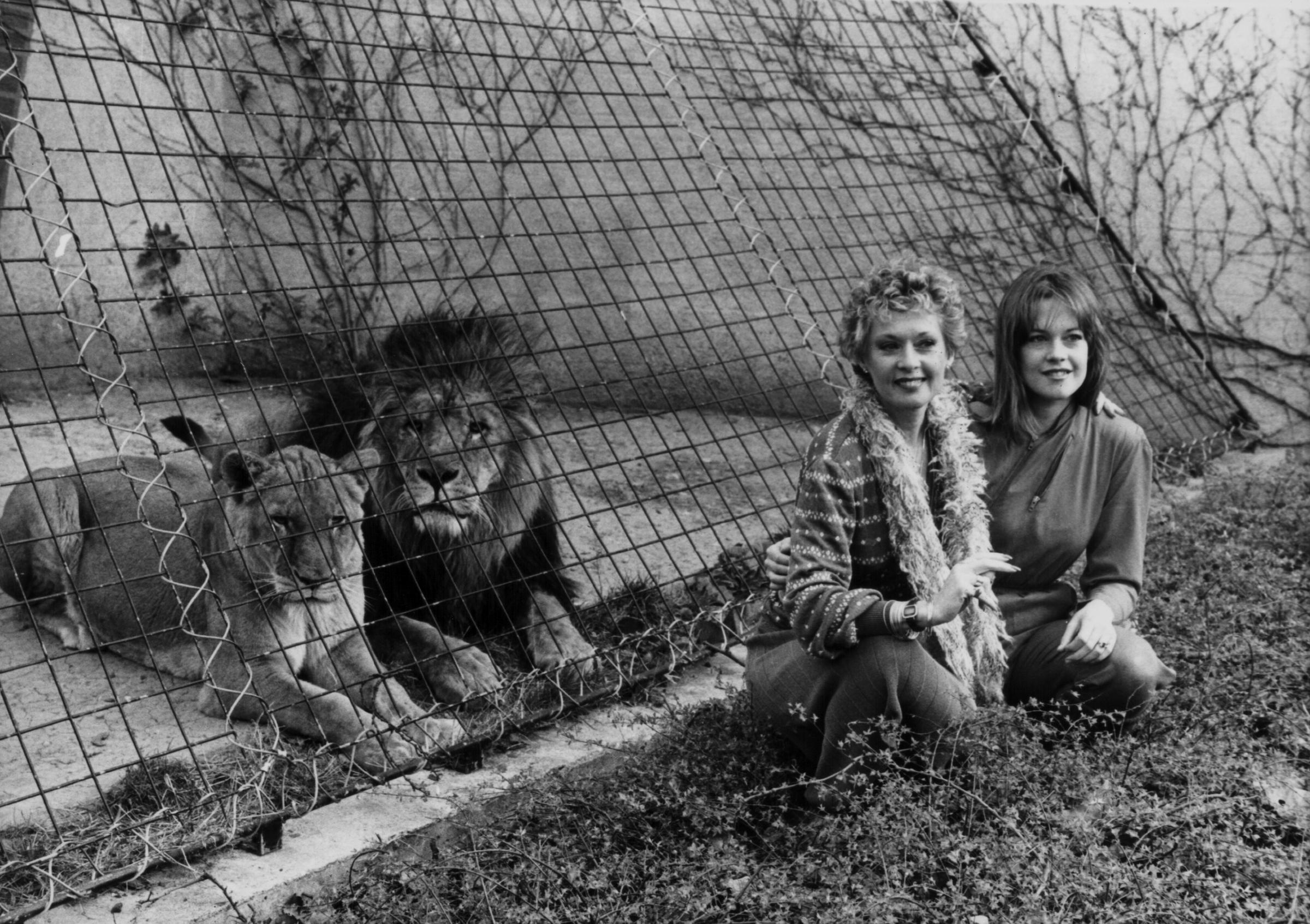
Most people remember Melanie Griffith for Working Girl or her high-profile marriage to Antonio Banderas. But there’s this weird, fever-dream chapter of her life that honestly sounds like a horror movie pitch. I'm talking about the time she lived with a 400-pound lion named Neil and nearly lost her face to another one.
It wasn’t just a weird phase. It was a decade-long obsession that consumed her family.
If you’ve ever seen those grainy 1970s photos of a teenage Melanie Griffith jumping into a pool while a lion grabs her leg, you know the vibe. It looks like a cool, bohemian California dream. In reality, it was the prelude to what many call the most dangerous movie ever made.
The Lion in the Living Room
It basically started with a trip to Africa in 1969. Melanie’s mom, Tippi Hedren—the legendary star of Hitchcock’s The Birds—and her stepfather, Noel Marshall, became obsessed with big cats. They wanted to make a movie to advocate for animal preservation. An animal trainer told them if they wanted to understand lions, they had to live with them.
So they did.
They brought a mature lion named Neil into their Sherman Oaks home. There are photos of Neil sleeping in Melanie’s bed. He hung out in the kitchen. He lounged by the pool.
Looking back, Tippi Hedren has been pretty vocal about how "stupid beyond belief" this was. You’ve got a teenager sharing a mattress with a predator that could snap her neck during a bad dream. Luckily, Neil was relatively chill. He never seriously hurt them. But Neil gave the family a false sense of security that almost cost them everything when they started filming Roar.
The Chaos of Roar
By the time production for Roar actually moved to a ranch in Acton, the "pet" situation had spiraled. They weren't just living with one lion anymore. They had over 130 untrained lions, tigers, leopards, and even a 10,000-pound elephant.
The movie's tagline eventually became a grim joke: "No animals were harmed in the making of this movie. 70 members of the cast and crew were."
Melanie Griffith was right in the middle of it. She actually quit the movie for a while because she didn't want to end up with "half a face." Can you blame her? She saw the cinematographer, Jan de Bont, get scalped by a lion. He needed 220 stitches. Her stepfather was constantly being bitten and eventually developed gangrene.
The Attack That Changed Everything
Melanie eventually came back to the project, and that's when the nightmare happened. During a scene where she was lying down with a lioness, the animal turned.
It wasn't a "movie" attack. It was real.
The lioness mauled her, and Melanie ended up needing 50 stitches and extensive facial reconstruction surgery. There was a very real fear she would lose an eye. If you watch the finished film, you can actually see footage where the tension is palpable—the actors aren't acting. They are genuinely terrified. They’re running for their lives because the "co-stars" are 500-pound predators that don't follow a script.
Why the Melanie Griffith Lions Story Still Matters
The movie was a financial disaster. It took 11 years to make, cost $17 million, and grossed next to nothing at the time. It also basically tore the family apart; Tippi and Noel divorced shortly after.
But it stands as this bizarre monument to Hollywood hubris. Today, we use CGI for everything. Back then, they just threw a 19-year-old girl into a pile of lions and hoped for the best.
Here is the thing: Melanie Griffith doesn't really talk about it much anymore. It’s a trauma she’s clearly moved past. But for the rest of us, those photos of her with Neil serve as a reminder of a time when the line between "animal lover" and "dangerously delusional" was incredibly thin.
What you can learn from the Roar disaster:
- Respect the Wild: Big cats are not pets. Even the "tame" ones have instincts that can trigger in a split second.
- Safety Protocols Exist for a Reason: The Roar set had almost no safety barriers. Modern film sets have strict rules to prevent exactly what happened to Melanie.
- The Legacy of Shambala: Despite the trauma, Tippi Hedren turned the ranch into the Shambala Preserve, a legitimate sanctuary for big cats. It moved away from the "living with humans" model to a "respectful distance" model.
If you’re interested in seeing the madness for yourself, the movie was re-released a few years ago and is often available on streaming platforms like Prime Video. It’s hard to watch, knowing the blood on screen is often real, but it’s a piece of cinematic history you won't forget.
For those looking to support big cat conservation without, you know, getting mauled, you can check out the work being done at the Shambala Preserve today. They’ve spent decades fixing the mistakes made during the Roar years, providing a home for exotic animals that were discarded by others.