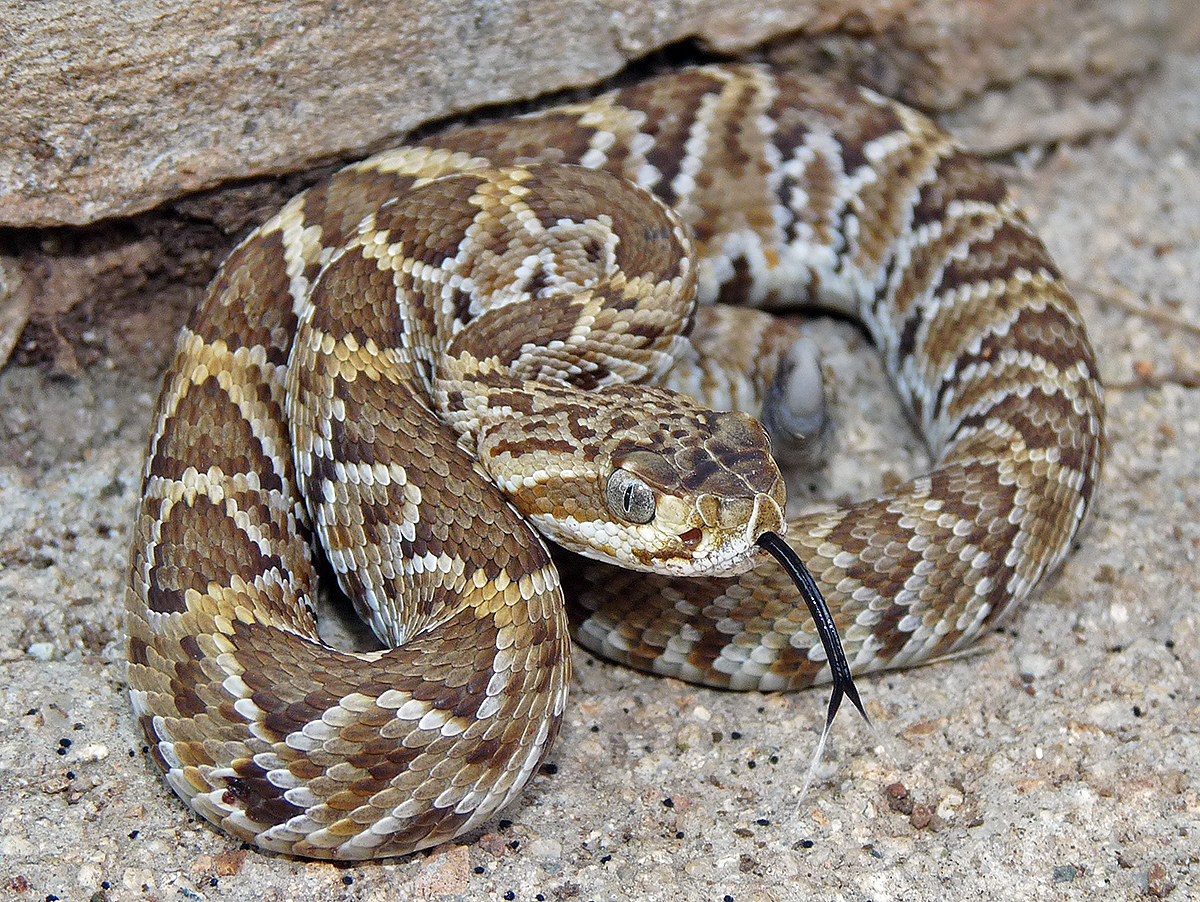
The sun hits the Sierra Madre Occidental and everything turns a dusty gold. If you’re hiking through the thorn forests of Sinaloa or the pine-oak woodlands of Michoacán, you’re in their house. I’m talking about the Mexican West Coast rattlesnake. Most people see the word "rattlesnake" and immediately think of a desert-dwelling Hollywood trope, but Crotalus basiliscus is a different beast entirely. It is massive. It is heavy. Honestly, it’s one of the most underrated apex predators in the Western Hemisphere.
It’s big.
We’re talking about a snake that comfortably clears five feet and can, in rare cases, push toward seven. In the world of rattlesnakes, that’s basically a heavyweight boxer. While its cousins like the Western Diamondback get all the press, the Mexican West Coast rattlesnake quietly rules the Pacific slopes from southern Sonora all the way down to Oaxaca.
What Actually Sets the Mexican West Coast Rattlesnake Apart?
It isn't just the size. It's the vibe. Scientists like Jonathan Campbell and William Lamar, who literally wrote the book on the venomous reptiles of the Western Hemisphere, point out that this species has a distinct, dignified look. They aren't as "busy" looking as other rattlers. As they age, their patterns often fade into a stately, uniform olive green or grayish-brown.
You've probably heard them called the "basilisk rattlesnake." That name comes from the Greek basiliskos, meaning "little king." It fits. There’s a certain regality to a six-foot snake that doesn’t feel the need to buzz its rattle at every passing shadow. They are surprisingly chill for a creature that packs enough venom to ruin your entire year.
Unlike the desert specialists, these snakes love a bit of humidity. You’ll find them in tropical deciduous forests. They like the shade. They like the rocky outcrops near seasonal streams. If you’re traveling through the "tierra caliente" regions, you’re in the heart of their territory. They aren't looking for trouble, but they are incredibly good at blending into the leaf litter. One minute you’re looking at a pile of dried oak leaves, and the next, you realize that "pile" has a pulse and a heat-sensing pit.
The Venom Reality Check
Let’s get the scary stuff out of the way. Is the Mexican West Coast rattlesnake dangerous? Yes. Obviously.
But it’s more complicated than just "snake bite equals bad." Their venom is a cocktail of proteolytic enzymes and peptides that break down tissue. It’s designed to digest a squirrel from the inside out before the snake even finishes swallowing. In humans, a bite causes massive swelling, pain, and systemic issues. However, despite their size and the potential volume of venom they can inject, fatalities are remarkably rare.
Why? Because they aren't aggressive.
A study by herpetologists in Colima found that these snakes often rely on camouflage first. They’d rather you just walk past. If that fails, they give you the rattle—a polite, if terrifying, "back off." Bites usually happen when someone tries to catch them or accidentally steps directly on one while wearing flip-flops. Don't do that.
Living With a Giant: The Ecology of the Pacific Slope
The Mexican West Coast rattlesnake plays a role in the ecosystem that most people overlook. They are the ultimate rodent control. In agricultural areas of Nayarit and Jalisco, these snakes are basically unpaid security guards. They keep grain-eating rodent populations in check. Without them, farmers would be dealing with far more crop loss and disease.
They are also incredibly hardy. While many species struggle with habitat fragmentation, Crotalus basiliscus has shown a surprising ability to persist in modified landscapes. They’ll hang out in the rock walls of old plantations or the edges of cattle pastures.
- Size: Average 150 cm (5 feet), maxing out near 200 cm.
- Coloration: Juveniles are brightly patterned; adults turn olive, greenish, or brown.
- Range: Exclusive to the Pacific coast of Mexico.
- Diet: Small mammals, birds, and occasionally other lizards.
There is a weird myth in some local communities that these snakes can "fly" or jump long distances. Total nonsense. They are heavy-bodied terrestrial animals. They move with a slow, deliberate rectilinear crawl. They aren't chasing you down the trail. In fact, if you see one, you've witnessed something special. Most people spend their whole lives in Mexico without ever spotting a wild one because they are masters of disappearing in plain sight.
Finding Them (Safely) and Conservation
If you’re a reptile enthusiast or a wildlife photographer, the Mexican West Coast rattlesnake is a bucket-list species. The best places to see them are protected areas like the Chamela-Cuixmala Biosphere Reserve in Jalisco. Here, the tropical dry forest remains intact, providing the perfect canopy for these "kings" to roam.
But here is the catch: They are under pressure.
Habitat loss is a big one. As the Pacific coast develops for tourism and agriculture, the continuous corridors these snakes need are shrinking. Then there’s the "senseless killing" factor. Many people kill snakes on sight out of a deep-seated fear. It’s an old story. Education is slowly changing things, but we’re not there yet.
Researchers like those at the Universidad Nacional Autónoma de México (UNAM) are working to map their genetic diversity. They’ve found that the populations in the north (Sonora) are slightly different from those in the south (Oaxaca). This nuance matters for conservation. We can’t just treat them as one big, monolithic group if we want to protect them effectively.
What to Do if You Encounter One
First, breathe. You aren't in a horror movie.
- Keep your distance. Five feet is the bare minimum, but ten is better.
- Watch the body language. If the snake is coiled tightly with its head raised in an S-curve, it’s feeling threatened.
- Back away slowly. Don't turn your back until you're a safe distance away, but don't make sudden, jerky movements.
- Appreciate the moment. You are looking at a lineage that has survived for millions of years.
The Cultural Connection
In Mexico, snakes have always been more than just animals. From the feathered serpent Quetzalcoatl to the eagle perched on a cactus clutching a snake on the national flag, they are woven into the identity of the land. The Mexican West Coast rattlesnake is a living piece of that heritage.
Indigenous groups in the regions where this snake lives often have a complex relationship with it. In some traditions, the rattlesnake is a guardian of the earth or a bringer of rain. It’s a far cry from the "vermin" label often slapped on them by modern urbanites.
Honestly, we need to get back to that. We don't have to love them, and we definitely shouldn't try to pet them, but we should respect the role they play. A world without the Crotalus basiliscus would be a world with more rats, less biodiversity, and a lot less mystery in the Mexican wilds.
Moving Toward Coexistence
Protecting the Mexican West Coast rattlesnake isn't just about the snake. It's about protecting the tropical dry forest—one of the most endangered ecosystems in the world. When we save the habitat for a large predator, we save it for everything else beneath it in the food chain.
If you live in or are visiting western Mexico, the best thing you can do is support local conservation initiatives and leave the wildlife alone. Use a telephoto lens, not a stick. If a snake ends up in a residential area, call a professional relocation service instead of reaching for a shovel.
The Mexican West Coast rattlesnake is a survivor. It has navigated the rugged terrain of the Pacific slopes since long before we showed up. With a little bit of space and a lot less misplaced fear, it’ll keep its place as the quiet, heavy king of the Mexican woods.
To better understand these creatures, start by learning to identify the local flora of the Pacific coast, which often dictates where these snakes shelter. If you are a landholder in these regions, consider leaving rocky outcroppings undisturbed to provide natural corridors. For travelers, always stick to marked trails in biosphere reserves and hire local guides who understand the behavior of native venomous species. Education is the only bridge between fear and conservation.