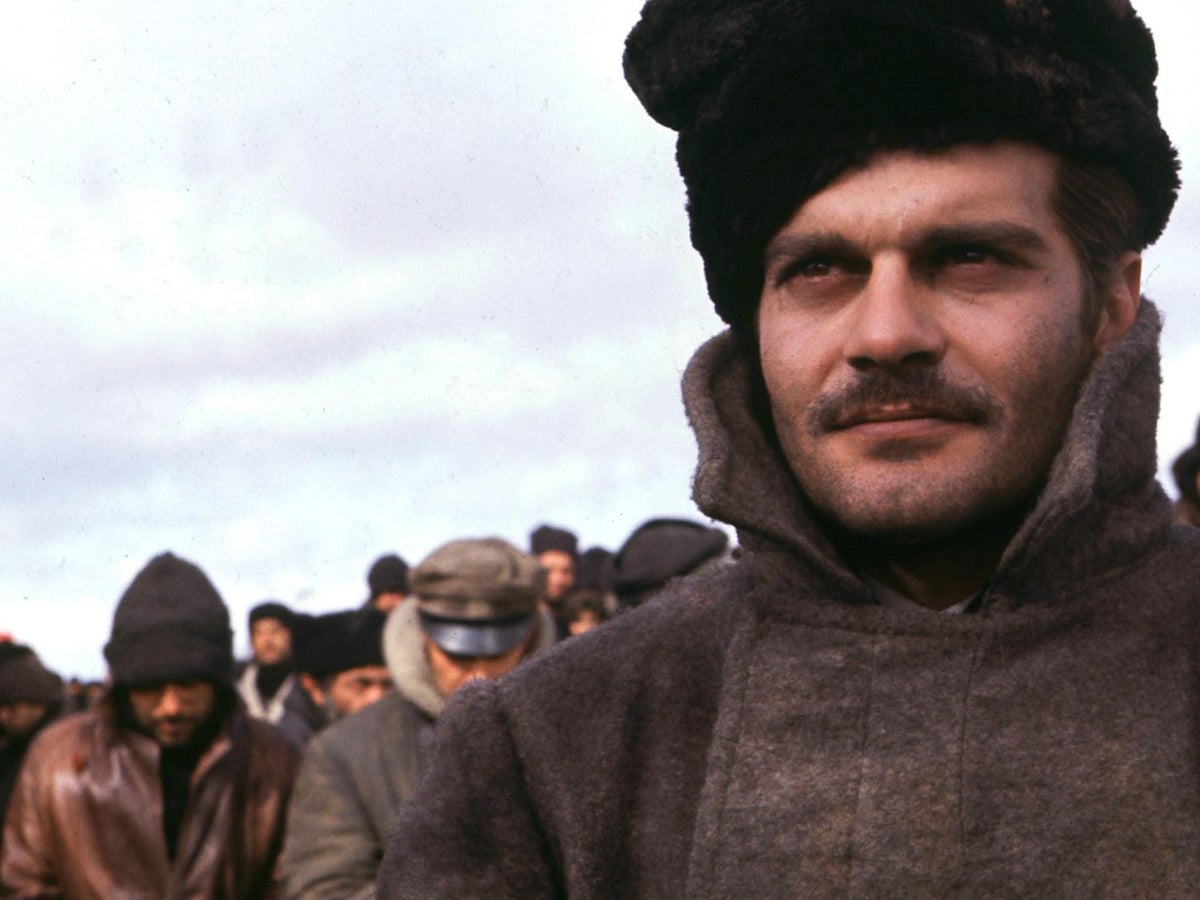
Omar Sharif was never supposed to be Yuri Zhivago.
Honestly, it’s one of those Hollywood stories that feels like a glitch in the matrix. When David Lean started looking for his lead for the 1965 epic Doctor Zhivago, Sharif wasn't even on the radar for the main role. He was the "bridge guy" or the desert rider from Lawrence of Arabia. In fact, Sharif himself actually wrote to Lean asking if he could play the role of Pasha—the revolutionary who eventually becomes the cold-blooded Strelnikov.
He just wanted to be in the movie. He didn't care if it was a supporting part.
Imagine his shock when Lean called him back and basically said, "Actually, I want you to be the Doctor."
It was a massive gamble. Sharif was Egyptian. Zhivago was the quintessential Russian soul. In today's world, the "discourse" on social media would have been a nightmare before the first frame was even shot. But Lean had a vision for those soulful, liquid eyes that could reflect the tragedy of an entire revolution without saying a single word.
The Transformation Nobody Talks About
Playing a Russian doctor wasn't just about learning lines for Sharif. It was a physical overhaul that sounded kind of miserable. To make him look "more Slavic," the makeup team actually taped his eyes back to give them a slight tilt. They shaved his hairline to change his forehead shape.
He spent most of the shoot in Spain, of all places.
Everyone thinks Doctor Zhivago was filmed in the snowy wastes of Russia, but the Soviet Union had banned Pasternak’s book. They weren't exactly going to let a Western crew film there. So, Lean built Moscow in the middle of a Spanish heatwave.
Creating Winter in the Heat
- The Ice Palace: That famous "frost" inside the Varykino estate? It was mostly wax and salicylic acid.
- The Snow: They used thousands of tons of white marble dust and salt.
- The Flowers: For the spring scenes, they had to plant thousands of daffodil bulbs in the cold, only for them to bloom too early because the Spanish winter was too mild. They had to dig them up and put them in cold storage to save the shot.
It’s wild to think about Sharif standing there in a heavy fur coat, portraying a man freezing to death in the Ural Mountains, while the Spanish sun was actually baking the set at 100 degrees. That’s acting.
Why the Critics Hated Him (At First)
When the film finally came out, the critics were brutal. Some of them called Sharif "passive." Pauline Kael, the legendary and often terrifying critic for The New Yorker, basically dismissed the whole thing as stately and dead.
They didn't get it.
They wanted a traditional hero who took charge of his destiny. But Zhivago isn't that guy. He’s a poet caught in a meat grinder. Sharif understood that the character’s power came from his vulnerability. He wasn't supposed to fight the Revolution; he was supposed to survive it while holding onto his humanity.
If you watch his face during the scene where he sees the partisans being mowed down, you see everything. You don't need a monologue. His eyes do the heavy lifting. That "passivity" the critics hated is actually what makes the performance timeless. It’s why people still watch it sixty years later while other "action" epics of the era have been totally forgotten.
The Bridge, the Gambling, and the Decline
Success is a double-edged sword. Doctor Zhivago made Omar Sharif a global superstar, but it also kind of trapped him. He became the "exotic" lead who could be plugged into any nationality. He played a German, a Spaniard, a Mongol (Genghis Khan!), and an Armenian king.
He once joked that Hitler would be turning in his grave seeing an Egyptian play a Nazi officer.
But the Hollywood lifestyle took its toll. Sharif was famously obsessed with bridge—the card game. He was one of the best in the world, actually. But his gambling habit meant he often took roles just for the paycheck. He’d blow a fortune at a casino in one night and then have to sign onto a mediocre movie the next morning to cover the debt.
It’s a bit sad, really. He was a man of immense intellect—he spoke five languages fluently and had a degree in physics—but he often felt like he was just a "pretty face" for hire.
The Chemistry That Wasn't
Here’s a fun bit of trivia that ruins the magic a little: Omar Sharif and Julie Christie didn't really get along off-camera.
On screen, they are the definition of "doomed lovers." They look like they would die for each other. In reality? Sharif complained that she ate fried egg sandwiches during breaks, which made her breath smell, well, not great for romantic scenes. Christie, for her part, later said she barely remembered him after the shoot ended.
It just goes to show that you don't need to be soulmates to create cinematic history. You just need a director like David Lean who is obsessed with every single frame.
The Lasting Legacy of the Poet-Doctor
So, why does it still matter? Why should anyone care about a three-hour-plus movie from 1965 in the age of TikTok?
Because Doctor Zhivago is about the individual versus the machine. It’s about how hard it is to stay "you" when the world is demanding you become "us."
Sharif's performance is the anchor for that entire theme. He didn't play a soldier; he played a man who loved flowers and poetry and a woman he shouldn't have loved. He made it okay for a leading man to be sensitive.
How to Appreciate the Film Today
- Watch the 4K Restoration: If you’re going to see it, see it in the highest quality possible. The cinematography by Freddie Young is genuinely jaw-dropping.
- Listen to the Silence: Pay attention to the scenes where Sharif isn't talking. That's where the real acting happens.
- Read the Book: Boris Pasternak won the Nobel Prize for this story. It's denser and more political than the movie, but it gives you a whole new layer of respect for what Sharif was trying to portray.
Omar Sharif eventually returned to Egypt, leaving the glitz of Hollywood behind. He lived a long, complicated life, but he’ll always be Yuri Zhivago to the rest of the world. That guy in the fur hat, looking out of a frost-covered window, watching a world he loved disappear into the snow.
Actionable Insight: If you want to understand why Sharif was so special, skip his later "paycheck" movies and watch Lawrence of Arabia and Doctor Zhivago back-to-back. Notice how he transforms from the fiery, aggressive Ali into the quiet, observant Yuri. It’s a masterclass in range that few actors have ever matched.