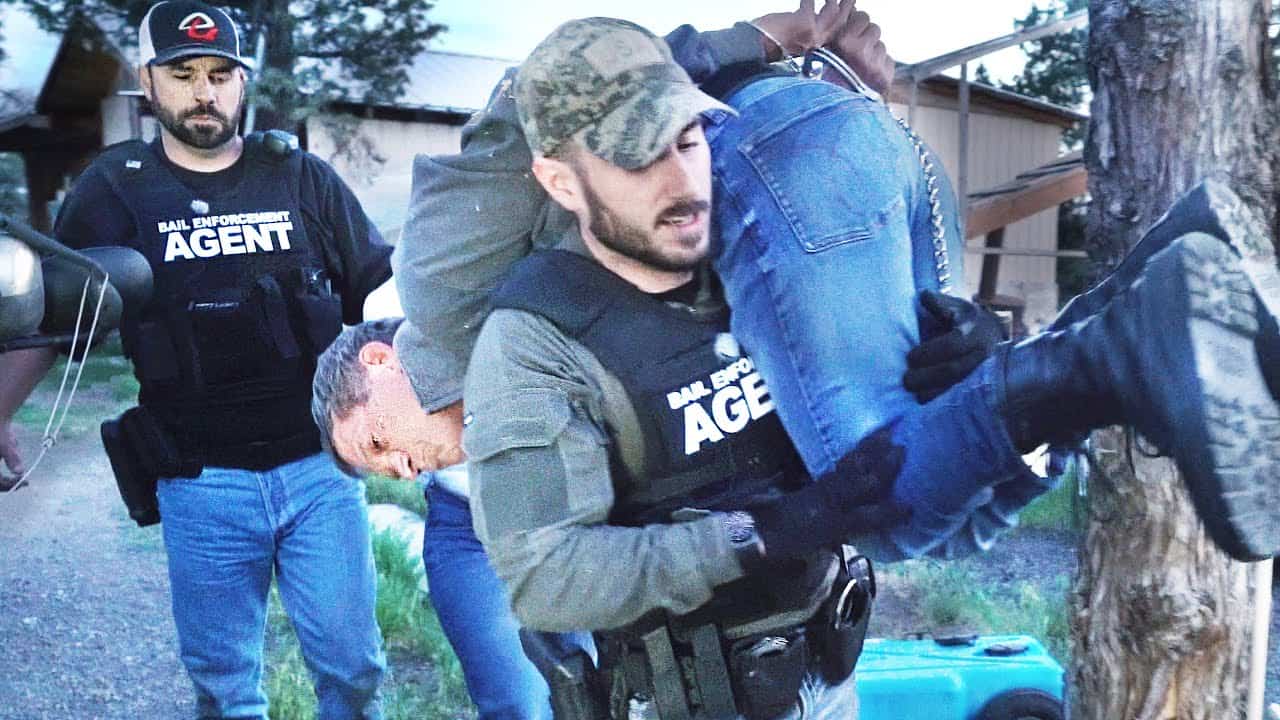
If you’ve spent more than five minutes on the "wild west" side of YouTube, you’ve probably seen him. A guy in a tactical vest, barking orders, kicking down doors, and chasing fugitives through the dusty backroads of Oregon or California. He goes by Patty Mayo. With over 10 million subscribers and views that would make a network TV executive weep, he’s become the face of a very specific, very intense genre of internet content.
But here’s the thing. Almost every time a new video drops, the comments section turns into a digital fistfight. "Is he a real cop?" "Is this legal?" "Why hasn't he been shot yet?"
Honestly, the reality of who Patty Mayo is—and what he actually does—is a lot more interesting than the "is it real or fake" debate suggests. It’s a masterclass in modern digital branding, a bit of legal tightrope walking, and a whole lot of Hollywood-style production hidden behind a GoPro lens.
Who is the man behind the badge?
First off, Patty Mayo isn’t his birth name. He’s Patrick Thomas Tarmey, born in 1987 in Boston. Before he was "arresting" people on camera, he was actually a fairly standard prank YouTuber. If you go far enough back in his upload history, you’ll find the typical 2014-era nonsense: public pranks, vlogs, and the kind of stuff that dominated the platform before "narrative" content took over.
He eventually realized that while pranks were okay, conflict was better. High-stakes conflict? That was the jackpot.
He pivoted. He created "Southland Bounty Hunters," a series where he played a rough-and-tumble bail enforcement agent. The shift worked. His numbers didn't just grow; they exploded. He traded the prankster persona for a tactical belt and a "Sheriff" patch, and the internet couldn't look away.
The Oregon "Sheriff" controversy
You’ve probably seen the videos where he’s wearing a uniform that looks suspiciously like the Deschutes County Sheriff’s Office. He drives a blacked-out SUV with lights and sirens. He’s got "Sheriff" emblazoned across his chest.
This specific era of his content caused a massive headache for real-life law enforcement. In late 2018, the Oregon State Sheriffs' Association (OSSA) had to step in because their phones were ringing off the hook with confused citizens.
They didn't mince words. They released a formal statement clarifying that Mr. Mayo is not a member of law enforcement and has no affiliation with any sheriff’s office in Oregon. They even went as far as to meet with him to tell him he couldn't keep filming in public locations without proper permits and road closures.
Basically, the "arrests" you see in those videos? They aren't happening to random people on the street.
Is Patty Mayo real or fake?
This is the million-dollar question. If you’re looking for a "yes" or "no," you’re going to be disappointed because the answer is a little of both.
Technically, Patty Mayo’s videos are scripted entertainment.
Think of it like Cops mixed with The Office or Reno 911!, but played completely straight. The "fugitives" are almost always paid actors or members of his production crew. The dialogue is often improvised to give it that gritty, "unscripted" feel, but the scenarios are planned.
Why people think it’s real
- The Gear: He uses high-end tactical equipment, including Byrna less-lethal launchers and body armor.
- The Cinematography: He uses body cams and "shaky cam" techniques that mimic real police dashcam footage.
- The Emotion: The actors he hires are actually pretty good at screaming, crying, and resisting, which triggers a visceral reaction in the viewer.
Why it’s definitely a show
- No Miranda Rights: As many law enforcement critics on Reddit and YouTube have pointed out, he rarely follows actual legal procedures for arrests.
- Public Statements: He has acknowledged in various interviews and descriptions that the show contains "dramatized engagements."
- Safety: In a real bounty hunting scenario, the risk of a firearm being pulled is extremely high. In Patty’s world, the "suspects" always seem to have just the right amount of resistance to make for good TV without anyone actually getting killed.
The "DBSO" and the business of bounty hunting
The "Dutchberry Sheriff’s Office" (DBSO) is a fictional entity he created. It’s a clever move. By creating a fake jurisdiction, he sidesteps some (though not all) of the legal issues regarding impersonating a real police officer.
He’s not just a YouTuber; he’s an entrepreneur. He sells merch—everything from hats to "DBSO" gear. He has brand deals with tactical equipment companies. He’s essentially built a media empire around the aesthetic of law enforcement.
Some people find this "scummy" because he doesn't always put a giant "THIS IS FAKE" disclaimer at the start of every video. They feel he’s tricking people into believing they’re watching real-life heroics. Others argue that it’s no different than a reality TV show like Storage Wars or Pawn Stars, where everyone knows there’s a script, but we all just agree to go along with the ride because it’s fun.
What we can learn from the Patty Mayo phenomenon
Love him or hate him, Patty Mayo understands the attention economy better than almost anyone. He figured out that people crave justice, action, and clear-cut "good guy vs. bad guy" narratives.
If you're watching his videos, treat them like a movie. Appreciate the production value, the stunts, and the intensity. Just don't go out and try to "arrest" your neighbor while wearing a tactical vest you bought on Amazon.
Actionable Insights for Viewers
- Check the Description: Always look at the video descriptions on high-intensity "reality" channels. Creators often hide their legal disclaimers there to avoid breaking the "immersion" of the video.
- Verify the Uniform: If you see a law enforcement officer in a video and something feels "off," look for the specific department name. Real agencies are very protective of their logos.
- Understand "Less-Lethal": Much of the gear Patty uses (like Byrna) is real-world equipment used by civilians and security for self-defense. It's interesting to see it in action, even if the "action" is staged.
- Support Real Law Enforcement: If you enjoy the service aspect of what you see, look into local ride-along programs or civil service opportunities in your own town. The real work is usually a lot more paperwork and a lot less kicking down doors.
Patty Mayo is a creator who found a niche and dominated it. He isn't a cop, and he isn't a traditional bounty hunter, but he is one of the most successful digital filmmakers of the last decade. Whether that's a good thing for the "truth" on the internet is a conversation that's still happening in every one of his comments sections.
Next Steps for Your Research
If you're curious about the legal side of this, look up your own state's laws on Bail Enforcement. Every state has wildly different rules—some require licenses, while others are a complete free-for-all. You can also compare Patty's videos to "audit" channels or real bodycam footage released by police departments to see just how different the real procedures are from the "Southland" version.