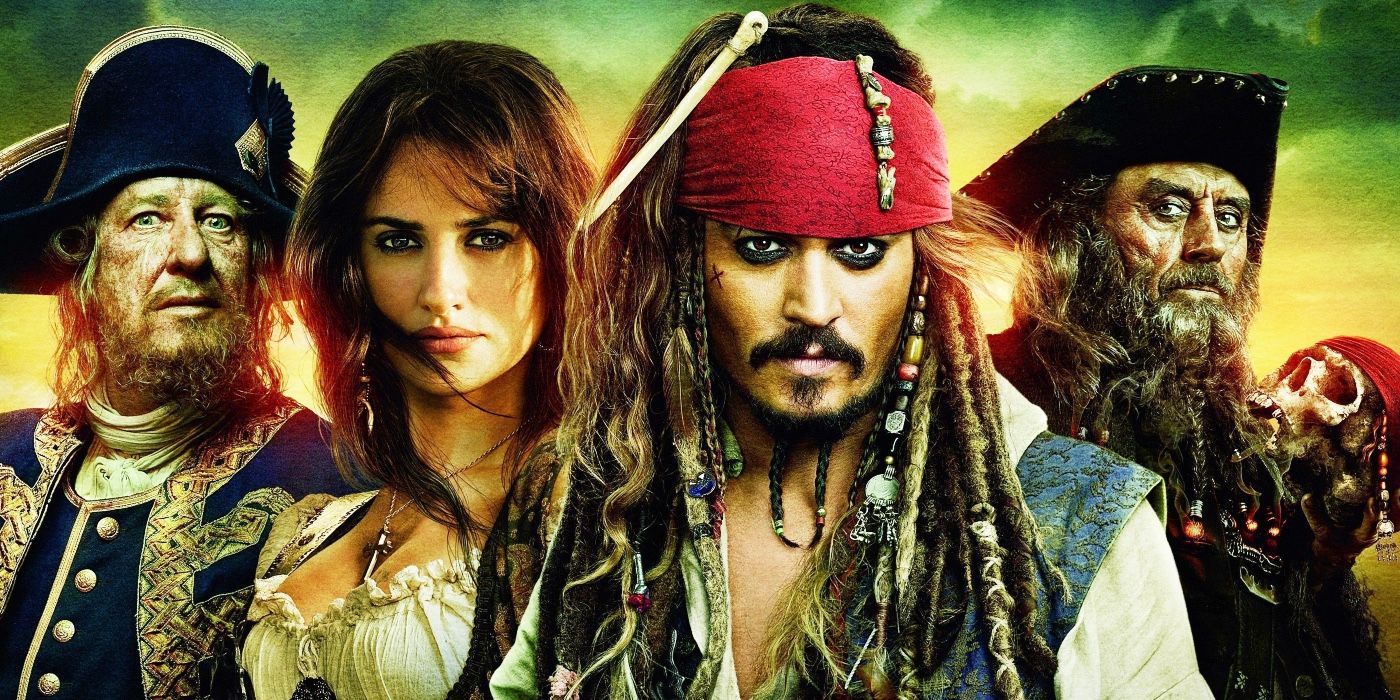
Let’s be real for a second. When Pirates of the Caribbean On Stranger Tides dropped back in 2011, it felt like a massive gamble. The original trilogy had just wrapped up Gore Verbinski's sprawling, weird, and surprisingly dark epic with At World's End. We thought the story was done. But Disney saw a billion-dollar ship still docked in the harbor, and they decided to set sail again, this time without Orlando Bloom or Keira Knightley.
It was a reset. A "soft reboot" before we even used that term every five minutes.
People have a love-hate relationship with this one. Honestly, it’s understandable. You’ve got Johnny Depp returning as Captain Jack Sparrow, but for the first time, he isn't the supporting comedic relief—he's the lead. That change alone shifted the entire DNA of the franchise. It’s a movie that traded the high-seas naval battles of the first three films for a more contained, jungle-trekking adventure involving the Fountain of Youth.
What Really Happened with Pirates of the Caribbean On Stranger Tides
Rob Marshall took over the director's chair from Verbinski, and you can feel the shift immediately. Marshall, coming off Chicago and Nine, brought a different theatricality to the screen. The movie didn't have that grimy, salt-crusted texture of the first three. Instead, it felt a bit cleaner, more focused on character interactions than massive CGI maelstroms.
The plot? It’s basically a race.
Jack Sparrow is forced onto the Queen Anne’s Revenge by Angelica, played by Penélope Cruz. She’s a blast. Her chemistry with Depp is one of the high points because she’s one of the few characters who can actually out-lie Jack. They’re chasing the Fountain of Youth, but they aren't alone. You have the Spanish Empire, the British Navy (led by a newly "civilized" Hector Barbossa), and the terrifying Blackbeard.
Ian McShane as Blackbeard should have been the ultimate villain. He’s a legend. He has a sword that controls ships! Yet, some fans felt he was a bit subdued compared to the literal squid-faced god that was Davy Jones. It’s a tough act to follow. While Davy Jones felt like a force of nature, Blackbeard felt like a very dangerous, very grumpy old man with some cool magic tricks.
The Mermaid Problem and the Romance Gap
One of the biggest critiques of Pirates of the Caribbean On Stranger Tides is the lack of Will and Elizabeth. To fill that void, the writers gave us Philip, the missionary, and Syrena, the mermaid.
It didn't quite land for everyone.
The mermaid sequence itself, though? Genuinely terrifying. This is where the movie shines. Marshall leaned into the folklore that mermaids aren't just pretty girls with tails—they’re predators. The scene at Whitecap Bay is arguably the best-directed sequence in the film. It’s tense, beautifully shot, and actually stakes a claim for why these movies need a big budget.
But the romance between Philip and Syrena felt like it was checking a box. We needed a "pure" love story to balance Jack’s cynicism, but it lacked the three-movie buildup that made us care if Will and Elizabeth ended up together. It’s a classic case of trying to catch lightning in a bottle twice. Sometimes, the bottle just stays empty.
Why the Production Cost So Much (And Why It Matters)
Here is a fun fact that sounds fake but is 100% true: On Stranger Tides is officially one of the most expensive movies ever made. We are talking a budget that ballooned toward $378 million.
Why?
Logistics. They shot in Hawaii and London. They used high-end 3D cameras, which were bulky and temperamental back then. Plus, Disney had to manage a massive cast and crew across multiple islands. When you look at the screen, you don't necessarily see $400 million in CGI explosions, but you see it in the scale of the sets and the sheer number of practical locations.
The movie ended up crossing the billion-dollar mark at the global box office. Despite the mixed reviews from critics, audiences showed up. It proved that Jack Sparrow was a global icon who didn't necessarily need the original ensemble to sell tickets. It's the reason we eventually got a fifth movie, for better or worse.
Pirates of the Caribbean On Stranger Tides: A Technical Shift
Technically, this film was a turning point. It moved away from the heavy, gothic lighting of the original films. Dariusz Wolski, the cinematographer, had to work with those 3D rigs, which required a lot more light. The result is a movie that looks "flatter" than The Curse of the Black Pearl.
If you go back and watch them side-by-side, the difference is jarring.
The original films used shadows to hide the edges of the world, making it feel infinite. This fourth entry feels more like a stage play at times. That’s not necessarily a bad thing—it fits Marshall’s background—but it’s a big reason why die-hard fans feel like it "looks" different.
The Barbossa Factor
Can we talk about Geoffrey Rush? Because he carries this movie on his back.
Watching Hector Barbossa wear a powdered wig and work for King George II is hilarious. He’s clearly miserable but also clearly has a secret agenda. His rivalry with Jack remains the heartbeat of the series. When they’re stuck in the trees together, arguing over a map or a bottle of rum, the movie finds its soul.
Rush plays Barbossa with a new layer of vulnerability here. He’s lost his leg. He’s lost the Pearl. He’s driven by revenge against Blackbeard, not just greed. It gives the climax some actual emotional weight that the Fountain of Youth plot lacks on its own.
What Most People Get Wrong About the Ending
A lot of viewers walked away thinking the ending was just a setup for a sequel. Sorta. But it’s actually a very traditional pirate ending.
Jack chooses his friends (and his own soul, arguably) over eternal life. He tricks Blackbeard in a way that is perfectly "Jack." It’s a cynical move wrapped in a heroic one. The tragedy of Angelica being left on that island is a dark note that the movie doesn't apologize for. It reminds us that Jack Sparrow isn't a "good guy." He's a pirate. He’s selfish, even when he’s being helpful.
Actionable Insights for Your Next Rewatch
If you’re planning to dive back into the franchise, don’t just treat this as a "filler" movie. There’s a lot to appreciate if you look in the right places.
- Watch the background during the London chase: The detail in the production design is insane. The carriage chase through the streets of London is one of the last times the franchise used that much practical stunt work.
- Pay attention to the music: Hans Zimmer worked with the guitar duo Rodrigo y Gabriela for this soundtrack. It’s why the score has a much more Spanish, rhythmic flair than the previous orchestral themes.
- Look for the "Easter Eggs" regarding the Black Pearl: The movie sets up the "ship in a bottle" plot point which becomes the entire driving force of the next film. It’s one of the few things that actually connects the later sequels together.
- Analyze the Fountain of Youth ritual: It’s actually quite a dark concept. To live, you have to literally steal the years from someone else. It fits the selfish nature of the pirate life better than a simple "magic water" trope.
On Stranger Tides isn't perfect. It’s a bit too long, the middle section in the jungle drags, and the new romantic leads are a bit bland. But it’s also a movie that dares to take Jack Sparrow out of his comfort zone. It gives us the best mermaid horror in cinema and reminds us that Geoffrey Rush is a national treasure.
If you want to understand the modern blockbuster landscape, you have to look at this movie. It’s the bridge between the standalone epics of the early 2000s and the franchise-building "content" of the 2020s. It’s a fascinating, weird, expensive relic of a time when Disney was figuring out if they could keep a franchise alive on the shoulders of one man in eyeliner.
To get the most out of the experience now, try watching it as a standalone adventure rather than "Part 4." It functions much better as a "Tall Tale" told by Jack at a bar than a direct continuation of the Elizabeth Swann saga. Focus on the production design and the character dynamics between the veteran actors. That’s where the real magic is hidden.