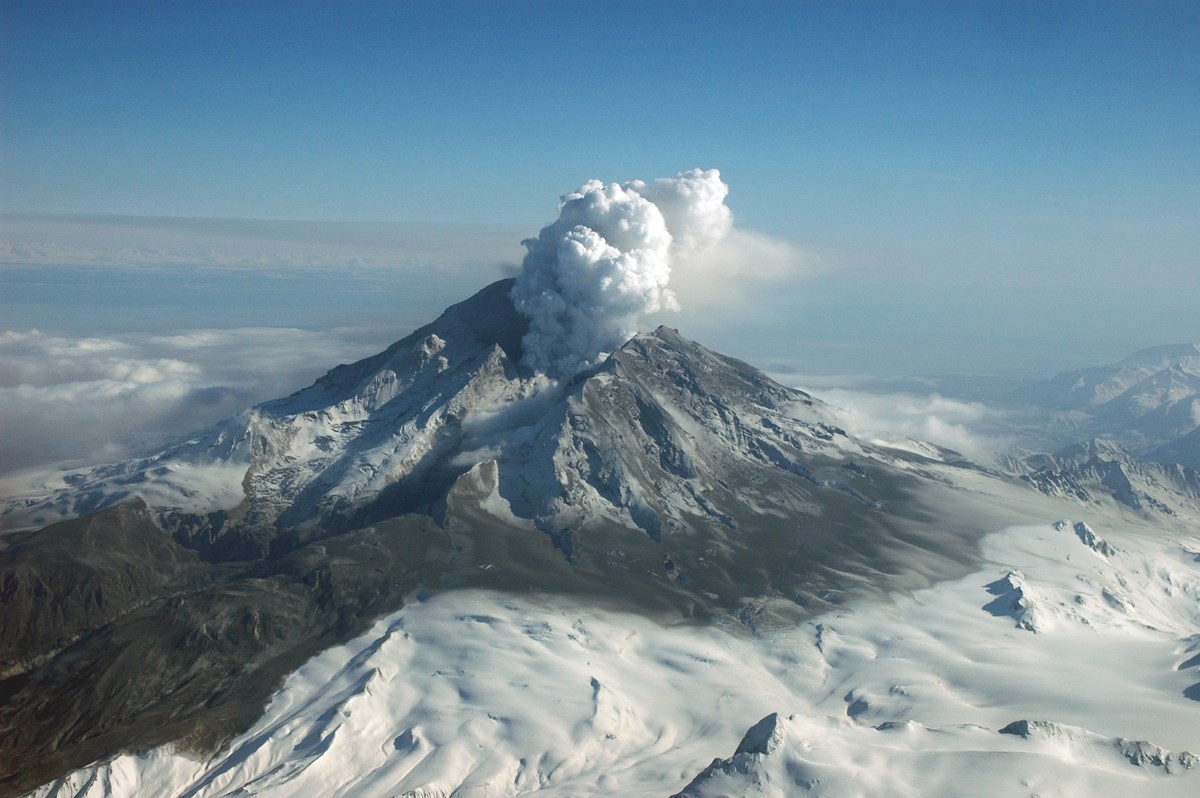
You’ve seen the movies. The hero outruns a slow, glowing river of lava, maybe hopping over a small crack in the ground while dramatic music swells. It’s a classic trope, but honestly? It’s totally wrong. Lava rarely kills people. It’s slow. It’s predictable. If you want to know what actually levels cities and leaves nothing but ash and silence, you have to talk about pyroclastic flows and surges. These things are terrifying. They aren’t liquid rock crawling down a hill; they are massive, boiling clouds of gas and volcanic debris moving faster than a Formula 1 car.
Think of a "nuée ardente"—that’s French for "glowing cloud." It’s a poetic name for something that will basically vaporize anything in its path. When a volcano’s eruption column collapses or a lava dome gets too heavy and just gives way, you get a ground-hugging avalanche of hot ash, pumice, and toxic gas. We’re talking temperatures over 1,000°F. If you're standing in the way, you don't "run away." You can't.
The Mechanics of Destruction: Flow vs. Surge
People often use the terms interchangeably, but there’s a nuance that matters if you’re a volcanologist or, well, anyone living near a mountain like Rainier or Vesuvius. A pyroclastic flow is the heavy hitter. It’s dense. It follows the valleys and the low ground because gravity is pulling that massive weight of rock and ash downward. It acts like a fluid, but a fluid made of sandpaper and fire.
Then you have the pyroclastic surge.
This is the flow’s more agile, chaotic cousin. Surges are lower density and have a much higher ratio of gas to rock. Because they are lighter, they don't care about the terrain. A flow might get stuck in a canyon, but a surge will simply hop over a ridge and destroy whatever is on the other side. During the 1980 eruption of Mount St. Helens, the "lateral blast" was essentially a massive surge that snapped mature Douglas fir trees like they were toothpicks for miles. It didn't matter if there was a hill in the way; the surge just went over it.
Why You Can’t Outrun the Cloud
Speed is the factor that shocks people the most. Most pyroclastic flows and surges travel at speeds exceeding 50 mph, but they can easily clock in at over 400 mph. At those speeds, the friction between the particles generates even more heat. It’s a self-sustaining nightmare.
Look at what happened in Pompeii in 79 AD. For a long time, people thought the residents died of slow suffocation from falling ash. Newer forensic research by experts like Pier Paolo Petrone at the University of Naples Federico II suggests something much faster and more gruesome. The victims weren't just buried; they were hit by a series of surges. The heat was so intense—estimated at around 500°C (932°F)—that it caused near-instantaneous thermal shock. In some cases, the heat was so extreme it literally caused soft tissue to vaporize and replaced it with ash, or caused the skulls of victims to explode from the internal steam pressure. It’s grim. But it’s the reality of how these flows work.
Real-World Nightmares: St. Pierre and Mount Pinatubo
If you want to understand the scale, you have to look at the 1902 eruption of Mount Pelée on the island of Martinique. The city of St. Pierre was known as the "Paris of the Caribbean." People knew the volcano was acting up, but there was an election coming up, and officials didn't want an evacuation to ruin the vote.
On the morning of May 8, a massive pyroclastic flow swept down the mountain. It hit the city in less than two minutes. Roughly 30,000 people died instantly. There were only two notable survivors: a shoemaker and a prisoner named Ludger Sylbaris, who was saved by the thick stone walls of his poorly ventilated jail cell. He spent the rest of his life touring with Barnum & Bailey’s circus as the "man who lived through Doomsday."
Then there's Mount Pinatubo in 1991. This was a win for science, mostly. Because geologists from the USGS and the Philippine Institute of Volcanology and Seismology (PHIVOLCS) saw the signs of pyroclastic flows and surges early, they evacuated tens of thousands of people. Even so, the flows were so massive they filled deep valleys with hundreds of feet of ash. When the rains came later, that ash turned into lahars—volcanic mudflows—which are a whole other brand of chaos.
The Physics of the "Fluidized" State
Why do they move so fast? It’s a process called fluidization.
- Gas Expansion: As the volcano erupts, trapped gases (water vapor, CO2, sulfur dioxide) expand violently.
- Suspension: This gas carries fine ash particles, keeping them suspended so they don't settle.
- Low Friction: Because the particles are "floating" on a cushion of air and volcanic gas, there is almost zero friction with the ground.
It's essentially a massive, hot air hockey puck the size of a city. The flow moves as a single, coherent unit of destruction. Even the water doesn't necessarily stop them. There are recorded instances of pyroclastic flows "surfing" across the surface of the ocean. The bottom of the flow turns the seawater to steam, creating a vapor cushion that allows the rest of the flow to glide across the waves for miles. This happened during the 1883 eruption of Krakatoa, where flows crossed the Sunda Strait and hit the coast of Sumatra, nearly 25 miles away.
Misconceptions and Survival Myths
"Just get to high ground."
Nope. Not with a surge.
"Hide in a basement."
Actually, that's often a death sentence. The ash in a flow is so fine and so hot that it infiltrates every crack. It displaces oxygen. Even if the heat doesn't kill you, the lack of air will. Plus, the weight of the ash (which is basically pulverized rock) is so heavy that it collapses roofs within minutes. A few inches of dry ash can weigh hundreds of pounds per square yard; if it’s wet, double that.
The only real "survival" strategy for pyroclastic flows and surges is being somewhere else entirely. This is why exclusion zones are so strictly enforced. When the Soufrière Hills volcano on Montserrat started going off in the 90s, the southern half of the island was basically abandoned. People lost their homes, their capital city (Plymouth), and their way of life. But they lived.
Watching the Warnings
We are getting better at predicting these things. We use tiltmeters to see if the mountain is "inflating" like a balloon. We use seismometers to listen for "harmonic tremors," which sound like a low-frequency hum and mean magma is moving.
But volcanoes are temperamental. Sometimes the dome just collapses because of a small earthquake or even heavy rain, triggering a flow with almost no warning. That's why the USGS and other agencies spend so much time mapping old flow deposits. If your house is sitting on top of a 2,000-year-old pyroclastic deposit, you're in the "red zone." Simple as that. Nature tends to repeat itself.
What to Do If You Live Near a Volcano
If you're in a high-risk area—think places like Orting, Washington, or parts of Naples, Italy—you need to have a plan that doesn't involve "waiting to see what happens."
- Study the Hazard Maps: Every major volcanic observatory publishes maps showing where pyroclastic flows and surges are likely to go. Know if you are in a valley or on a plain that a surge could sweep across.
- Sign Up for Alerts: Don't rely on social media. Use official government emergency alert systems.
- The 2-Minute Rule: If an evacuation order is given for a pyroclastic event, you leave immediately. You don't pack a suitcase. You don't look for the cat. You get in the car and drive perpendicular to the expected path of the flow, or follow the designated evacuation route.
- Air Filtration: If you are far enough away to avoid the flow but in the path of the ash fall, you need N95 masks. Volcanic ash isn't "dust." It’s tiny shards of glass and rock. Breathing it in turns into a cement-like slurry in your lungs.
Understanding these events isn't about fear; it's about respecting the sheer scale of geological forces. A volcano doesn't care about your property lines or your commute. It’s just physics. When a mountain decides to move, the best thing you can do is give it plenty of space.
Research local volcanic history through the Global Volcanism Program to see the activity levels of peaks near you. Knowledge is the only real shield against something that moves at the speed of sound and glows in the dark.