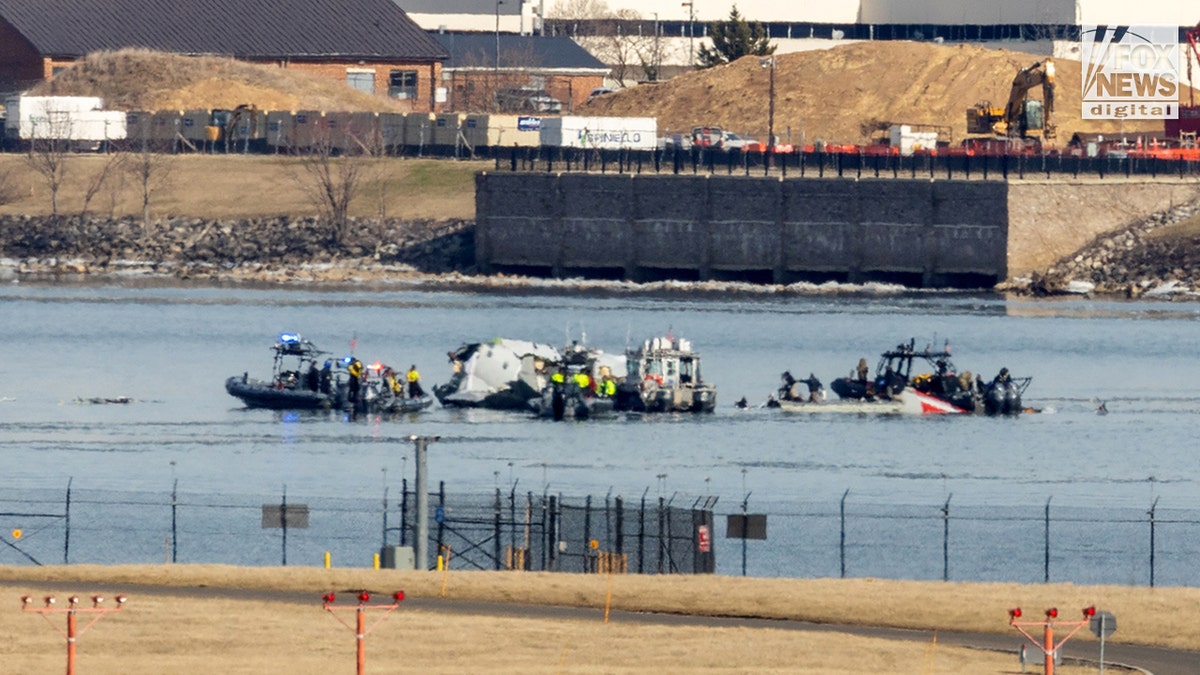
It was barely two months after 9/11. The air in New York City was still thick with a kind of collective trauma that’s hard to describe if you weren't there. Then, on a crisp November morning in 2001, the unthinkable happened again. An Airbus A300-600, bound for Santo Domingo, fell out of the sky into the residential neighborhood of Belle Harbor, Queens. The American Airlines Flight 587 victims included 260 people on board and five neighbors on the ground who were just starting their Mondays. Honestly, the timing was cruel. People naturally assumed it was another terror attack. But the reality was a mechanical and pilot-error tragedy that, in many ways, changed how we think about flight safety and the Dominican-American experience forever.
The Faces Behind the Numbers
We often talk about air disasters in terms of flight recorders and rudder movements. That’s easy. It’s clinical. What’s harder is looking at the 265 lives cut short. The American Airlines Flight 587 victims weren't just passengers; they were the backbone of a specific, vibrant community. If you walk through Washington Heights today, you’ll still find families who feel the gap left by that Monday morning.
Take the story of Hilda Yolanda Mayol. She was a survivor of the September 11 attacks at the World Trade Center. She worked at a restaurant in the Twin Towers and managed to escape. Two months later, she was on Flight 587. It’s the kind of statistical anomaly that feels like a punch to the gut. Then there were the kids. There were babies. There were grandmothers going home to retirement homes they’d saved for decades to build in the Dominican Republic.
The flight was a "shuttle" of sorts. For the Dominican diaspora, Flight 587 was the bridge. You’ve got to understand the cultural weight of that specific route. It wasn't just a vacation. It was the "viaje." People carried oversized suitcases filled with gifts, clothes, and electronics for family back home. When that plane went down, it didn't just kill individuals; it punctured the spirit of an entire transnational neighborhood.
What Really Happened in the Cockpit?
The National Transportation Safety Board (NTSB) had a massive job. They had to prove it wasn't a bomb. Because, let’s be real, everyone thought it was a bomb. The tail fin—the vertical stabilizer—was found in Jamaica Bay. It had literally snapped off. That doesn't happen. It shouldn't happen.
Basically, the plane flew into the "wake turbulence" of a Boeing 747 that had taken off just before it. Think of wake turbulence like the ripples behind a massive boat, but in the air and much more violent. The co-pilot, Sten Molin, reacted by moving the rudder pedals back and forth. Aggressively. The NTSB report later showed that he had been trained—or at least misunderstood his training—to believe that such "pedal hunting" was necessary to stabilize the aircraft.
It wasn't.
The stress of those rapid, full-deflection rudder movements was more than the composite lugs holding the tail to the fuselage could handle. The tail snapped. The plane became uncontrollable. It’s a terrifying thought: the very actions intended to save the plane were the ones that doomed it. This led to a massive overhaul in how pilots are trained to handle "upset recovery." No more aggressive rudder wagging in transport-category jets.
The Neighborhood of Belle Harbor
Belle Harbor is a tight-knit, largely Irish-Catholic enclave in Queens. It’s a neighborhood of firefighters and cops. On September 11, they had already lost dozens of their own. When the wreckage of Flight 587 rained down on the intersection of Beach 131st Street and Newport Avenue, it felt like the world was ending. Again.
Five people on the ground died. Imagine sitting in your kitchen, having coffee, and an engine—not a piece of an engine, but the whole turbine—falls through your roof. That’s what happened to the victims on the ground. The houses didn't just catch fire; they were incinerated by the remaining jet fuel.
Even now, if you go to the memorial at the end of Beach 121st Street, you see the names. The design is beautiful. It’s a wall with windows looking out toward the ocean, toward the Dominican Republic. Each name is carved there. The community of Belle Harbor and the community of Washington Heights are forever linked by this patch of sand and concrete. It's a weird, somber brotherhood.
Why the Silence?
There is a lingering feeling among the families of the American Airlines Flight 587 victims that their loss was overshadowed. Because it happened so close to 9/11, and because it was "just" an accident, it didn't stay in the national news cycle for long.
The victims didn't get a massive federal fund in the same way. The media moved on to the war in Afghanistan. But for the 265 families, there was no moving on. They had to fight for recognition. They had to fight for the memorial. Many felt that if the passengers had been wealthy Wall Street executives rather than Dominican immigrants, the story would have been told differently.
Maybe. Maybe not. But the perception of being "the forgotten crash" is a real part of the trauma here.
Technical Legacy and Safety Shifts
Safety is bought with the lives of those who went before. It’s a grim truth in aviation. Because of Flight 587, we changed a lot.
- Rudder Limiter Systems: Manufacturers looked harder at how much pressure a pilot can actually put on the tail at high speeds.
- Pilot Training (Advanced Maneuvering Program): American Airlines and other carriers completely rewrote their manuals. They stopped teaching pilots to use the rudder to level the wings in most situations.
- Composite Testing: Since the tail was made of composite materials (not aluminum), the industry had to learn how these materials fail under extreme stress. They don't bend. They snap.
Acknowledging the Complexity of Grief
Grief isn't linear. Especially when it's public. For the families, every November 12 is a grueling exercise in memory. You see the same faces at the memorial. You see the graying hair of parents who lost children and the adult faces of children who lost parents.
The NTSB's final report was controversial to some. Some family members and even some pilots didn't like the "pilot error" label. They felt the plane's design should have been robust enough to handle any input from the cockpit. It’s a classic debate in engineering: do you build it to be unbreakable, or do you train the human to not break it? In the end, it’s usually a bit of both.
Practical Steps for Remembering and Learning
If you’re looking to honor the memory of the American Airlines Flight 587 victims or want to understand this piece of New York history better, there are a few things you can actually do. It’s not just about reading a Wikipedia page.
- Visit the Memorial: It’s located at Rockaway Park, Queens. It’s a quiet, powerful place. Stand there for a minute. Look through the "windows" in the wall toward the sea.
- Support the Scholarships: Several funds were set up in the wake of the crash to help the children of victims. While many have wound down as those children grew up, local community organizations in Washington Heights still hold the history.
- Read the NTSB Report: If you’re a tech nerd or a frequent flyer, read the executive summary. It’s sobering. It reminds you that safety is a constant, evolving process.
- Listen to the Survivors (of the families): There are several documentaries and oral history projects that focus on the Dominican community’s experience. "The Flight 587 Memorial Project" has done work to keep these stories alive.
The crash of Flight 587 was a moment where the "New York Strong" mantra was tested to its absolute limit. It was a tragedy born of a thousand tiny factors—wind, timing, training, and materials—all failing at the exact same second. We owe it to the people on that manifest to remember that they weren't just a news crawl on a Tuesday morning. They were the bridge between two worlds.