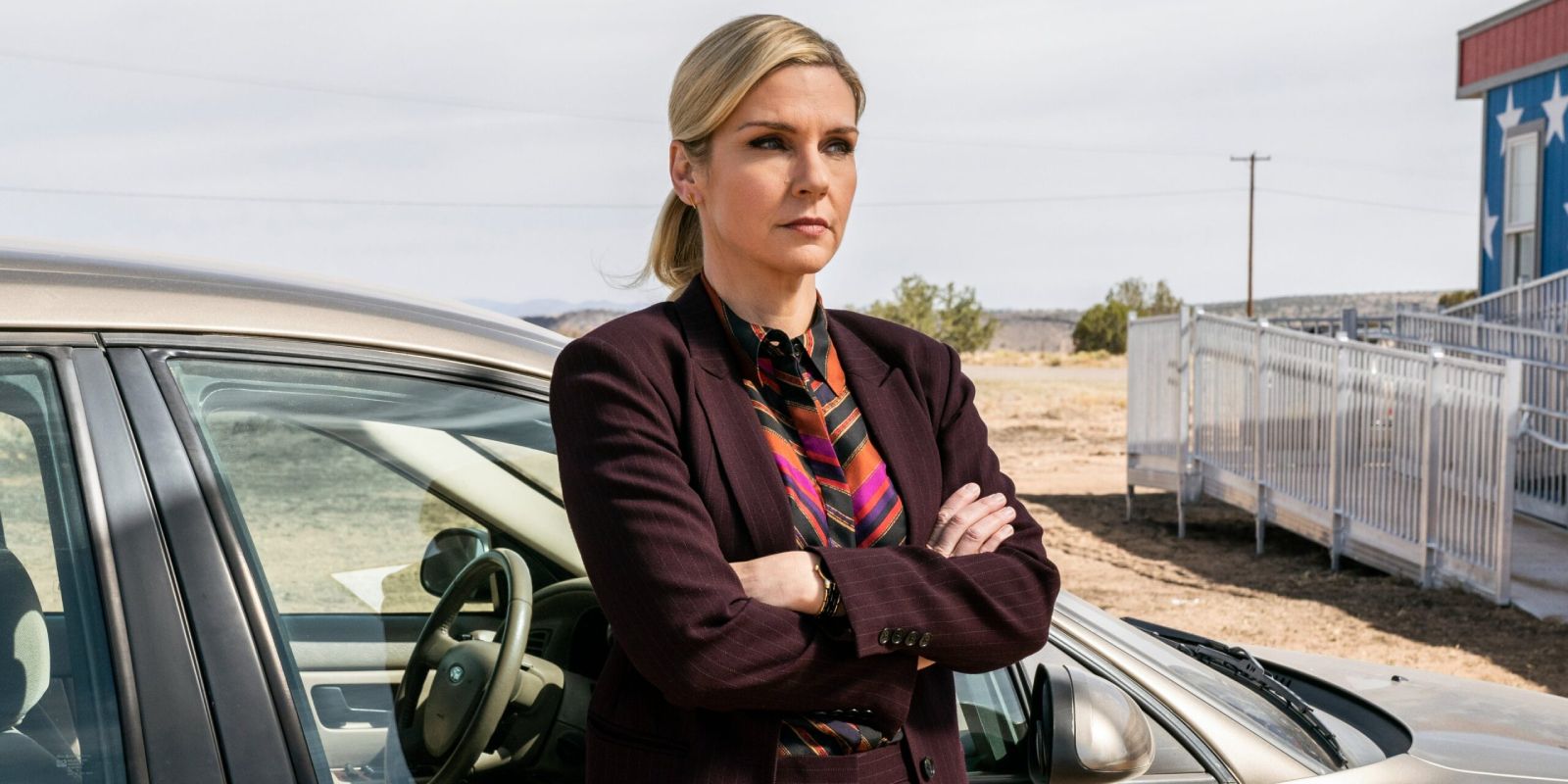
Honestly, if you watched the first season of Better Call Saul, you probably didn't think Kim Wexler was going to be the person holding the entire show together by the end. She was just... there. A competent lawyer in a ponytail. A "tempering influence," as Vince Gilligan once put it. But then Rhea Seehorn happened.
What started as a supporting role evolved into one of the most complex, frustrating, and devastating character arcs in the history of television. And now, as we sit in 2026, Seehorn is finally getting the hardware to match the hype, having just swept the Golden Globes and Critics Choice Awards for her new show Pluribus. But even with new success, we always circle back to Kim.
Why? Because Rhea Seehorn didn't just play a lawyer; she built a person out of silence and cigarette smoke.
The Kim Wexler Magic Trick: Acting in the Silence
Most actors want more lines. They want the big "I am the one who knocks" speech. Seehorn went the other way. She became a master of the "non-reaction."
If you go back and watch the early seasons, pay attention to how Kim listens. She doesn't just wait for her turn to speak. She processes. You can see the gears turning as she decides exactly how much of her soul she's willing to trade for a win.
Small Choices, Big Impact
Seehorn has mentioned in several interviews that she views "receiving information" as two-thirds of the performance. This wasn't just a stylistic choice; it was survival for the character. Kim Wexler grew up in Nebraska with an alcoholic mother and a lifestyle that required her to be self-reliant and, frankly, invisible when necessary.
- The Ponytail: This wasn't just a hairstyle. It was an armor. Seehorn and the stylists used the tightness of that curl to signal Kim’s mental state. When it was perfect, Kim was in control. When it started to fray or come down, the world was ending.
- The Smile: Kim rarely gave a full, toothy grin. Her "tell" was a tiny, almost imperceptible twitch of the lips when Jimmy (Bob Odenkirk) did something clever. That’s how the writers knew Kim was into the "con"—not because she said so, but because Seehorn played the attraction to the darkness before the script even asked for it.
What Most People Get Wrong About the Kim/Jimmy Dynamic
There is a common misconception that Jimmy McGill corrupted Kim Wexler. That he was the "bad influence" who dragged a good woman down into the Albuquerque gutter.
That’s a lie.
The truth is much more uncomfortable. Kim wasn't a victim; she was a willing participant who often pushed the gas pedal harder than Jimmy ever did. Remember the plan to ruin Howard Hamlin? That wasn't Jimmy’s idea. That was Kim, lying in bed, plotting the demise of a man who—while annoying—didn't deserve to have his life dismantled.
Seehorn played this with a terrifying lack of ego. She allowed Kim to be unlikeable. She showed us that Kim’s "pro bono" work wasn't just about altruism; it was a way to balance the books for the terrible things she did for fun. It was a "God complex," as Seehorn herself described it during a Reddit AMA. She was deciding who deserved a break and who deserved a breakdown.
The "Snub" Years and the Emmy Curse
It’s actually wild to think about now, but for years, the industry ignored her. Better Call Saul earned 53 Emmy nominations over its run and—get this—never won a single one. Not for Bob, not for Rhea, not for the writing.
Seehorn wasn't even nominated until the very end, in 2022 and 2023. By then, the "Rhea Seehorn Snub" had become its own recurring news cycle. Fans were genuinely angry. Critics were writing essays.
Why the delay?
Maybe it’s because her performance was too subtle for a medium that loves "big" acting. She wasn't throwing plates or screaming in the street (well, until that bus scene in the final season, which finally broke everyone). She was doing the heavy lifting in the quiet moments between the legal jargon.
Rhea Seehorn as Director: A New Lens on the Universe
People often forget that Seehorn didn't just stay in front of the camera. She directed the Season 6 episode "Hit and Run."
It was a pivot point for the series. She had to handle the first-ever meeting between Kim and Mike Ehrmantraut (Jonathan Banks). Think about the pressure there. These are two titans of the Breaking Bad universe who had never shared a frame. Seehorn directed that scene with a cold, minimalist precision that felt exactly like Kim Wexler was behind the camera.
She wasn't just a "guest director" either. She had been "shadowing" the crew for years, learning the cogs in the wheel. She wanted to know how the lights worked, how the lenses changed the emotional depth of a shot. That level of dedication is why her transition into lead roles and directing in 2026 has felt so seamless.
The 2026 Update: Life After Albuquerque
If you haven't started Pluribus yet, you're missing out on Seehorn's best work since the finale of Saul.
Working again with Vince Gilligan, she plays Carol Sturka, a woman in a world where everyone is forced into a state of artificial happiness. She’s one of the few who is "immune" to it. It’s a grounded sci-fi drama that feels like a spiritual successor to the character study of Kim Wexler.
The awards she’s winning now? They aren't just for Pluribus. They feel like a collective apology from Hollywood for missing the boat on her for seven years.
Actionable Insights for Fans and Creators
Whether you're an aspiring actor or just a die-hard fan re-watching the series for the fifth time, there's a lot to learn from Seehorn’s trajectory.
- Watch the "Breathe" Scene Again: In Season 4, Episode 2, Kim lays into Howard in his office. It’s a masterclass in controlled rage. Notice how she doesn't raise her voice until the very end.
- Study the Listening: If you're an actor, stop looking for your cues. Start looking for the subtext in what the other person is saying. Seehorn proved that you can win a scene without saying a word.
- The "Slow Burn" Career: Seehorn didn't become a "household name" until her 40s. She worked in sitcoms like Whitney and did guest spots on Homicide: Life on the Street. Success wasn't overnight. It was built through decades of being the most prepared person in the room.
The legacy of Rhea Seehorn in Better Call Saul is simple: she took a character that wasn't supposed to matter and made her the only thing that did. Kim Wexler didn't exist in the Breaking Bad world, but after Seehorn's performance, it’s impossible to imagine that world without her.
The next step for any fan is to go back to the pilot. Watch Kim standing in the shadows of the HHM parking garage, sharing a cigarette with Jimmy. She doesn't say anything for the first several minutes. But now that you know where she's going, you'll see that everything—the ambition, the love, and the eventual ruin—was already there in Rhea Seehorn's eyes.