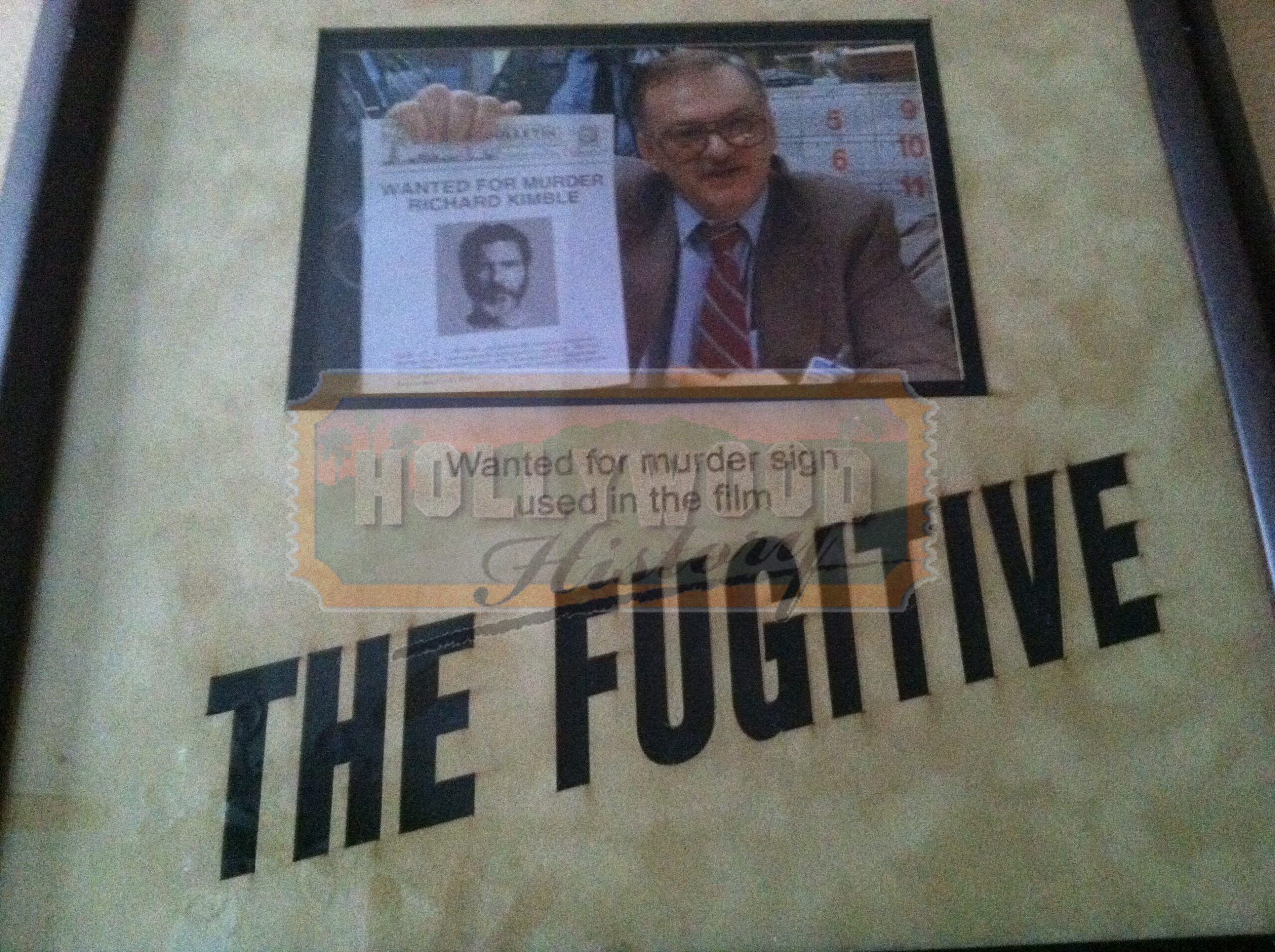
He didn’t kill his wife. Honestly, that’s the one thing everyone knows about Dr. Richard Kimble. Whether you picture the weary, silver-templed David Janssen from the sixties or the rugged, frantic Harrison Ford from the nineties, the image is the same: a man running for his life while trying to catch a "one-armed man."
But there is so much more to the story than just a guy in a suit jumping off a dam.
Richard Kimble isn't just a character; he’s a massive piece of American pop culture that almost didn't happen. When Roy Huggins first pitched the idea of a hero who was a convicted murderer on the lam, TV executives thought he was crazy. They literally told him it was a "bad idea." Who would want to root for a guy who’s technically a criminal in the eyes of the law? Turns out, basically everyone.
The Real-Life Tragedy Behind the Fiction
People love to argue about whether Richard Kimble was based on a real person.
The short answer? Yes and no.
If you talk to historians or fans of true crime, they’ll point you straight to Dr. Sam Sheppard. In 1954, Marilyn Sheppard was brutally murdered in her Ohio home. Her husband, Sam—a respected doctor—claimed a "bushy-haired intruder" did it. The media went into a total frenzy. It was a circus. Sheppard was convicted, spent ten years in prison, and was eventually acquitted in a retrial after the Supreme Court ruled that the "carnival atmosphere" of his first trial made a fair verdict impossible.
The parallels are spooky. Doctor? Check. Murdered wife? Check. Mysterious intruder? Check.
However, Roy Huggins, the creator of the original show, spent years swearing up and down that he didn’t base it on Sheppard. He claimed his inspiration was actually Jean Valjean from Les Misérables. He wanted a "Western hero" who had no home and no responsibilities—someone who was in trouble the second he woke up every morning.
Despite Huggins' denials, the public never really bought it. F. Lee Bailey, the famous lawyer who represented Sheppard in his retrial, once said that in the sixties, nobody would have even bothered to argue the point. To the world, Kimble was Sheppard.
Two Kimbles, One Soul
When we talk about Dr. Richard Kimble, we’re usually talking about two very different performances.
David Janssen: The Weary Traveler
From 1963 to 1967, David Janssen played Kimble on ABC. If you watch those old black-and-white episodes now, you’ll notice something: he looks exhausted. Janssen brought this quiet, simmering anxiety to the role. He wasn't an action hero. He was a guy who was just tired of running but couldn't stop.
Every week, Kimble would hop a bus or a train, get a job as a dishwasher or a farmhand, and end up helping someone else with their problems. He was a healer who couldn't heal his own life. The 1967 finale was actually one of the most-watched events in television history. Over 72% of people watching TV that night tuned in to see if he’d catch the one-armed man. That record stood for over a decade until the "Who Shot J.R.?" episode of Dallas.
Harrison Ford: The Desperate Professional
Then 1993 happened.
The movie version changed the game. Harrison Ford’s Kimble is more of a "man of action," even though he's still a doctor. He’s smarter, more resourceful, and—let’s be real—more aggressive. He doesn't just run; he investigates.
Interestingly, the movie production was a total mess. They started filming without a finished script. They were rewriting scenes the day they shot them. That famous "I didn't kill my wife!" scene in the tunnel? Tommy Lee Jones' iconic response ("I don't care!") was actually a bit of a pivot from the script. It worked because it showed that Kimble wasn't just fighting a villain—he was fighting a system that simply didn't care about the truth.
Why the One-Armed Man Still Matters
The "one-armed man" has become a bit of a punchline in 2026, but the concept is actually pretty dark. In the original series, he was Fred Johnson, played by Bill Raisch. In the movie, he was Sykes, played by Andreas Katsulas.
In the film, the stakes were jacked up. It wasn't just a random burglary gone wrong. It was a conspiracy involving a pharmaceutical company called Devlin-McGregor and a drug named Provasic. Kimble discovered the drug caused liver damage, and his "friend" Dr. Charles Nichols tried to have him killed to keep the FDA approval on track.
This change turned Kimble from a victim of bad luck into a whistleblower. It made his struggle feel more modern. We love a story where one guy takes on a giant, faceless corporation.
The Dynamics of the Hunt
You can't talk about Richard Kimble without talking about Samuel Gerard.
Whether it was Barry Morse (as Philip Gerard) or Tommy Lee Jones (as Sam Gerard), the relationship is what makes the story work. It’s not a "good guy vs. bad guy" thing. It’s "good guy vs. good guy who thinks the other guy is bad."
Gerard is just doing his job. He’s the law. Kimble is the truth.
In the movie, we see Gerard slowly realize that Kimble is actually doing the detective work the police should have done. By the time they get to that final confrontation on the roof of the Chicago Hilton, Gerard isn't just trying to cuff him; he’s trying to understand him.
Actionable Insights for Fans and Writers
If you’re looking to dive deeper into the world of Dr. Richard Kimble or you're a storyteller trying to capture that same "man on the run" magic, here’s what you need to keep in mind:
- Watch the 1967 Finale: If you want to see how to end a long-running narrative with actual stakes, find the two-part finale "The Judgment." It’s a masterclass in tension.
- Study the "Static Protagonist": Kimble is a rare example of a character who doesn't actually change. He starts as a good man and ends as a good man. The world around him changes as people realize his innocence. If you're writing a thriller, remember that your hero doesn't always need a "growth arc" if their conviction is strong enough.
- Location as a Character: The 1993 film used Chicago perfectly. From the Cook County Hospital to the St. Patrick’s Day parade, the setting made Kimble’s isolation feel more real.
- The Power of Competence: We root for Kimble because he's good at what he does. Whether he's performing an emergency tracheotomy on a kid in the back of an ambulance or using a hospital computer to track down prosthetic patients, his medical skill is his "superpower."
Dr. Richard Kimble remains a legendary figure because he represents our deepest fear: being blamed for something we didn't do and having no one believe us. He’s the ultimate underdog.
To really appreciate the depth of the character, start by watching the 1993 film again, but this time, pay attention to how little Kimble actually speaks. He’s a man defined by his actions, not his words. After that, track down the original pilot episode, "Fear in a Desert City," to see where the exhaustion truly began.