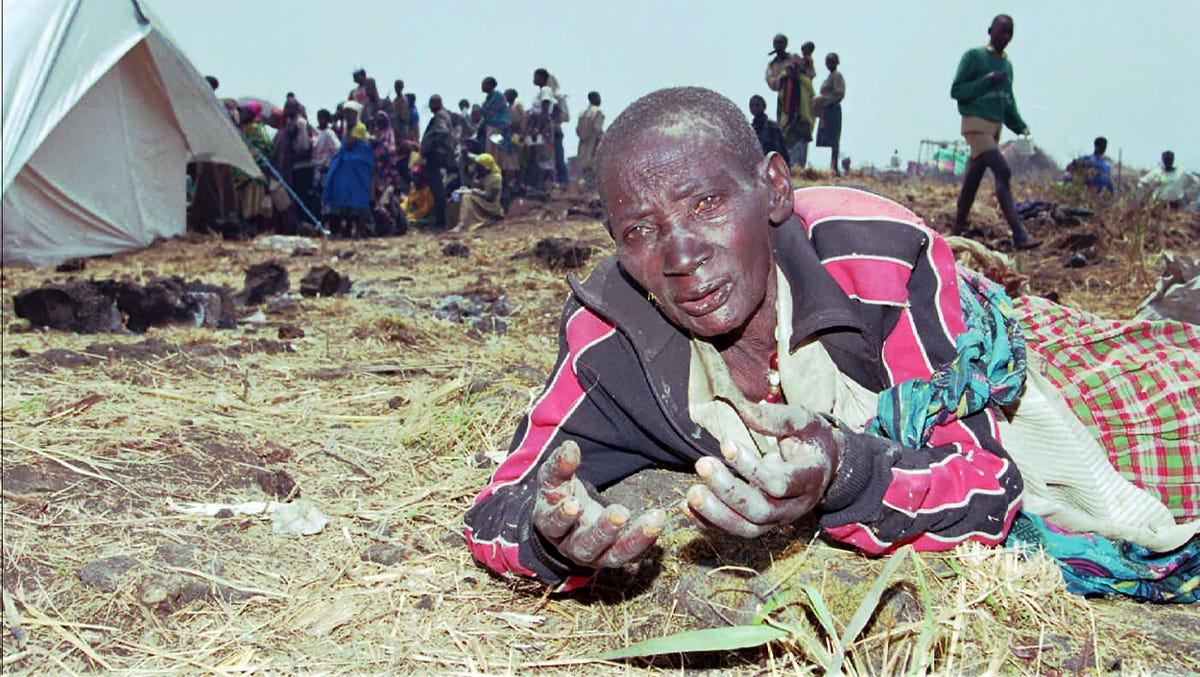
It happened in 100 days. That's the part that usually sticks in people's heads when they first hear about the Rwandan genocide Hutus and Tutsis fought through in 1994. But honestly? Looking at just the timeline misses the point. It misses the centuries of history, the weird colonial interference, and the terrifyingly efficient way a government turned neighbors into killers.
We’re talking about a million lives gone. Roughly 800,000 to 1,000,000 people—mostly Tutsis—were slaughtered with machetes, clubs, and firearms. If you want to understand what actually went down, you have to look past the "ancient tribal hatred" myth. It wasn't ancient. It was manufactured.
The Myth of "Ancient Tribal Hatred"
People love a simple story. The easiest one to tell about Rwanda is that Hutus and Tutsis just hated each other since the dawn of time. That's basically garbage.
Before the Europeans showed up, the distinction between Hutu and Tutsi was more about social class and economics than race. Tutsis were generally cattle owners; Hutus were farmers. You could actually move between the groups. If a Hutu got rich and bought a lot of cows, they could "become" Tutsi (a process called kwihutura). They shared the same language (Kinyarwanda), the same religion, and lived on the same hills.
Then came the Belgians.
In the 1930s, Belgian colonial administrators decided they needed a more efficient way to rule. They obsessed over "Hamitic" theories, thinking Tutsis looked more "European" because they were often taller and had thinner noses. They literally went around with calipers measuring people's facial features. In 1933, they issued mandatory ethnic identity cards.
This changed everything. Suddenly, you weren't just a guy with ten cows. You were "Tutsi" on a piece of paper, and that was permanent. The Belgians gave Tutsis the best jobs and better education, which naturally built up a massive reservoir of resentment among the Hutu majority. By the time the Belgians left in the early 60s, they flipped the script and started supporting the Hutus, leaving a power vacuum and a boiling pot of ethnic tension that they’d spent decades simmering.
How 1994 Actually Triggered
Most people know about the plane crash. On April 6, 1994, a plane carrying President Juvénal Habyarimana (a Hutu) was shot down over Kigali. Everyone on board died.
To this day, nobody is 100% sure who did it. Was it the Rwandan Patriotic Front (RPF), the Tutsi rebel group? Or was it Hutu extremists who thought the President was being too soft by signing peace accords?
It didn't matter. Within hours, the Interahamwe (Hutu militias) had set up roadblocks. They had lists. They knew exactly who lived where because of those identity cards the Belgians introduced decades earlier.
The violence wasn't just "chaos." It was organized. The RTLM radio station (Radio Télévision Libre des Mille Collines) started broadcasting hate, calling Tutsis "cockroaches" and telling Hutus to "go to work." In this context, "work" meant killing.
The Role of the International Community (Or Lack Thereof)
The world watched. That’s the hardest part to stomach.
General Roméo Dallaire, the head of the UN peacekeeping mission (UNAMIR), practically screamed for help. He sent the famous "Genocide Fax" to UN headquarters in New York months before the killing started, warning that militias were stockpiling weapons and planning a mass slaughter.
The response? He was told not to intervene.
The US was reeling from the "Black Hawk Down" incident in Somalia and had zero appetite for another African intervention. The French were actually tight with the Hutu government. Even after the killing started, the UN Security Council voted to reduce the number of peacekeepers. It was a bureaucratic nightmare while a human one played out on the ground.
Nuance Matters: Not All Hutus Were Killers
One of the biggest misconceptions about the Rwandan genocide Hutus and Tutsis timeline is that it was a simple binary of "one group killed the other."
While the genocidaires were Hutu extremists, thousands of moderate Hutus were also murdered because they refused to participate or tried to hide their Tutsi neighbors. People like Paul Rusesabagina (whose story inspired Hotel Rwanda, though his real-life reputation is now a subject of intense political debate in Rwanda) or the many unnamed farmers who stood in front of their doors and died alongside those they were protecting.
Being Hutu didn't mean you were a murderer, but the pressure to conform was psychic and physical. If you didn't kill, you were often killed yourself.
The Aftermath and the "Gacaca" Courts
How do you fix a country where the person who killed your family is now your neighbor again?
By 1994, the RPF, led by current President Paul Kagame, took control and stopped the genocide. But the justice system was trashed. There were over 100,000 suspects and maybe 20 lawyers left in the whole country.
Rwanda did something wild: they brought back Gacaca.
These were community courts held on the grass in villages. Victims got to face their attackers. The goal wasn't just punishment; it was truth and "reconciliation." It wasn't perfect. Some people used it for land grabs or revenge, but it allowed the country to process a volume of cases that would have taken 200 years in a traditional court.
Modern Rwanda: A Complicated Success
If you visit Kigali today, you’ll see one of the cleanest, safest cities in Africa. Plastic bags are banned. "Umuganda" (community service) happens every month.
But there's a trade-off.
The government has a "no ethnicity" policy. It is literally illegal to identify as Hutu or Tutsi in public. You are "Rwandan." While this has prevented a return to civil war, human rights groups like Amnesty International and Human Rights Watch argue that it has also been used to silence political dissent. If you criticize the government, you can be accused of "divisionism."
Practical Insights for Understanding the Conflict
If you’re looking to truly grasp the weight of the Rwandan genocide Hutus and Tutsis endured, don't just stop at a Wikipedia summary. History is lived.
- Read Primary Accounts: Shake Hands with the Devil by Roméo Dallaire gives the most harrowing look at the UN's failure. For a survivor's perspective, Left to Tell by Immaculée Ilibagiza is intense.
- Examine the Propaganda: Look at the "Hutu Ten Commandments" published in 1990. It shows how the groundwork for genocide is laid years in advance through dehumanization.
- The Role of Media: Study how RTLM used pop music and humor to make hate speech "entertaining." It’s a terrifyingly modern lesson for the age of social media algorithms.
- Visit with Context: If you ever go to the Kigali Genocide Memorial, remember that it is a place of active mourning. Many bodies are still being discovered and buried there today.
The conflict wasn't an accident of geography or a byproduct of "primitive" culture. It was a modern, political, and systemic failure. Understanding that is the only way to actually learn from it.
Next Steps for Deeper Learning
To move beyond the basics, you should look into the "mapping report" from the UN regarding the Second Congo War. The genocide didn't stay inside Rwanda's borders; it spilled over into the Democratic Republic of Congo, sparking a "World War of Africa" that involved nine countries and killed millions more.
Research the specific role of the French government’s "Operation Turquoise" and the ongoing debates regarding their complicity. Lastly, look into the current status of the ICTR (International Criminal Tribunal for Rwanda) to see how international law has evolved in its attempt to prosecute the masterminds of the slaughter. This isn't just history; it's a living case study in how societies break and, occasionally, how they try to knit themselves back together.