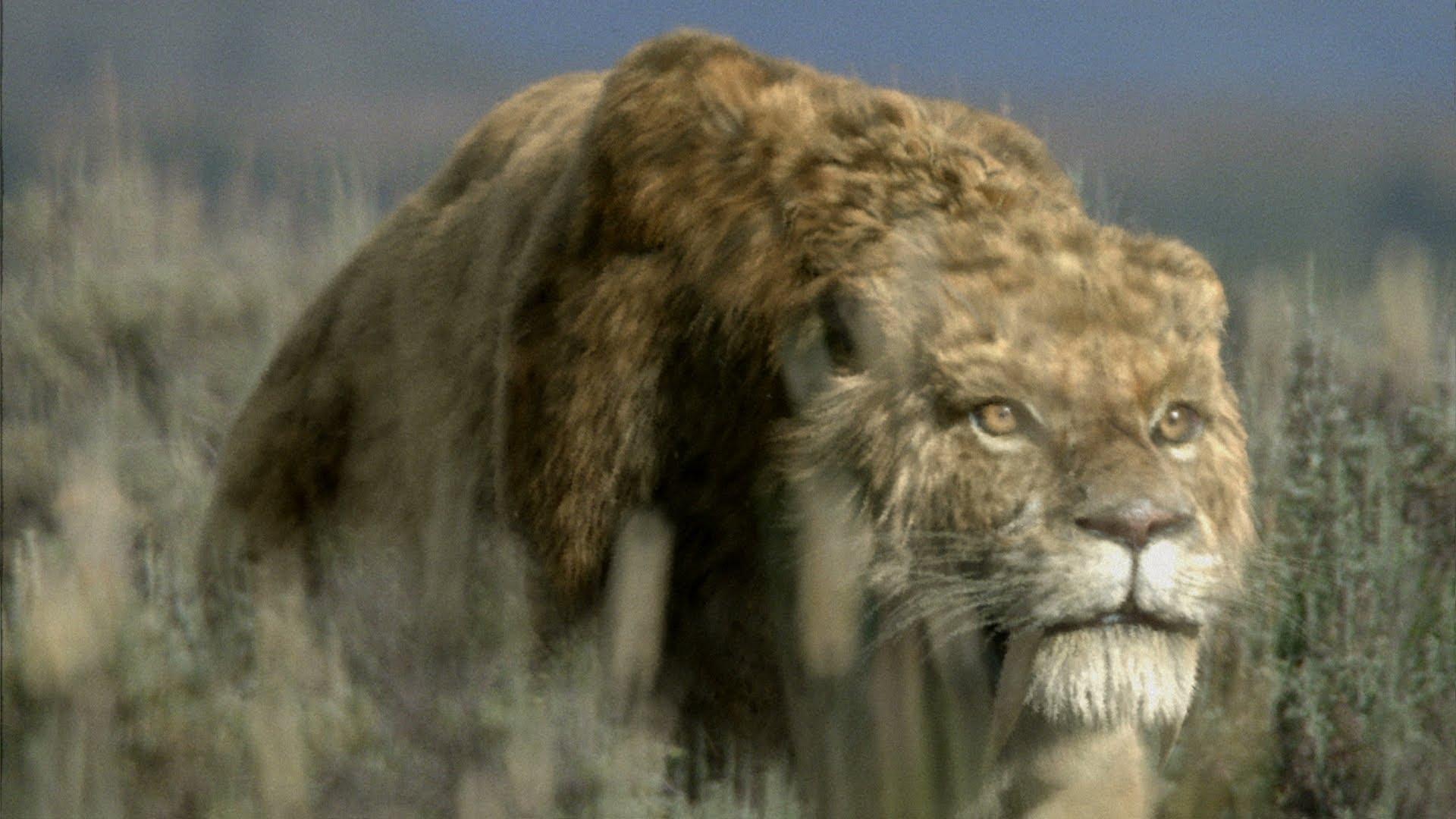
You’ve seen the movies. A massive, snarling beast with teeth like steak knives lunging out of a snowbank. It’s the classic saber tooth tiger ice age trope that’s been drilled into our heads since elementary school. But honestly? Most of what we think we know about Smilodon fatalis is kinda wrong. First off, they weren’t tigers. Not even close. Calling a Smilodon a tiger is like calling a hyena a dog—they're distant cousins at best.
These were specialized, heavy-duty killing machines. They were built like wrestlers, not sprinters. While a modern tiger is sleek and built for a high-speed chase, the saber-tooth was all about raw, brute strength. Imagine a cat with the front-end power of a grizzly bear. That’s what we’re dealing with here.
The bulky truth about Smilodon
The Ice Age wasn't just a long winter. It was an era of giants. To survive, you had to be able to take down something five times your size. Smilodon evolved specifically for this "big game" lifestyle. Researchers like Dr. Julie Meachen have spent years looking at fossilized bones from the La Brea Tar Pits, and the data is pretty clear: these cats had insanely thick limb bones.
They had to.
If you're going to wrestle a terrified, multi-ton bison or a juvenile mammoth to the ground, you can't have spindly legs. You need leverage. They used those massive forelimbs to pin prey down. Only once the struggle was mostly over did those famous teeth come into play. People used to think they used their fangs to hunt, stabbing at anything that moved. That’s a great way to break a tooth. Those seven-inch long canines were actually quite fragile from the side. One wrong move against a kicking ribcage and—snap—the cat is basically disabled.
Instead, they were precision surgeons.
Why the teeth were so long
The mechanics of a Smilodon bite are fascinatingly weird. They couldn't bite down with the same force as a modern lion. Their jaw muscles simply didn't have the same mechanical advantage. To compensate, they had an incredible gape. A lion can open its mouth about 65 degrees. A saber tooth tiger ice age predator could crank its jaws open to an astounding 120 degrees.
This wasn't for show.
They used a "canine shear-bite." Once the prey was pinned and immobile, the cat would aim for the soft throat. One deep, shearing bite would sever the carotid artery and the windpipe simultaneously. Death was almost instant. It wasn't about a long, suffocating struggle like you see with lions today. It was a quick, bloody execution.
Social lives and the tar pit evidence
Los Angeles is famous for traffic and movies, but for paleontologists, it’s all about the asphalt. The La Brea Tar Pits are a goldmine. We’ve found thousands of Smilodon skeletons there. This high concentration tells us something huge: they were likely social animals.
Think about it.
If one animal got stuck in the sticky "tar" (actually asphalt), it would scream and struggle. This acted like a dinner bell for predators. If Smilodon were solitary hunters, you’d expect a mix of different predators. But we see so many of them together. Even more telling is the evidence of healed injuries. We have fossils of saber-tooths with massive hip fractures or crushed jaws that had clearly healed. In the wild, a solitary cat with a broken leg starves to death in a week. The only way these injured cats survived for months or years was if the rest of the pride brought them food or let them eat at the kill.
It paints a picture of a surprisingly "human" social structure. They looked out for their own.
The coat color mystery
We always see them depicted with spots or plain tan coats like a mountain lion. Truth is? We have no clue. Since fur doesn't fossilize well, we have to guess based on habitat. During the saber tooth tiger ice age, the landscape wasn't just solid ice. It was a "mammoth steppe"—a mix of grasslands, shrubs, and patches of forest. A dappled or spotted coat would have been perfect for blending into the shadows while stalking a horse or a ground sloth.
What actually killed them off?
It wasn't just "the weather got warm." That's a massive oversimplification. The end of the Pleistocene was a chaotic mess of shifting ecosystems. As the climate changed, the massive grasslands started to vanish. They were replaced by dense forests or different types of vegetation that didn't support the "megafauna" Smilodon relied on.
- The Food Problem: Giant ground sloths went extinct. Western horses disappeared from North America. Camels went poof.
- Competition: Humans were entering the scene with spears and long-range hunting tactics.
- Specialization Trap: This is the big one. Smilodon was too good at killing big stuff. When the big stuff died out, they couldn't just "switch" to hunting fast rabbits or nimble deer. They were too heavy, too slow, and their teeth were too specialized for throat-slitting giants.
Evolution is a double-edged sword. The very traits that made them the kings of the saber tooth tiger ice age made them obsolete when the world changed. It's a classic case of being over-engineered for a specific environment.
Don't call them tigers: A quick taxonomy lesson
If you want to sound like an expert, use the word Machairodont. That’s the subfamily they belong to.
Modern cats (lions, tigers, leopards) belong to the Felinae or Pantherinae subfamilies. The saber-tooths branched off the feline family tree millions of years ago. They are a completely separate lineage that left no living descendants. When the last Smilodon died roughly 10,000 years ago, that entire branch of "dirk-toothed" evolution just ended.
It’s a bit tragic, honestly.
We often think of evolution as a straight line leading to the "best" animals, but it’s more like a bush. Sometimes the coolest branches get snipped off by a changing climate.
Lessons from the fossils
What can we actually take away from the history of these cats? First, specialization is a risk. Second, social behavior isn't just a "human" or "primate" trait—it's a survival strategy that has appeared across many species.
If you’re ever in Los Angeles, go to the Page Museum. Seeing a wall of hundreds of Smilodon skulls is a humbling experience. You realize that these weren't just monsters from a movie; they were real, breathing, purring (maybe?), social creatures that ruled this continent for nearly 2.5 million years. Humans have only been around in our current form for a fraction of that time.
How to explore the Ice Age today
You don't need a time machine to get a sense of this world. Paleontology is more accessible than it used to be.
- Visit the Pits: The La Brea Tar Pits in LA is the "holy grail" for this specific animal. You can literally watch volunteers cleaning bones through glass windows.
- Check the Digital Archives: The University of California Museum of Paleontology has incredible online databases where you can see 3D scans of these fossils.
- Look at the "Modern Smilodon": While not a direct relative, the Clouded Leopard has the longest canines relative to its body size of any living cat. It gives you a tiny glimpse into how a saber-toothed predator might have moved and used its jaws.
Understanding the saber tooth tiger ice age isn't just about looking at old bones. It's about recognizing how fragile an ecosystem really is. Even the most powerful predator on the planet can vanish if its foundation—the prey and the plants—starts to crumble. To dive deeper, look into the "Overkill Hypothesis" versus "Climate Shift" debates; experts like Paul Martin and Gary Haynes have spent decades arguing over whether it was humans or the heat that finally did them in.
Next time you see one on screen, remember: it’s not a tiger. It’s a 600-pound social wrestler with a very specific, very lethal set of tools that worked perfectly—until the world decided to change the rules of the game.