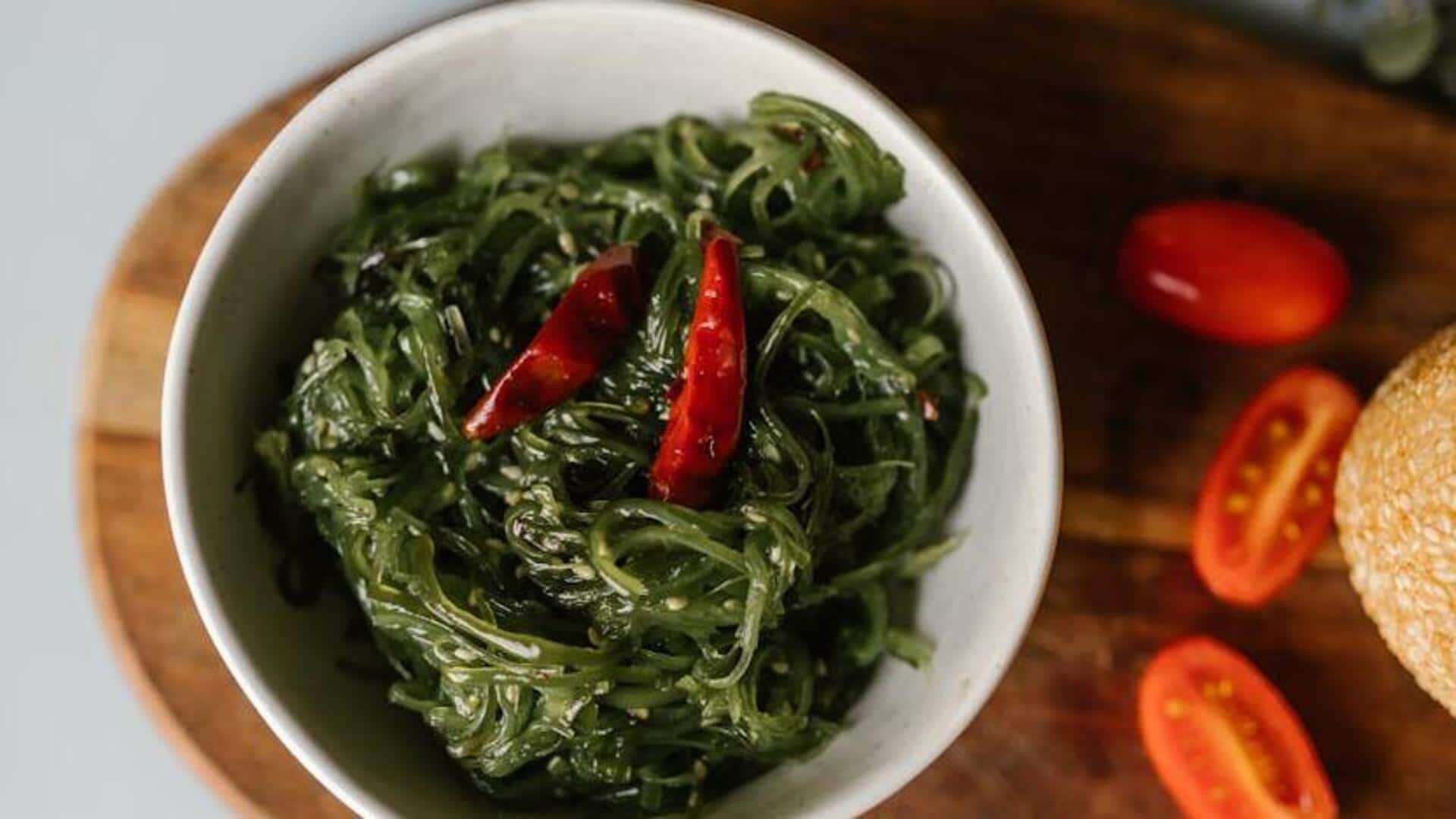
Your thyroid is basically a tiny, butterfly-shaped engine sitting in the front of your neck, and it is obsessed with one specific mineral: iodine. Most people don't think about it. We just use table salt and assume everything is fine. But for anyone looking at seaweed for thyroid health, the reality is a lot more complicated than "eat more kelp and feel better." It's actually a bit of a tightrope walk. You need iodine to make thyroid hormones like thyroxine (T4) and triiodothyronine (T3), but if you overdo it, you can actually shut the whole system down. It's called the Wolff-Chaikoff effect.
I’ve seen people start snacking on dried nori sheets like they’re potato chips, thinking they’re "biohacking" their metabolism. Honestly, that can be a risky move depending on your baseline health.
Why Seaweed for Thyroid Health Is Such a Double-Edged Sword
Seaweed is a literal sponge for seawater minerals. It’s dense. It’s packed with magnesium, calcium, and—most importantly—iodine. However, the concentration varies wildly. If you’re eating Nori (the stuff on sushi), you’re getting a relatively modest dose. If you’re messing around with Kombu or Kelp, you’re playing with fire. A single gram of dried Kombu can contain nearly 2,500 micrograms of iodine. To put that in perspective, the Recommended Dietary Allowance (RDA) for an adult is usually around 150 micrograms. You’re doing the math, right? That’s over 15 times the daily limit in one tiny bite.
The thyroid needs that iodine to attach to an amino acid called tyrosine. No iodine, no hormone. No hormone, and you’re suddenly exhausted, cold all the time, and dealing with brain fog that feels like walking through waist-deep molasses. This is why people gravitate toward seaweed. It feels "natural." It’s a whole food. But the thyroid is sensitive to spikes.
The Problem With Modern "Iodine Deficiency" Claims
A lot of wellness influencers claim we're all iodine deficient. That isn't necessarily true in the West because of iodized salt programs started in the 1920s. However, as people switch to "fancy" salts like pink Himalayan or sea salt—which often have zero added iodine—we are seeing a weird resurgence of mild deficiency. This is where seaweed for thyroid health actually makes sense as a supplemental tool.
But here is the catch: if you have an underlying autoimmune condition like Hashimoto’s thyroiditis, dumping a bunch of seaweed into your system can be like throwing gasoline on a fire. The extra iodine can stimulate the production of thyroid peroxidase (TPO), which is exactly what the immune system is attacking in Hashimoto’s. You could accidentally trigger a massive flare-up. You've gotta be careful.
Understanding the Different Types of Seaweed
Not all "sea vegetables" are created equal. If you're going to use seaweed for thyroid health, you need to know which ones are "safe" snacks and which ones are medicinal-grade powerhouses.
- Nori (Porphyra): This is the entry-level seaweed. It’s what wraps your spicy tuna roll. It has the lowest iodine content of the bunch. You can usually eat a few sheets without stressing your thyroid out.
- Wakame (Undaria pinnatifida): You find this in miso soup. It’s middle-of-the-road. Great for minerals, but you still shouldn't eat a giant salad of it every single day.
- Kelp/Kombu (Laminaria): The heavy hitters. These are the ones used for stocks (dashi). They are incredibly high in iodine. Some people use kelp flakes as a salt substitute, but you only need a tiny pinch. A literal pinch.
- Dulse (Palmaria palmata): Red seaweed that tastes kinda like bacon if you fry it. It has a moderate amount of iodine and is often sold in flakes.
Dr. Angela M. Leung, an endocrinologist and researcher who has published extensively on iodine, often points out that while seaweed is a great source of nutrition, the lack of labeling on iodine content is a massive hurdle for consumers. You never really know exactly how much you're getting because the iodine levels depend on where the seaweed grew and how it was processed.
The Role of Selenium: The Unsung Hero
You cannot talk about seaweed for thyroid health without talking about selenium. Think of iodine as the fuel and selenium as the cooling system for the engine. When your thyroid uses iodine to make hormones, it creates hydrogen peroxide as a byproduct. That's oxidative stress. It’s literally "rusting" the gland from the inside.
Selenium-dependent enzymes (selenoproteins) neutralize that peroxide. If you have high iodine intake from seaweed but low selenium levels, you’re asking for tissue damage. This is why many functional medicine practitioners suggest eating two Brazil nuts a day alongside any seaweed supplementation. It balances the equation.
Real-World Risks: Heavy Metals and Toxins
We have to be honest about the state of our oceans. Seaweed doesn't just soak up the good stuff. It also absorbs arsenic, cadmium, and lead. Brown seaweeds (like Hijiki) are notorious for high inorganic arsenic levels. In fact, many food safety agencies in countries like the UK and Canada specifically warn against consuming Hijiki.
If you’re sourcing seaweed for thyroid health, you have to look for organic certification or third-party testing for heavy metals. Don't just buy the cheapest bag of mystery greens from a random shelf. You're trying to heal your thyroid, not load your liver with lead.
Is Your Thyroid Actually the Problem?
A lot of people think they need seaweed because they feel "hypothyroid symptoms." Fatigue. Weight gain. Thinning hair. But here’s the thing: those symptoms overlap with a dozen other issues. Iron deficiency (anemia) looks exactly like hypothyroidism. Vitamin D deficiency looks like it, too. Even chronic stress (high cortisol) can suppress thyroid function by preventing the conversion of T4 to the active T3.
Before you start a seaweed-heavy diet, you need a full blood panel. Don't just settle for a TSH (Thyroid Stimulating Hormone) test. That’s like checking the thermostat to see if the furnace is working. It doesn't tell the whole story. You need:
- Free T4 and Free T3 (the actual hormones).
- TPO and TgAb antibodies (to check for autoimmune issues).
- Reverse T3 (to see if your body is "braking" your metabolism).
If your antibodies are high, seaweed might be the worst thing for you. If your iodine is actually low, it could be a godsend. Nuance matters.
The "Iodine Loading" Controversy
There is a school of thought, popularized by doctors like David Brownstein, that suggests humans need much higher doses of iodine than the RDA—think milligrams instead of micrograms. They argue that every cell in the body, not just the thyroid, needs iodine. They often point to the Japanese diet, where some populations consume high amounts of seaweed daily.
However, the mainstream endocrinology community is extremely wary of this. They argue that the Japanese population has adapted over generations to high iodine intake and that "loading" doses can trigger hyperthyroidism or thyroiditis in people who aren't used to it. It’s a heated debate. Most people do best somewhere in the middle: getting enough to support the gland without overwhelming it.
How to Safely Incorporate Seaweed Into Your Life
If you’ve cleared it with your doctor and you want to use seaweed for thyroid health, start small. This isn't a "more is better" situation.
Basically, treat seaweed like a seasoning, not a vegetable. Use kelp granules instead of salt once a day. Put a small strip of kombu in your pot of beans while they simmer (it actually helps with digestion and gas), then take the strip out before eating. This infuses the food with minerals without giving you a toxic megadose.
Watch for "thyroid storms" or signs of excess. If you start feeling heart palpitations, sudden anxiety, or you're sweating for no reason after increasing your seaweed intake, stop immediately. That’s your thyroid telling you it's over-revving.
Actionable Steps for Thyroid Support
- Get Tested First: Ask for a 24-hour urinary iodine clearance test if you’re serious. It’s the only way to know if you’re actually deficient. A standard blood test for iodine is notoriously unreliable.
- Check Your Salt: If you use sea salt, make sure you're getting iodine from other sources like eggs, dairy, or seafood. If not, a small amount of seaweed is a great insurance policy.
- Prioritize Selenium: Eat 2-3 Brazil nuts daily or take a 200mcg supplement. This protects your thyroid from the oxidative stress of iodine processing.
- Avoid Hijiki: Stick to Nori, Dulse, or Wakame. They have a better safety profile regarding heavy metals.
- Rotate Your Sources: Don't eat the same seaweed every day. Variety reduces the risk of accumulating too much of one specific mineral or toxin.
- Cook With Kombu: Add a 2-inch strip to soups or grain water. It’s the most traditional, gentle way to get the benefits without the "spike."
The thyroid is a delicate instrument. Seaweed for thyroid health is a powerful tool, but it requires respect. Don't treat it like a trendy superfood. Treat it like the potent biological fuel that it actually is. Balance the iodine, support it with selenium, and always listen to what your energy levels are trying to tell you.