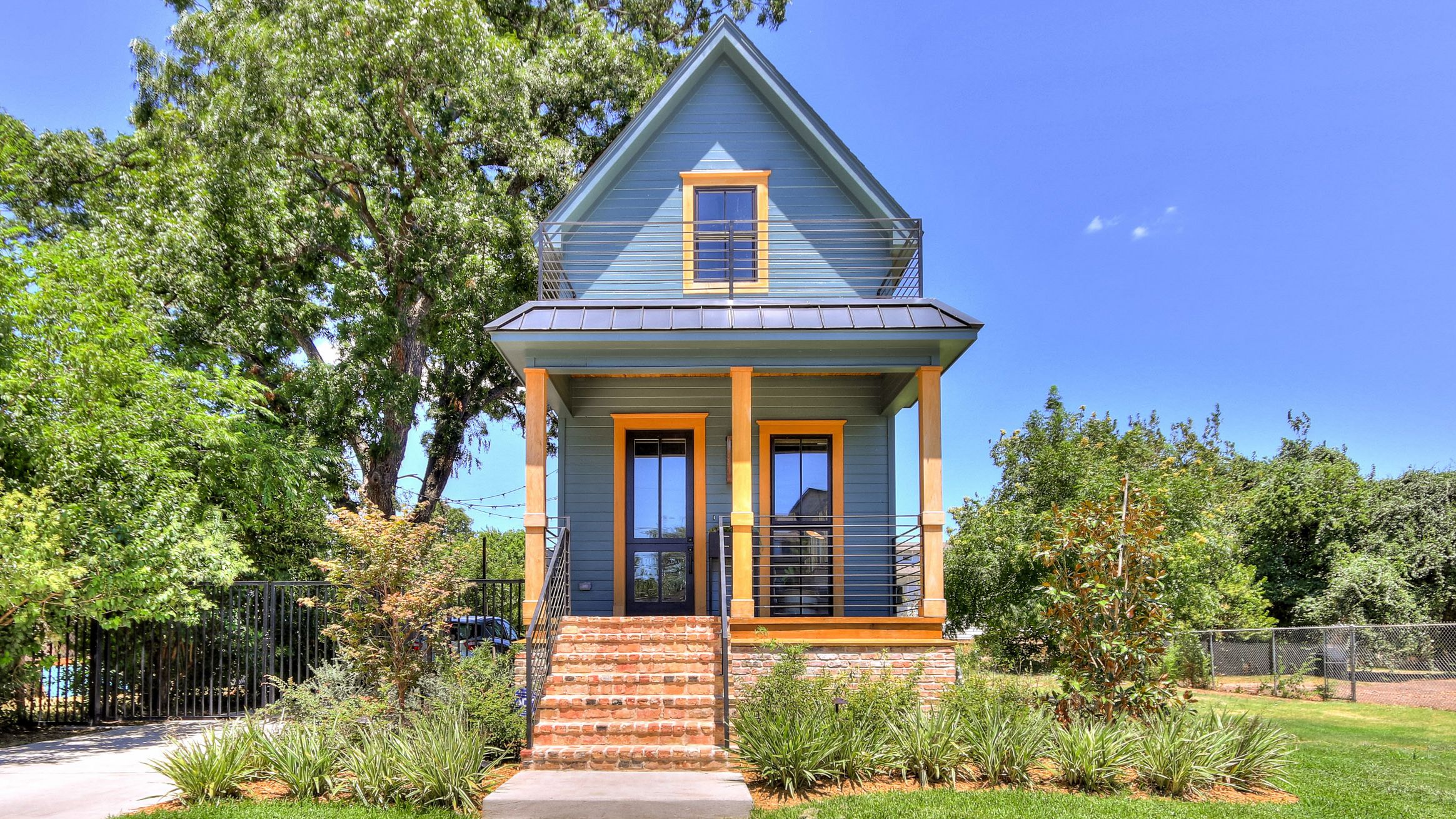
Walk through the Marigny in New Orleans or the Butchertown neighborhood in Louisville, and you’ll see them. Skinny. Long. Colorful. They look like they’re standing shoulder-to-shoulder, trying to squeeze onto a narrow lot.
Some folks say if you fire a shotgun through the front door, the buckshot will fly straight out the back without hitting a single wall. That’s the legend. That is how we got the name. But if you actually try to define what's a shotgun house, you're looking at more than just a quirky architectural footprint. You are looking at a piece of history that survived the Civil War, urban renewal, and a century of changing tastes.
It’s a house built for the heat. No hallways. No wasted space. Just room after room, lined up like a train car.
The Mystery of the Shotgun House Origins
Where did they actually come from? Most people think they’re a Southern invention, born out of the necessity of New Orleans property taxes. The myth is that the city taxed people based on the width of their front door. It’s a great story. It’s also completely wrong.
Research by architectural historians like John Michael Vlach suggests the shotgun house has deeper roots. We’re talking West Africa. Specifically, the Yoruba people in what is now Nigeria and Benin.
The "maison basse" style traveled through the Caribbean, particularly Saint-Domingue (modern-day Haiti). When the Haitian Revolution pushed free people of color toward New Orleans in the early 1800s, they brought this layout with them. They weren't trying to dodge taxes. They were building what they knew—homes that maximized airflow in a swampy, humid climate.
The word "shotgun" might not even be about guns. Some linguists believe it’s a corruption of the Yoruba word "shogon," which means "God’s house." Or maybe "to-gun," which means "place of assembly." Either way, by the mid-19th century, these houses were everywhere. They were the affordable housing of the Victorian era.
Anatomy of the Long and Lean
A true shotgun is one room wide. Usually, that’s about 12 feet. It’s three to five rooms deep.
You enter the living room. Walk through a doorway to the bedroom. Walk through another to the kitchen. In the old days, the bathroom (if there was one inside) was usually a tacked-on shed at the very back. Privacy? Forget it. If you want to get to the kitchen to make coffee, you’re walking right past your sleeping siblings or roommates.
They’re built on piers. This keeps the wood away from the damp ground and lets air circulate underneath. Tall ceilings are a must. We're talking 10 to 12 feet. Since heat rises, those high ceilings keep the living zone cool. When you open the front and back doors, the house acts like a wind tunnel. It’s a low-tech, brilliant cooling system.
Different Flavors of the Same Design
Not every shotgun looks like a narrow rectangle. As families grew, the houses grew too.
You’ve got the Double-Barrel Shotgun. Think of it as a duplex. Two houses sharing a central wall. These were huge for families who wanted to live near relatives or for owners who wanted to live in one side and rent the other. It’s basically the original "house hacking" strategy.
Then there’s the Camelback. This is where things get interesting. Because some cities did tax based on the height of the front of the house, owners would build a second story only on the back half. From the street, it looks like a single-story cottage. From the side, it looks like a camel’s hump.
We also see the North Shore style. These have a wide porch wrapped around the front, common in the vacation spots across Lake Pontchartrain. But no matter the variation, the core DNA stays the same: a straight shot from front to back.
Why They Almost Vanished
By the 1950s, the shotgun house was seen as a sign of poverty. It was "slum" architecture. People wanted suburbs. They wanted ranch-style homes with hallways and garages.
In cities like Charlotte and Houston, thousands of these homes were bulldozed. They were replaced by parking lots or highways. In New Orleans, though, the sheer volume of them saved the style. You can’t tear down half the city.
In the last decade, something changed. Millennials and Gen Z started looking at the "tiny house" movement. Suddenly, the shotgun house didn't look like a relic. It looked like a solution. It’s sustainable. It’s walkable. It’s urban.
The Modern Shotgun Renaissance
Go to a real estate site today and look for a renovated shotgun in Louisville’s Germantown or New Orleans' Bywater. You’ll see price tags that would make a 19th-century laborer faint.
Modern architects are obsessed with them now. Why? Because the footprint is perfect for modern minimalism. Designers are knocking out the middle walls to create "semi-open" plans while keeping the original transoms—those little windows above the doors.
They are remarkably easy to renovate. Because the load-bearing walls are usually the exterior ones, you can play around with the interior layout more than you’d think. Some people add side hallways to create privacy. It makes the rooms narrower, but you no longer have to walk through someone's bedroom to get a glass of water at 3 AM.
Living the Shotgun Life: Pros and Cons
If you’re thinking about buying or renting one, be ready. It’s a lifestyle.
- The Light: Windows are usually only on the front, back, and maybe one side if you’re not too close to the neighbor. It can be dark in the middle.
- The Social Aspect: You’re close to the street. Shotgun houses usually have big front porches. You will end up talking to your neighbors. You will know when the mail arrives.
- The Storage: Closets? They didn't really exist when these were built. People used armoires. If you move into an original shotgun, prepare to get creative with IKEA cabinets or built-ins.
- The Flow: It’s intimate. If you live with a partner, you’re going to be in each other’s space.
It’s honestly a vibe. There’s a rhythmic quality to the house. You move through it in a linear way that feels very intentional.
How to Spot a "Fake" Shotgun
As the style has become trendy, developers are building "New Urbanist" shotguns. They look the part from the street, but once you step inside, they have hallways and modern layouts.
To tell if it’s the real deal, look at the roofline. A true shotgun has a gable that faces the street. Look at the chimney. Usually, there’s a central chimney stack that served two rooms at once through back-to-back fireplaces.
Check the "brackets" under the eaves. In places like New Orleans, these were highly decorative. They’re like the jewelry of the house. If the house looks too perfect, too wide, or has a built-in garage? It’s a modern tribute, not a historical shotgun.
Preserving the Legacy
Organizations like the Preservation Resource Center of New Orleans (PRCNO) spend a lot of time educating owners on how to fix these up without ruining them. You can't just slap vinyl siding on a 120-year-old cypress house. It needs to breathe.
If you own one, keep the wood siding. Keep the floor-to-ceiling windows. Those windows weren't just for looks; they were designed so you could walk out of them onto the porch. They’re basically "guillotine" doors.
Why You Should Care
Understanding what's a shotgun house is about more than architecture. It’s about how we utilize land. As our cities get more crowded and housing prices soar, the shotgun model offers a blueprint for density that doesn't feel like a sterile apartment complex.
It’s a house that respects the climate. It’s a house that encourages community. It’s a house that has survived 200 years of American history by being exactly what it needs to be: simple, functional, and surprisingly beautiful.
If you’re looking to dive deeper into this style, start by researching your local zoning laws. Many cities are actually changing their "minimum lot width" requirements to allow shotgun-style "infill" housing again. It’s a practical way to add more homes to old neighborhoods without destroying the character.
Check out the "Shotgun House Tour" events often held in the spring in cities like New Orleans or Savannah. Seeing the interior flow in person is the only way to truly "get" it. You can also look into historic tax credits; if you buy a fixer-upper in a recognized historic district, the government might literally pay you to restore it to its former glory. Keep an eye on the National Register of Historic Places listings in your area to see which neighborhoods are protected. Restoring a shotgun isn't just a renovation project; it's an act of cultural preservation.